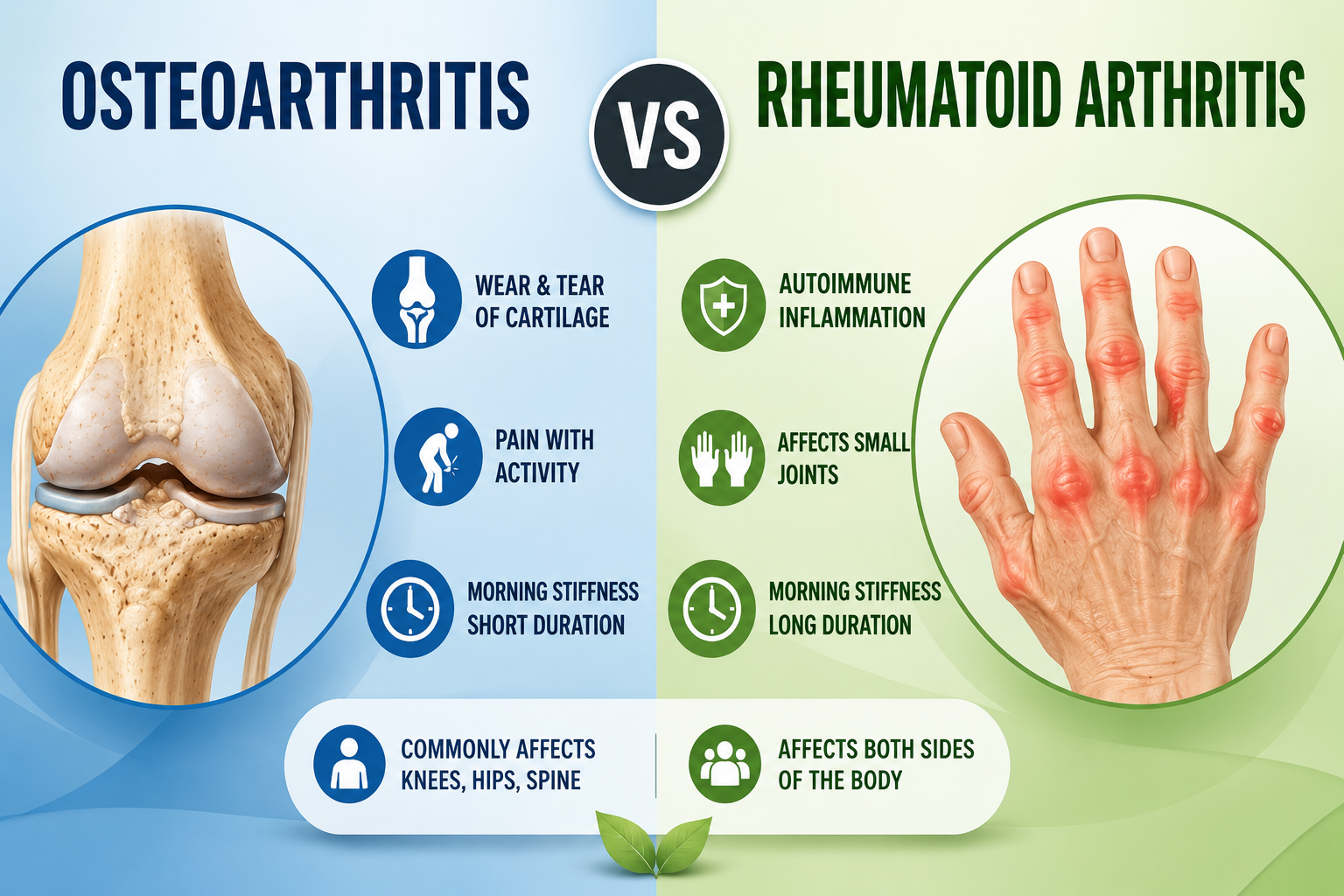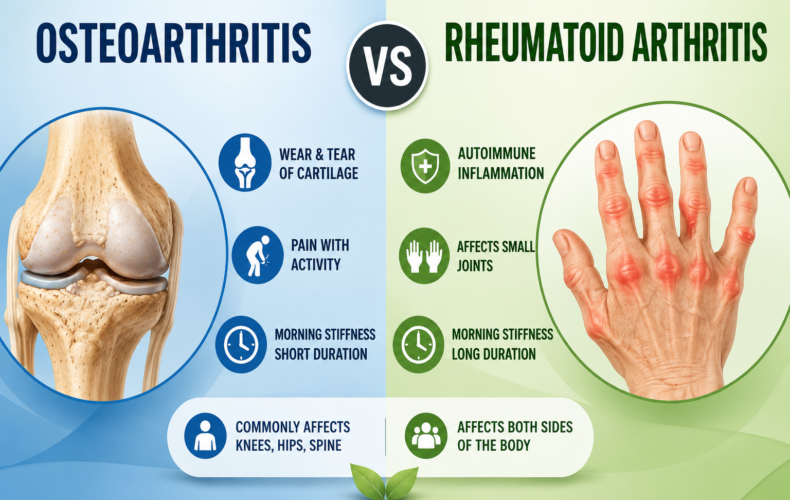
Osteoarthritis Vs Rheumatoid Arthritis What’s The Difference
Osteoarthritis vs Rheumatoid Arthritis
Osteoarthritis vs rheumatoid arthritis is a common comparison because both conditions affect the joints, yet they develop in very different ways. Joint pain, stiffness, swelling, and reduced movement can happen in both conditions, but understanding the difference between osteoarthritis vs rheumatoid arthritis may help people better manage symptoms and seek the right support earlier.
What Is Osteoarthritis?
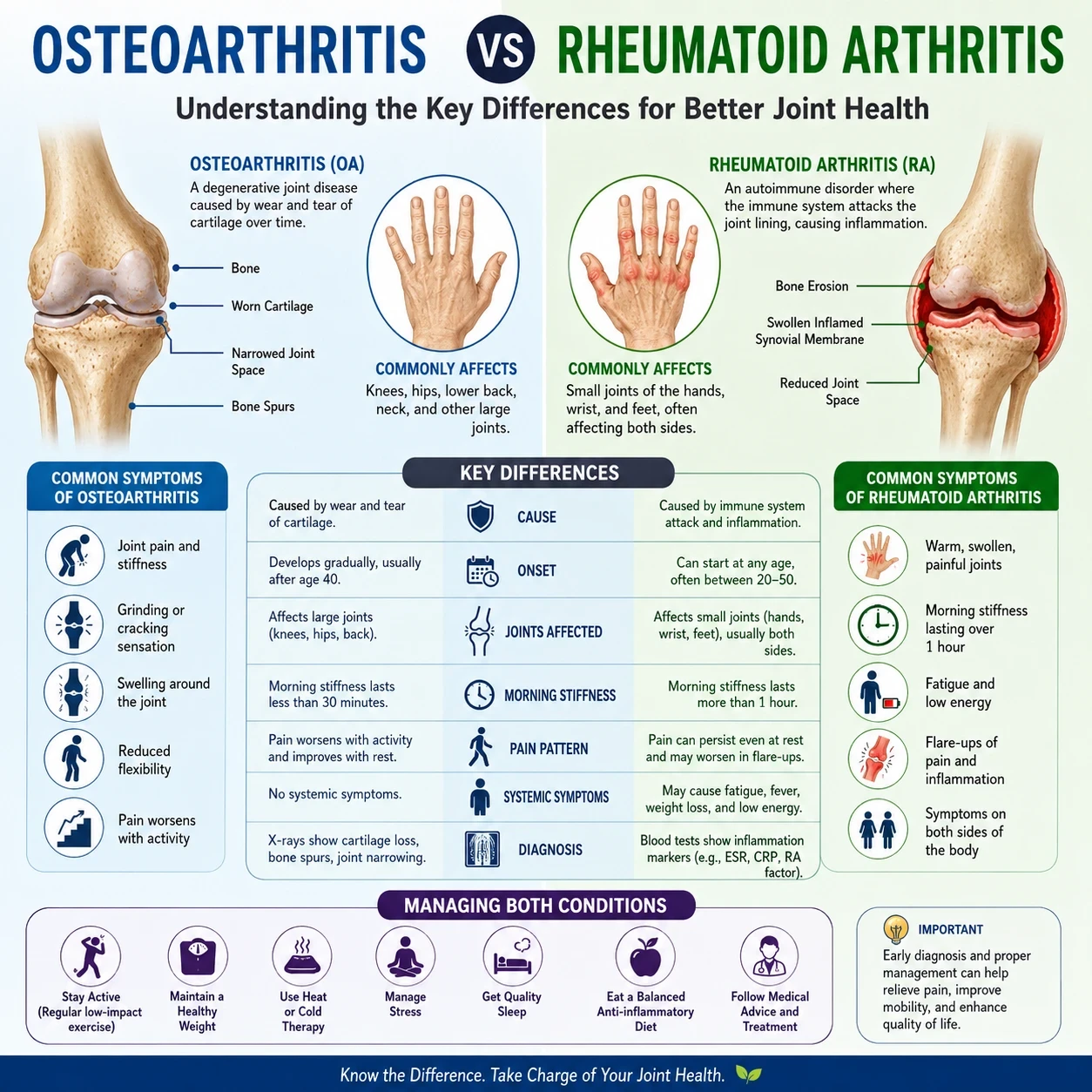
Osteoarthritis is the most common form of arthritis. It develops gradually over time as the protective cartilage inside the joints becomes worn down. Cartilage normally acts like a cushion between bones, helping joints move smoothly. When that cartilage becomes thinner, movement can become painful and stiff.
Many people notice osteoarthritis in weight-bearing joints such as the knees, hips, lower back, and feet. It can also affect the hands and neck. Age, repetitive movement, previous injuries, excess body weight, and physical strain may all contribute to osteoarthritis.
People researching arthritis and joint pain relief often discover that osteoarthritis tends to develop slowly over many years rather than appearing suddenly.
What Is Rheumatoid Arthritis?
Rheumatoid arthritis is different because it is an autoimmune condition. Instead of cartilage simply wearing down, the immune system mistakenly attacks the lining of the joints. This creates inflammation that can damage joints over time if not managed properly.
Rheumatoid arthritis often affects smaller joints first, especially the fingers, wrists, and toes. It usually affects both sides of the body at the same time. For example, both wrists or both hands may become painful together.
Unlike osteoarthritis, rheumatoid arthritis may also cause fatigue, low energy, flu-like symptoms, and periods of flare-ups where symptoms suddenly worsen.
Key Differences Between Osteoarthritis vs Rheumatoid Arthritis
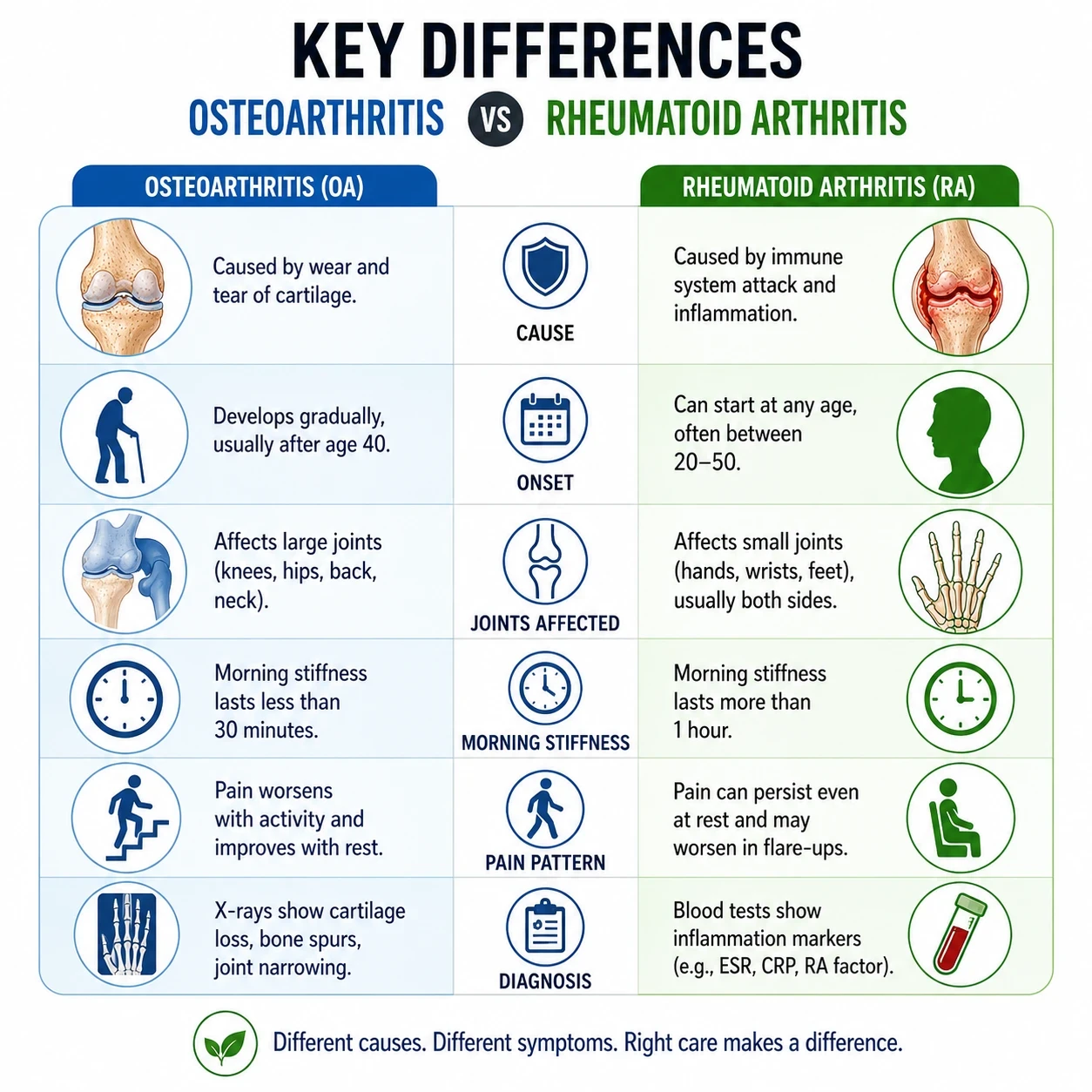
Understanding the key differences between osteoarthritis vs rheumatoid arthritis can help explain why symptoms feel different from person to person.
- Osteoarthritis mainly involves wear and tear inside the joints
- Rheumatoid arthritis involves immune system inflammation
- Osteoarthritis usually develops gradually with age
- Rheumatoid arthritis can appear earlier in life
- Osteoarthritis often affects larger joints
- Rheumatoid arthritis commonly affects smaller joints first
- Morning stiffness in osteoarthritis may improve quickly
- Morning stiffness in rheumatoid arthritis may last much longer
When comparing osteoarthritis vs rheumatoid arthritis, inflammation is usually far more aggressive in rheumatoid arthritis.
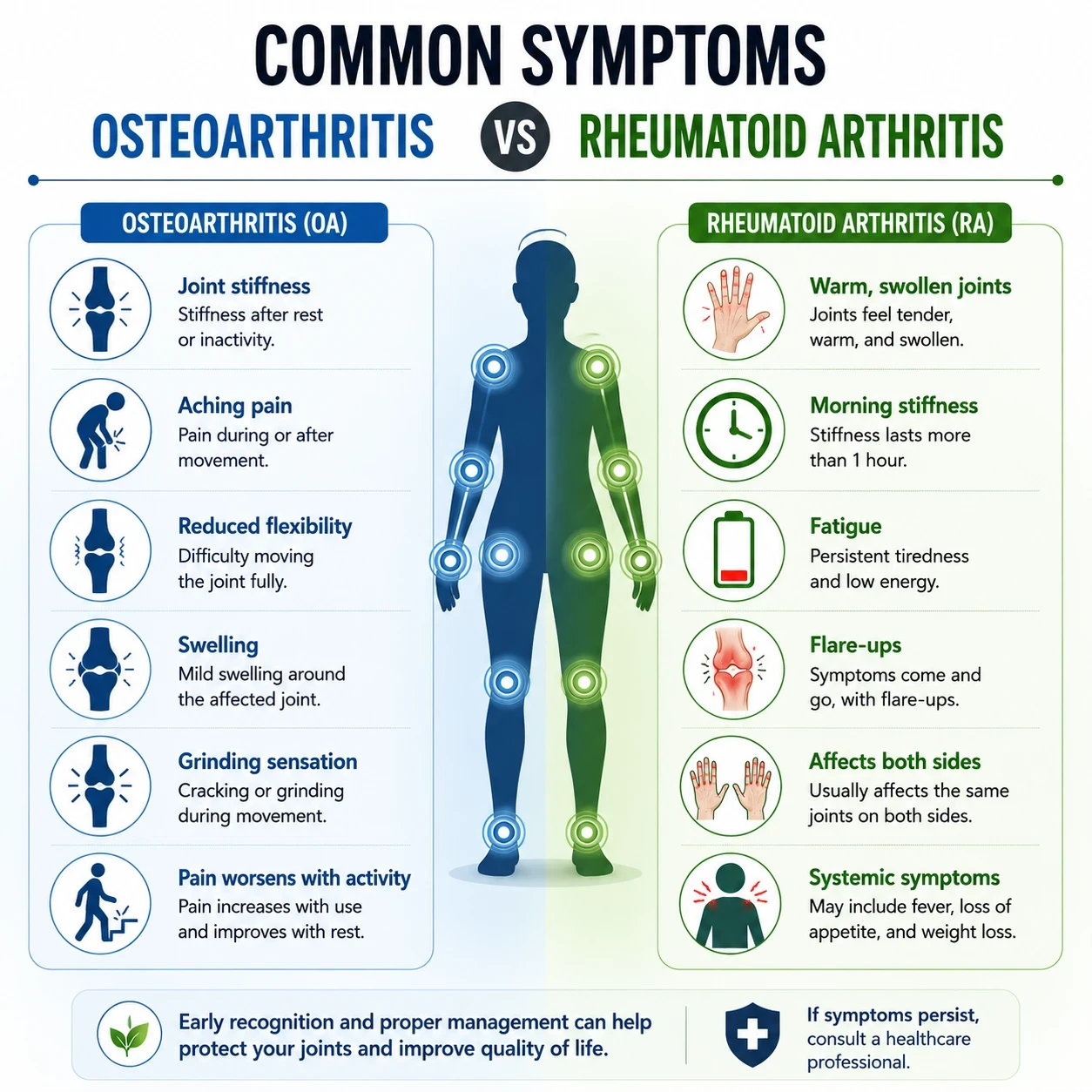
Common Symptoms of Osteoarthritis
Symptoms of osteoarthritis can vary depending on which joints are affected. Pain may become worse after activity or long periods of standing. Some people also notice grinding sensations or reduced flexibility.
- Joint stiffness
- Aching pain during movement
- Reduced flexibility
- Swelling around joints
- Cracking or grinding sensations
- Pain that worsens with activity
Many people with osteoarthritis also experience muscle tension around the painful joint because the body tries to protect the area.
Common Symptoms of Rheumatoid Arthritis
Rheumatoid arthritis symptoms often involve inflammation throughout the body, not just inside the joints.
- Warm swollen joints
- Fatigue and low energy
- Morning stiffness lasting over an hour
- Joint redness
- Flare-ups of pain and swelling
- Symptoms affecting both sides of the body
Some people living with rheumatoid arthritis describe feeling exhausted even when joint pain is not severe. This is one reason why osteoarthritis vs rheumatoid arthritis can feel very different in daily life.
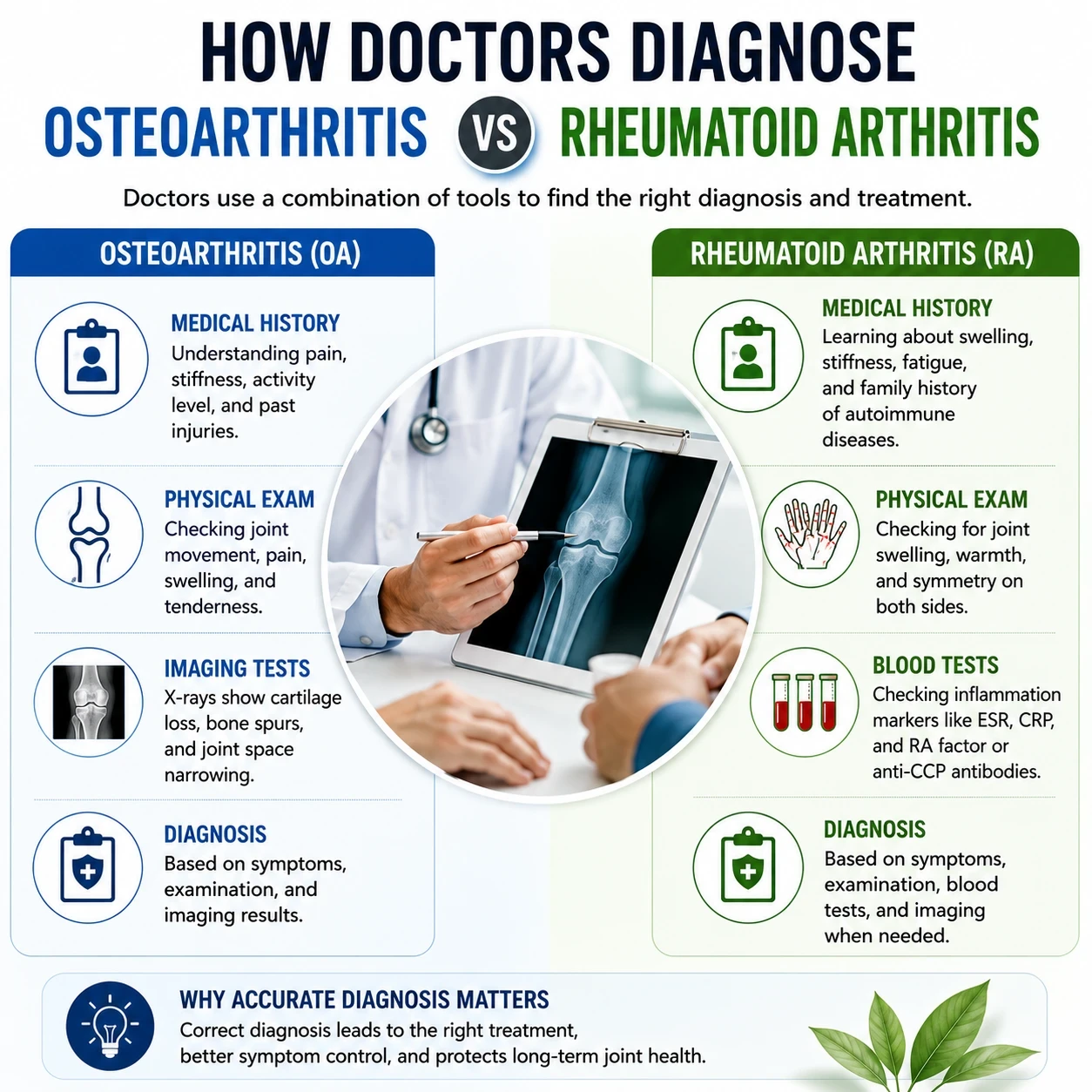
How Doctors Diagnose Osteoarthritis vs Rheumatoid Arthritis
Doctors usually combine symptom history, physical examination, imaging scans, and blood tests when evaluating osteoarthritis vs rheumatoid arthritis.
X-rays may help show cartilage loss and joint narrowing associated with osteoarthritis. Blood tests may help identify inflammation markers linked to rheumatoid arthritis.
Because early symptoms can overlap, diagnosis is not always immediate. Some people initially assume they simply have general joint pain or aging-related stiffness.
Learning more about natural approaches for joint pain relief may also help people support overall joint comfort alongside medical care.
Can Lifestyle Habits Affect Both Conditions?
Healthy daily habits may help support joint function in both osteoarthritis and rheumatoid arthritis. While lifestyle changes cannot completely cure arthritis, they may help improve movement and reduce stress on painful joints.
- Gentle exercise may support mobility
- Maintaining a healthy weight may reduce joint strain
- Heat therapy may help stiffness
- Stress management may help pain flare-ups
- Better sleep may support recovery
- Balanced movement may help reduce stiffness
Many people dealing with osteoarthritis vs rheumatoid arthritis find that consistent movement is often more helpful than complete rest.
Exercise and Joint Movement
Fear of movement is common when joints become painful, but gentle exercise may actually support flexibility and muscle strength. Walking, swimming, stretching, and low-impact mobility exercises are often recommended.
For osteoarthritis, movement may help lubricate stiff joints and strengthen surrounding muscles. For rheumatoid arthritis, carefully paced activity may help maintain mobility during periods when inflammation is under control.
People comparing osteoarthritis vs rheumatoid arthritis sometimes assume exercise will worsen damage, but controlled movement is often part of long-term management.
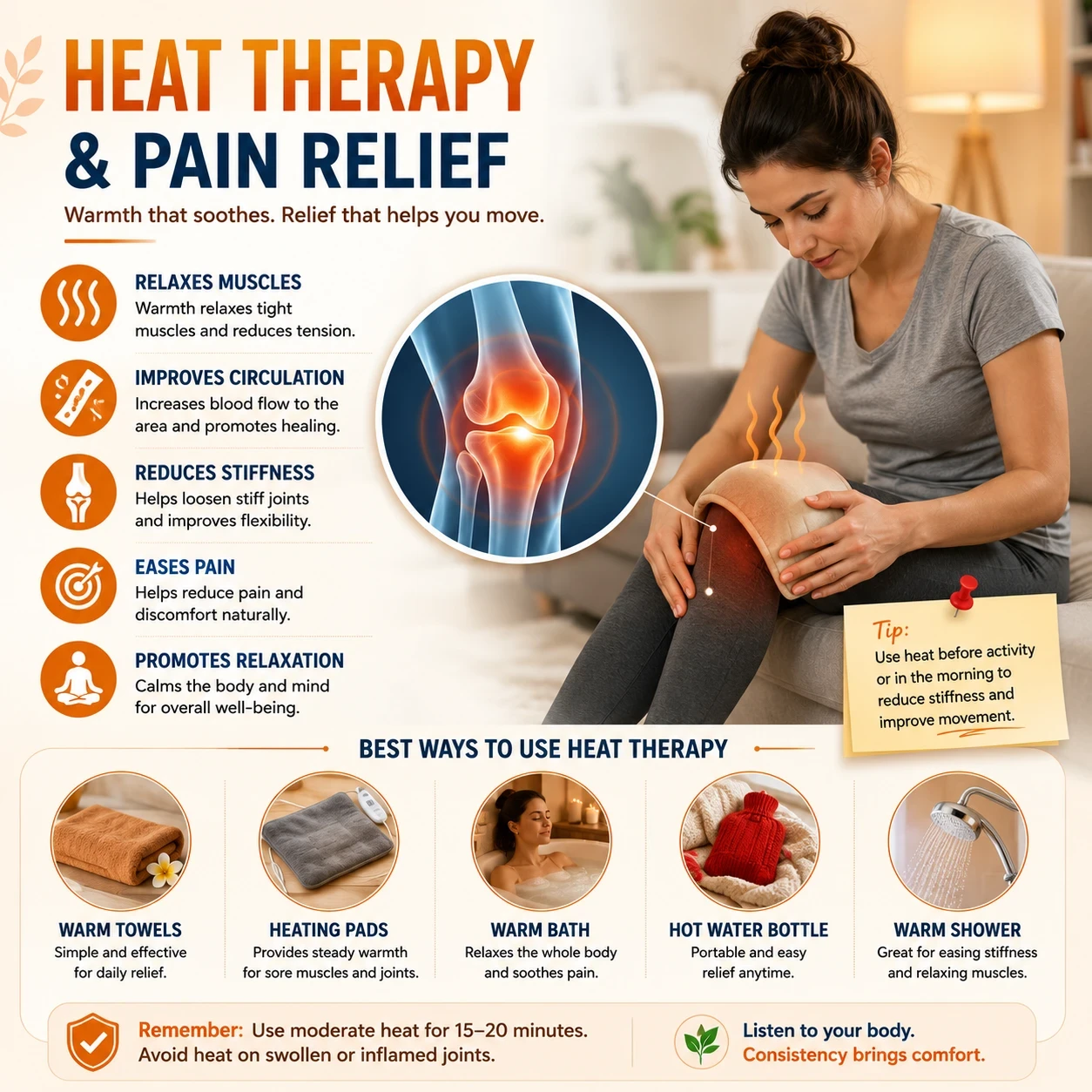
Heat Therapy and Pain Relief
Heat therapy is commonly used to ease joint stiffness and improve comfort. Warm compresses, heated pads, and warm baths may help relax surrounding muscles.
Some people prefer cold therapy during inflammatory flare-ups, particularly when joints feel swollen or hot. Finding the right balance between movement, rest, heat, and recovery often takes time.
Explore heat therapy here.
Infrared Light Therapy Devices Here.
Latest Infraheal heat products here.
.
When to Seek Medical Advice
Persistent joint pain should not be ignored, especially if swelling, fatigue, or worsening stiffness develops. Early support may help protect joint health over time.
Medical advice is especially important if:
- Joint swelling continues for weeks
- Morning stiffness becomes severe
- Symptoms affect daily movement
- Both sides of the body become painful
- Fatigue becomes overwhelming
- Pain rapidly worsens
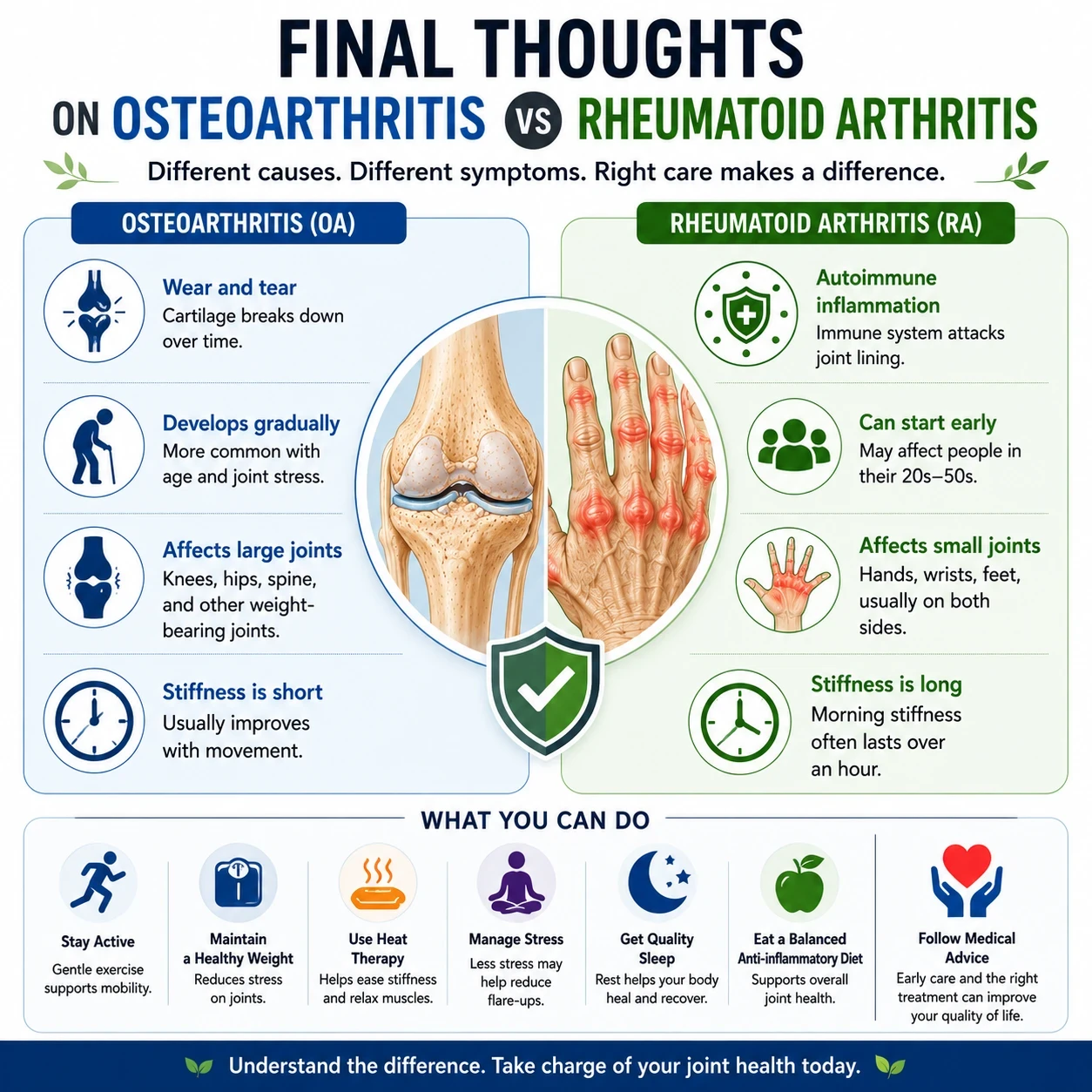
Final Thoughts on Osteoarthritis vs Rheumatoid Arthritis
Osteoarthritis vs rheumatoid arthritis may sound similar, but they involve very different processes inside the body. Osteoarthritis mainly develops from joint wear and cartilage breakdown, while rheumatoid arthritis involves immune-driven inflammation.
Understanding the differences between osteoarthritis vs rheumatoid arthritis may help people recognize symptoms earlier, make informed decisions, and explore supportive lifestyle strategies that improve daily comfort and movement.
Scientific studies:
NIAMS Rheumatoid Arthritis Overview