Hip Pain When Climbing Stairs
Hip pain when climbing stairs can feel frustrating because it often appears during normal daily movement that most people take for granted. The discomfort may feel sharp, aching, tight, or unstable depending on the structures involved inside and around the hip joint. For some people the pain starts gradually, while others notice sudden irritation after exercise, overuse, or long periods of inactivity.
The hip is one of the largest weight-bearing joints in the body. Every time you climb stairs the muscles, tendons, ligaments, and cartilage around the hip must work harder to lift body weight upward while also keeping balance and stability. When something becomes irritated or overloaded, hip pain when climbing stairs may develop and start affecting walking, exercise, sleep, and everyday confidence.
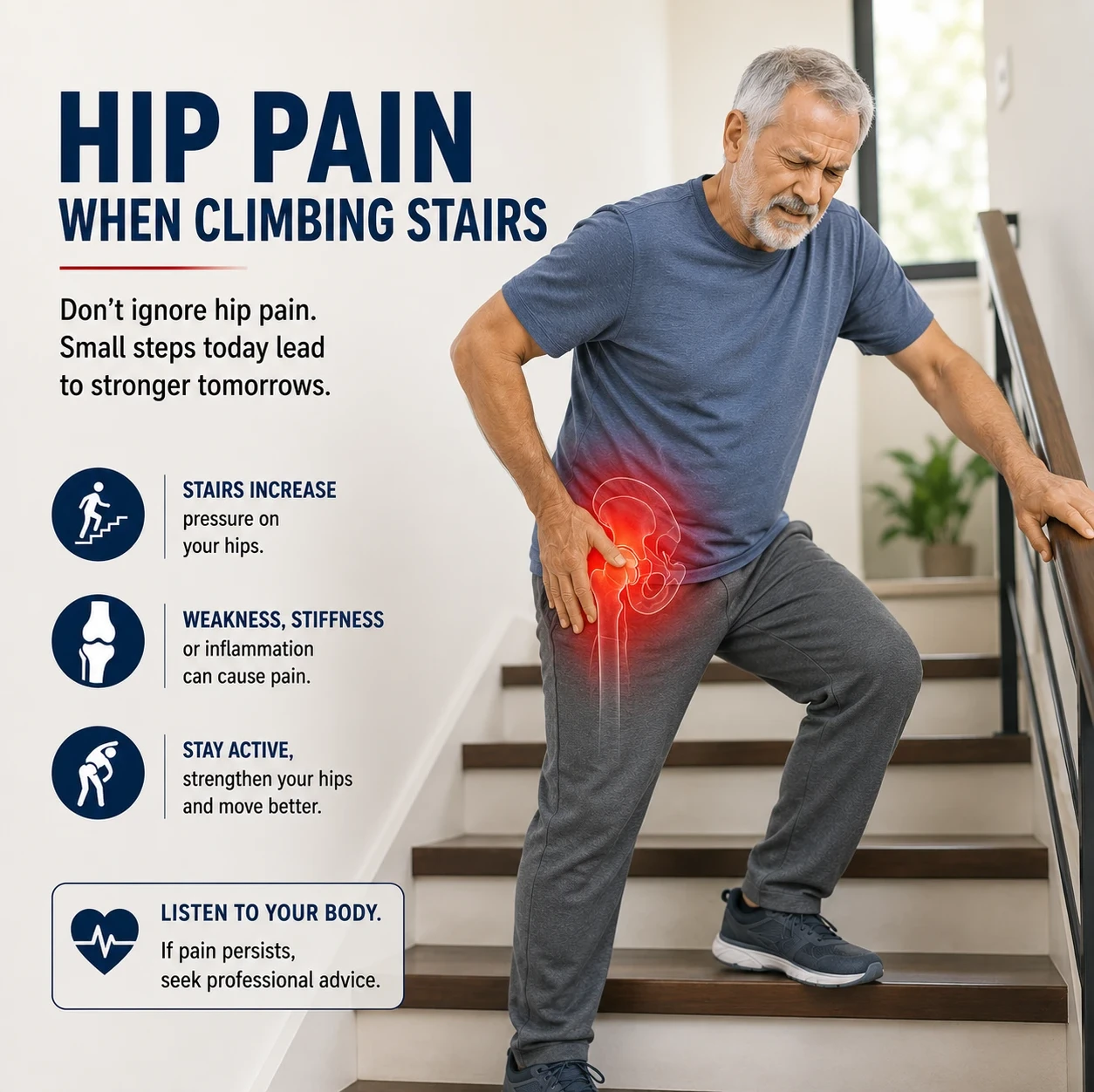
Why Stairs Can Trigger Hip Pain
Climbing stairs places more pressure on the hips than walking on flat ground. The hip flexors, glutes, and supporting muscles must work harder to lift the leg and stabilize the pelvis during movement. If the muscles are weak, tight, inflamed, or overworked, irritation can build up over time.
People with reduced mobility often notice that hip pain when climbing stairs becomes worse later in the day or after repeated movement. Steep stairs, carrying shopping bags, poor footwear, and lack of exercise can all increase strain on the hips.
Understanding sharp hip pain causes may help explain why stair movement sometimes triggers sudden discomfort around the joint.
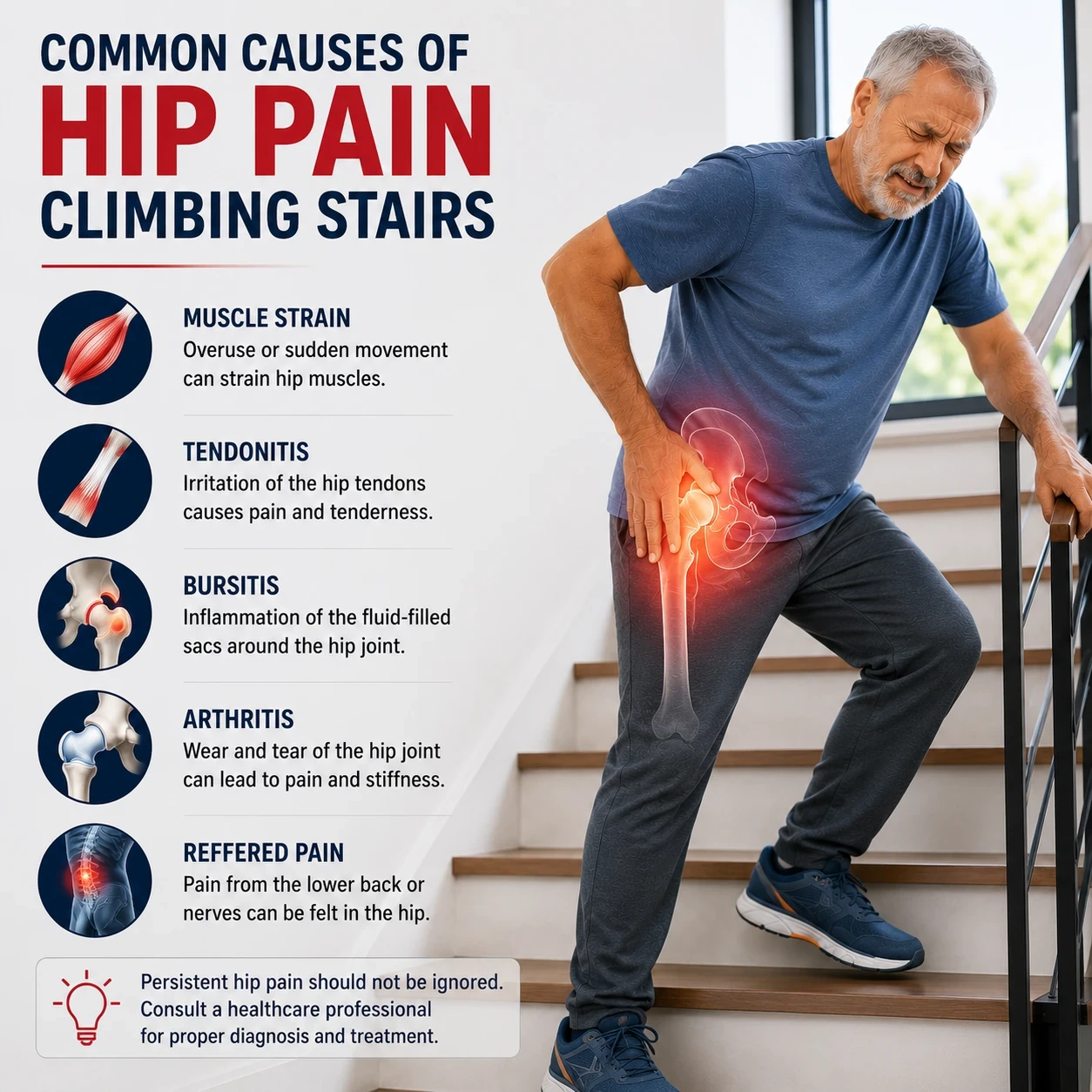
Common Causes of Hip Pain When Climbing Stairs
Hip Flexor Strain
The hip flexors help lift the knee upward during stair climbing. Overuse, sports activity, long sitting hours, or sudden exercise can irritate these muscles and create pain at the front of the hip.
The discomfort may feel worse when lifting the leg or stepping upward. Tight hip flexors can also pull on surrounding structures and change movement patterns.
Glute Weakness
The glute muscles stabilize the pelvis while climbing stairs. Weakness in these muscles can increase pressure on the hip joint and surrounding tissues. This often leads to fatigue, instability, or aching pain after repeated stair use.
Many people with desk-based lifestyles develop weak glutes over time without realizing it.
Bursitis
Bursae are small fluid-filled sacs that reduce friction around joints. Hip bursitis occurs when these sacs become irritated or inflamed. Pain is often felt on the outer side of the hip and may worsen when walking upstairs, lying on one side, or standing for long periods.
Arthritis
Arthritis can slowly wear down cartilage inside the hip joint. As movement becomes less smooth, stair climbing may create stiffness, grinding sensations, or deeper aching pain.
People with arthritis frequently notice that hip pain when climbing stairs is worse first thing in the morning or after long periods of sitting.
Tendon Irritation
Tendons connect muscles to bones. Repeated stair climbing, sports, or sudden increases in activity may irritate the tendons around the hip. This can create soreness during movement and tenderness around the joint.
Referred Pain
Sometimes pain felt in the hip actually comes from the lower back, pelvis, or nerves. Tight muscles or nerve irritation may create symptoms that travel into the hip area during movement.
What Hip Pain When Climbing Stairs Can Feel Like
Hip pain when climbing stairs does not feel the same for everyone. Some people experience sharp pain while others describe stiffness, burning, pulling, or weakness.
- Pain at the front of the hip
- Outer hip tenderness
- Deep aching in the joint
- Clicking or catching sensations
- Tightness during movement
- Pain radiating toward the thigh
- Weakness when pushing upward
- Stiffness after sitting
The location and pattern of symptoms often provide clues about which structures may be involved.
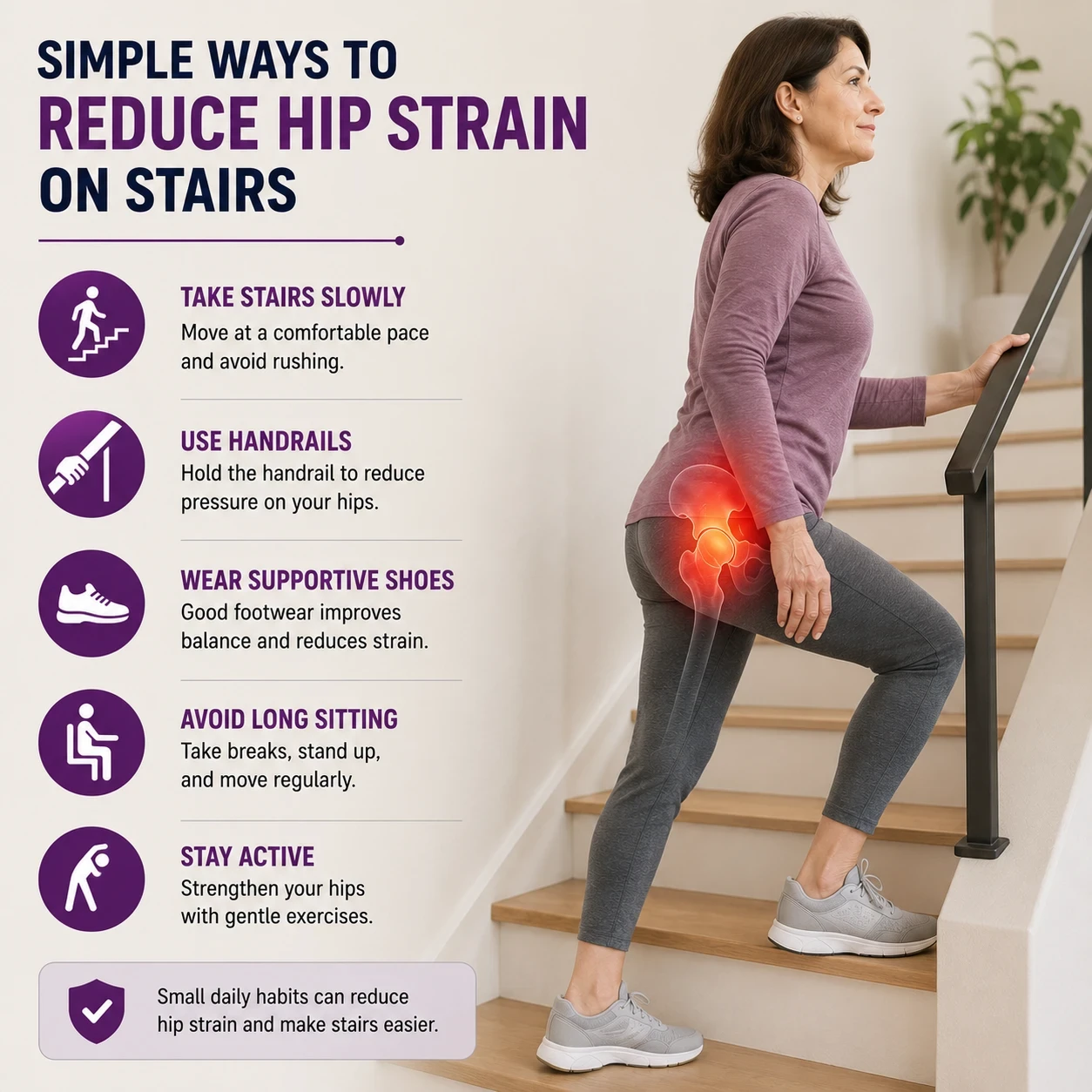
Simple Ways to Reduce Hip Strain on Stairs
Small changes in movement and daily habits can sometimes reduce pressure on the hips and improve comfort.
Take Stairs Slowly
Rushing upstairs increases force through the hip joint. Moving more slowly allows muscles to work with better control and may reduce irritation.
Use Handrails
Holding a handrail can reduce the amount of weight and pressure placed through the hips during stair climbing.
Improve Footwear
Supportive footwear may improve alignment and reduce stress traveling upward through the legs and hips.
Avoid Long Sitting Periods
Sitting for extended periods can tighten the hip flexors and reduce mobility. Standing up regularly and moving gently throughout the day may help.
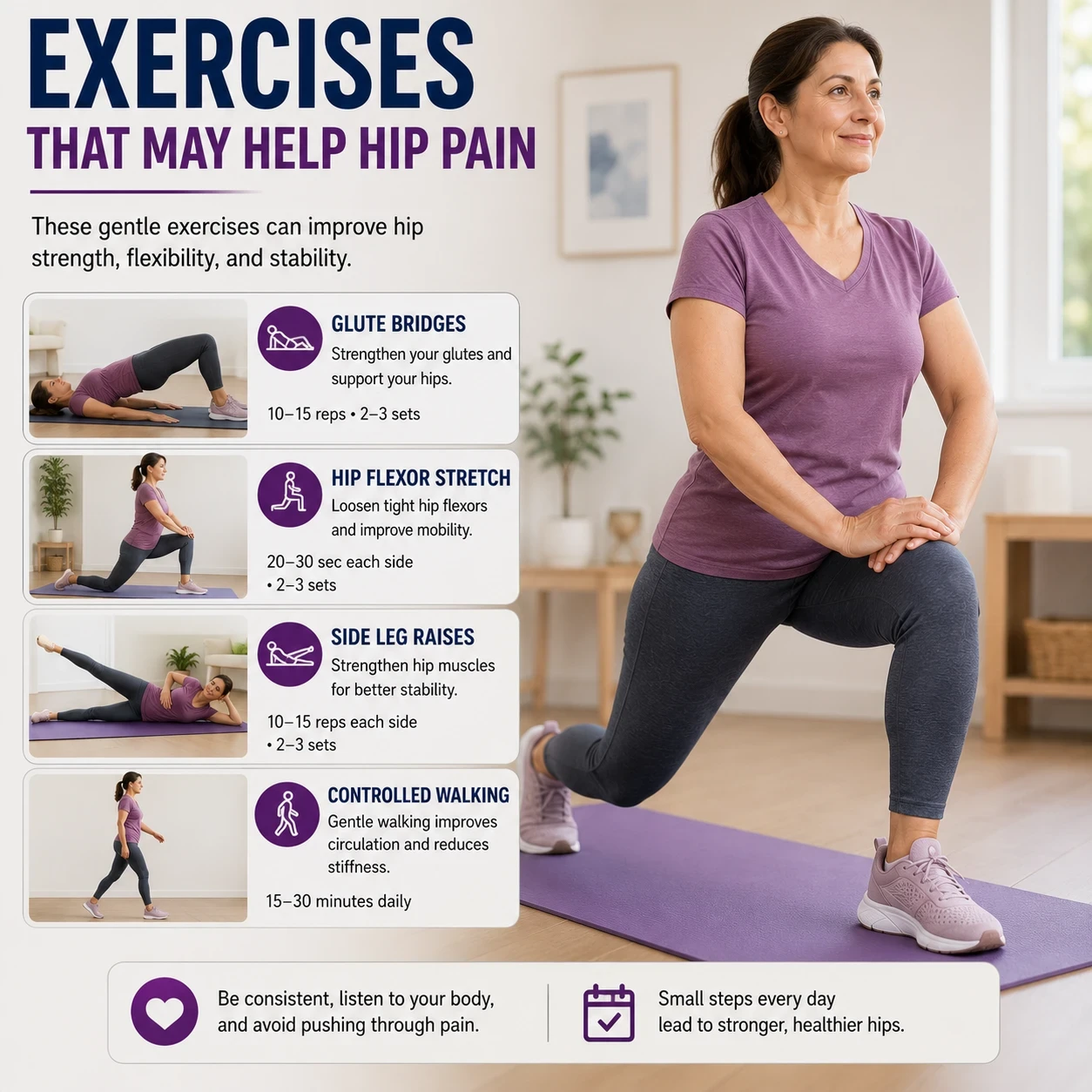
Exercises That May Help Hip Pain
Gentle strengthening and mobility exercises may support the hips over time. Building stronger muscles around the joint can improve stability and reduce excessive strain during movement.
Many people benefit from best exercises for hip pain that focus on flexibility, glute activation, and controlled strengthening.
Glute Bridges
Glute bridges help strengthen the muscles that stabilize the pelvis and hips during stair climbing.
Hip Flexor Stretching
Gentle stretching may reduce tension at the front of the hips and improve movement quality.
Side Leg Raises
This exercise targets muscles that support balance and hip stability.
Controlled Walking
Short walks on level ground can improve circulation and reduce stiffness without placing excessive pressure on the hips.
Heat and Recovery Strategies
Heat therapy may help relax tight muscles and reduce stiffness around the hip area. Some people use warm compresses, heating pads, or warm baths before activity.
Recovery also matters. Repetitive overload without adequate rest can increase irritation around the hip joint.
According to the NHS guide on hip pain, gentle movement, pacing activity, and improving strength may help support recovery for many common hip issues.
When to Seek Medical Advice
Persistent or worsening hip pain when climbing stairs should not be ignored. Professional assessment may help identify the underlying cause and rule out more serious conditions.
Medical advice is important if you experience:
- Sudden severe pain
- Swelling or redness
- Difficulty bearing weight
- Pain after a fall or injury
- Hip locking or instability
- Night pain that does not improve
- Symptoms lasting several weeks
Managing Hip Pain Long Term
Long-term improvement usually involves consistency rather than quick fixes. Strengthening weak muscles, improving mobility, managing body weight, reducing excessive strain, and staying active can all support healthier hip movement over time.
Many people find that small daily habits gradually improve mobility and confidence. Gentle exercise, movement pacing, supportive footwear, and improving posture may all help reduce hip pain when climbing stairs and make daily movement feel more manageable again.