Alkaline Phosphatase Enzymes:
Alkaline phosphatase enzymes (ALP)are proteins found throughout the body that help break down molecules, especially phosphate-containing compounds.
When these enzymes show up on a blood test, they often raise questions.
Are they too high? Too low?
What does it mean for bone, liver, or overall health?
Understanding the ALP enzymes in context can reduce unnecessary fear and help you interpret results calmly and accurately.
What Are Alkaline Phosphatase Enzymes?
Alkaline phosphatase (ALP) is an enzyme that removes phosphate groups from molecules in an alkaline (less acidic) environment.
There are different forms, mainly produced in:
• Liver
• Bones
• Intestines
• Placenta (during pregnancy)
In adults, most circulating ALP enzymes come from the liver and bones. That’s why doctors often think about these two areas first when levels are outside the typical range.

Why Are Alkaline Phosphatase Enzymes Tested?
They are usually measured as part of a routine liver function test panel. They can help assess:
• Liver health
• Bile duct function
• Bone activity
• Certain metabolic conditions
When interpreted alongside other markers such as AST, ALT, bilirubin, and GGT, ALP provide useful clues about whether an issue is liver-related or bone-related.
If you’re already exploring inflammatory or pain-related issues on Beyond Pain Relief, it’s helpful to understand that blood markers don’t exist in isolation.
For example, chronic pain is explained more clearly in
https://beyond-pain-relief.com/what-is-chronic-pain-a-clear-human-explanation/
What Causes High ALP Enzymes?
Elevated ALP levels can happen for several reasons. The most common include:
1. Liver or Bile Duct Issues
When bile flow is obstructed or impaired, alkaline phosphatase enzymes often rise. Conditions may include:
• Gallstones
• Bile duct obstruction
• Certain liver diseases
Doctors often check GGT levels alongside ALP enzymes to confirm if the source is liver-related.
2. Increased Bone Activity
Bones are constantly remodeling. When bone turnover increases, ALP levels may rise. This can occur in:
• Growth in children and adolescents
• Healing fractures
• Vitamin D deficiency
• Certain bone disorders
If you are dealing with joint pain or swelling, you might also find it useful to read:
https://beyond-pain-relief.com/knee-bursitis-causes-and-symptoms-knee-bursitis-causes-and-symptoms/
3. Pregnancy
Placental alkaline phosphatase enzymes naturally increase in pregnancy. This is normal and expected.
4. Certain Medications
Some medications can influence ALP levels. This is why full medication history always matters when interpreting blood tests.
What Causes Low Alkaline Phosphatase Enzymes?
Low ALP levels are less common but can occur in:
• Zinc deficiency
• Malnutrition
• Hypothyroidism
• Rare genetic conditions
Mildly low levels are often not clinically significant. Context, again, is everything.
Alkaline Phosphatase Enzymes and Inflammation
ALP enzymes are not direct markers of inflammation in the way CRP or ESR are.
However, inflammatory conditions affecting the liver or bones can indirectly influence alkaline phosphatase enzymes.
If you’re learning how inflammation affects tissues and pain perception, this article helps explain the broader picture:
https://beyond-pain-relief.com/movement-load-and-pain-sensitivity/
When people see abnormal numbers, it’s easy to assume something serious is happening. In reality, alkaline phosphatase enzymes are just one piece of the puzzle.
How Doctors Interpret Alkaline Phosphatase Enzymes
Clinicians rarely rely on alkaline phosphatase enzymes alone. Instead, they look at:
• Full liver panel results
• Symptoms
• Imaging (if needed)
• Medical history
• Age
For example:
High ALP + high GGT → more likely liver or bile duct origin
High ALP + normal GGT → more likely bone-related
This pattern-based approach prevents unnecessary alarm.
Can Lifestyle Affect Alkaline Phosphatase Enzymes?
In some cases, yes.
Supporting liver and bone health may help normalize mildly abnormal alkaline phosphatase enzymes.
Practical strategies include:
• Adequate vitamin D
• Sufficient magnesium intake
• Balanced nutrition
• Regular weight-bearing movement
• Limiting excessive alcohol
Nutrition and movement both influence bone turnover and liver efficiency over time.
If you are exploring natural approaches for inflammation and tissue health, peer-reviewed research supports the role of vitamin D and bone metabolism:
https://pubmed.ncbi.nlm.nih.gov/26604733/
Research also highlights how liver enzyme interpretation should be contextual rather than fear-driven:
https://pubmed.ncbi.nlm.nih.gov/30172804/
(Scientific links provided without description for transparency and independent review.)
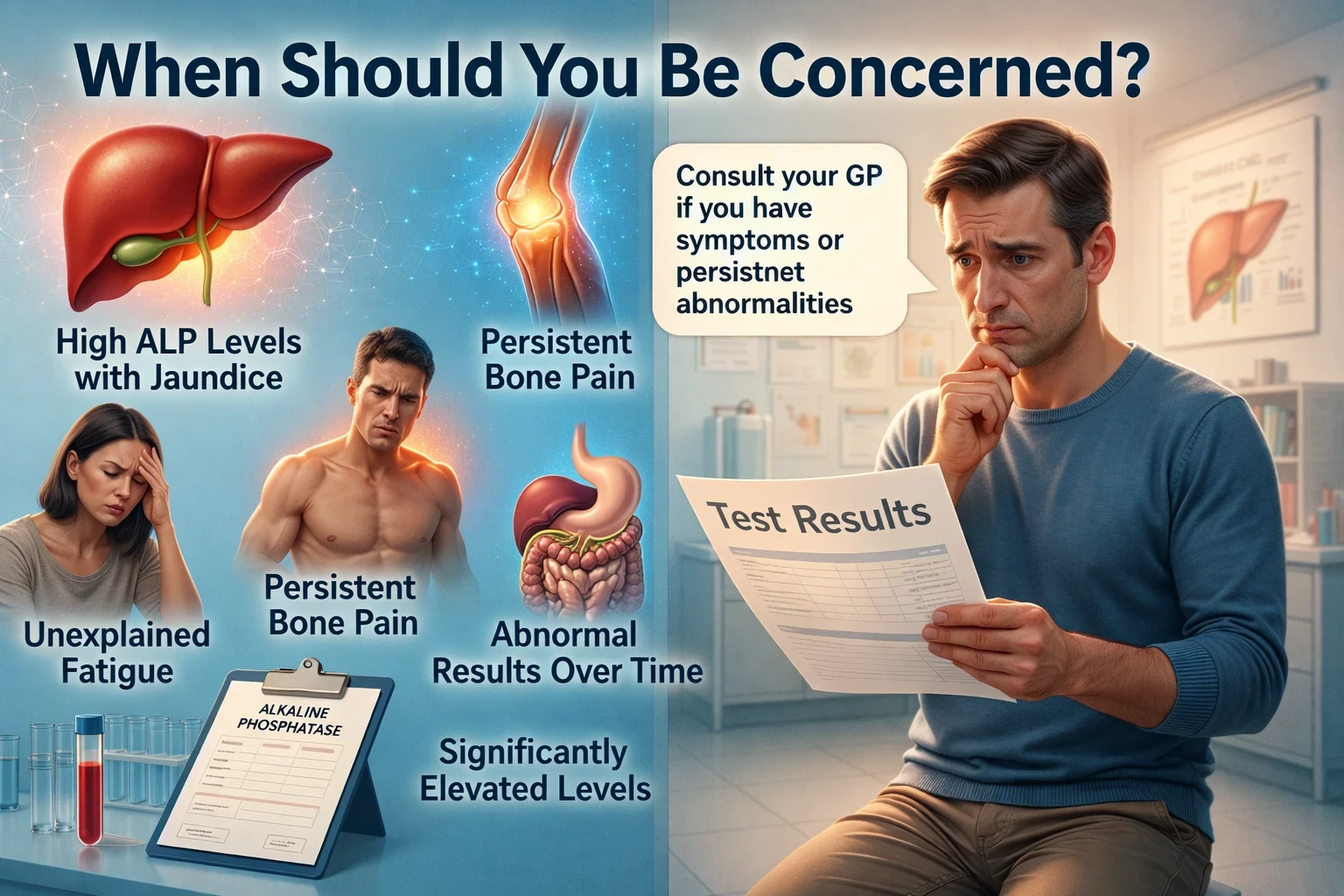
When Should You Be Concerned?
You should discuss ALP enzymes with your GP if:
• Levels are significantly elevated
• You have jaundice (yellowing of skin/eyes)
• You have persistent bone pain
• You experience unexplained fatigue
• Results remain abnormal over time
A single mild elevation of ALP enzymes is often not an emergency. Trends matter more than isolated readings.
The Bigger Picture
ALP enzymes are functional proteins involved in liver and bone processes. They are not a diagnosis on their own. When you understand what ALP enzymes actually do, the numbers become less intimidating.
Blood tests are tools. They guide investigation. They don’t define your health in isolation.
If you’ve received results that worry you, pause. Ask for context. Look at the full panel. Consider your symptoms. Then make decisions from a place of clarity rather than fear.
That’s always the more supportive approach.