How TENS Therapy Works
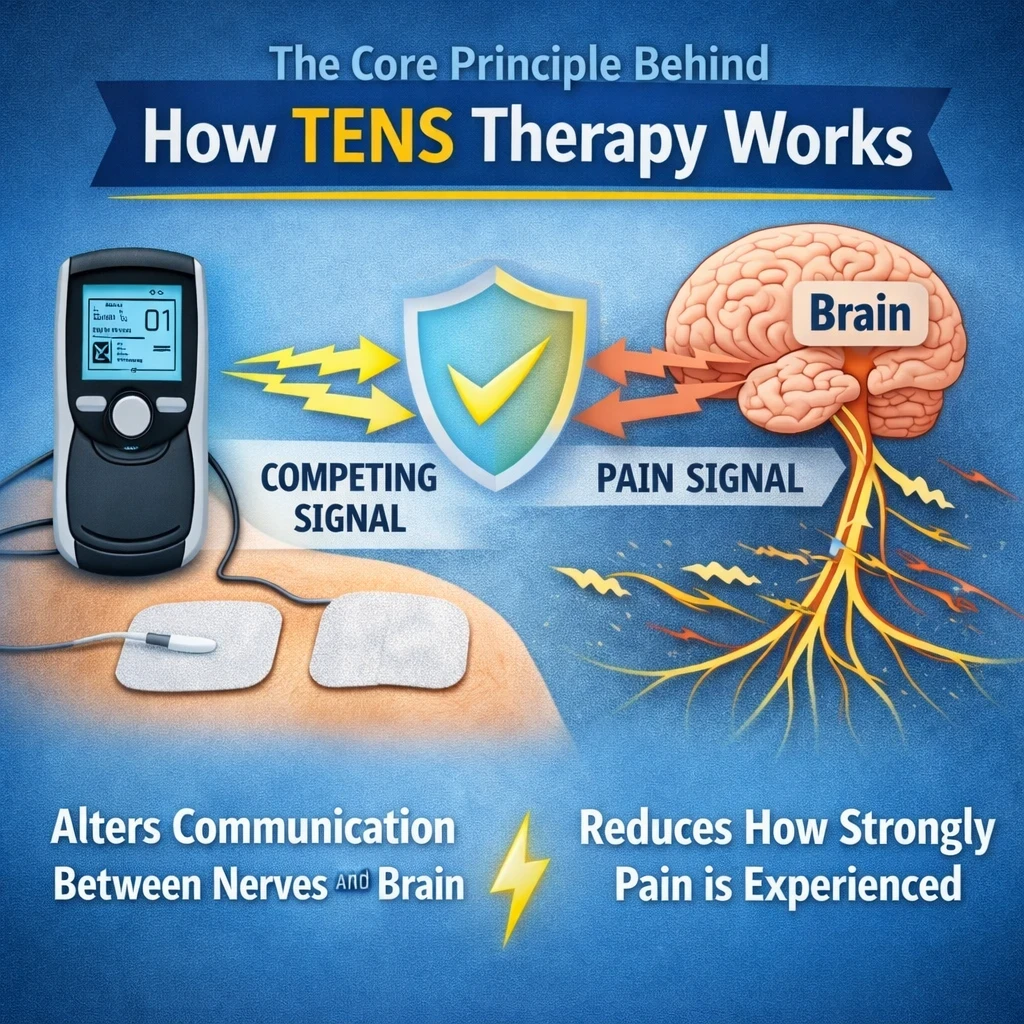
How TENS therapy works is actually quite simple once you break it down. It uses gentle electrical pulses to interact with nerves through the skin.
These pulses do not fix the root cause of pain, but they may help reduce how strongly pain is felt.
For many people, that means moving with less discomfort and more confidence.
TENS stands for Transcutaneous Electrical Nerve Stimulation.
A small device delivers low-voltage electrical signals through pads placed on the skin.
These signals target sensory nerves, not muscles, and create a mild tingling or buzzing sensation.
Understanding how TENS therapy works helps you use it properly and avoid expecting too much from it.
Shop Top Quality TENS Pain Therapy Devices Here.
What Is TENS Therapy?
TENS therapy is a non-invasive, drug-free way to manage pain. The device is portable, easy to use, and commonly used at home.
It includes:
- A small battery-powered unit
- Lead wires
- Adhesive electrode pads
Once the pads are placed on the skin, electrical impulses pass into the nerve pathways. These impulses are designed to influence how pain signals are processed rather than directly treating damaged tissue.
For a full beginner overview, see
TENS units for pain relief
The Core Principle Behind How TENS Therapy Works
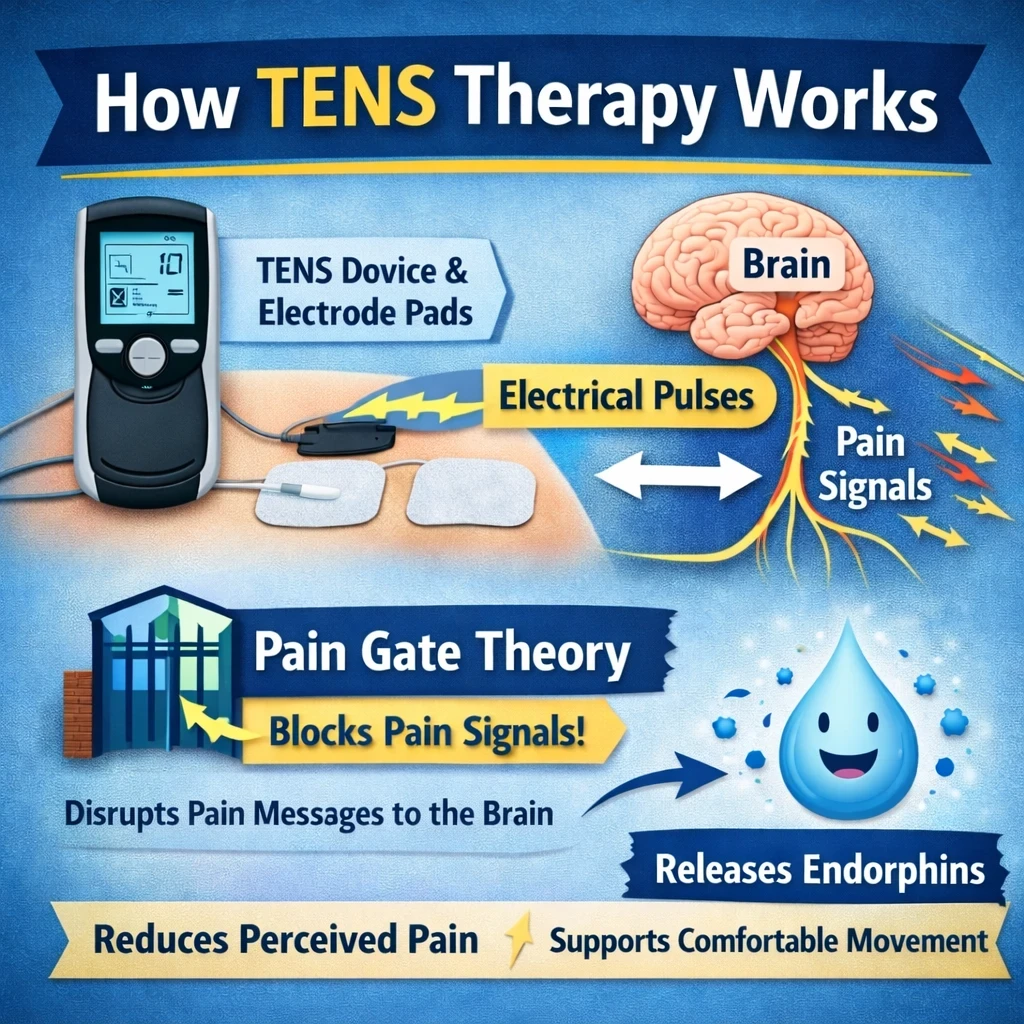
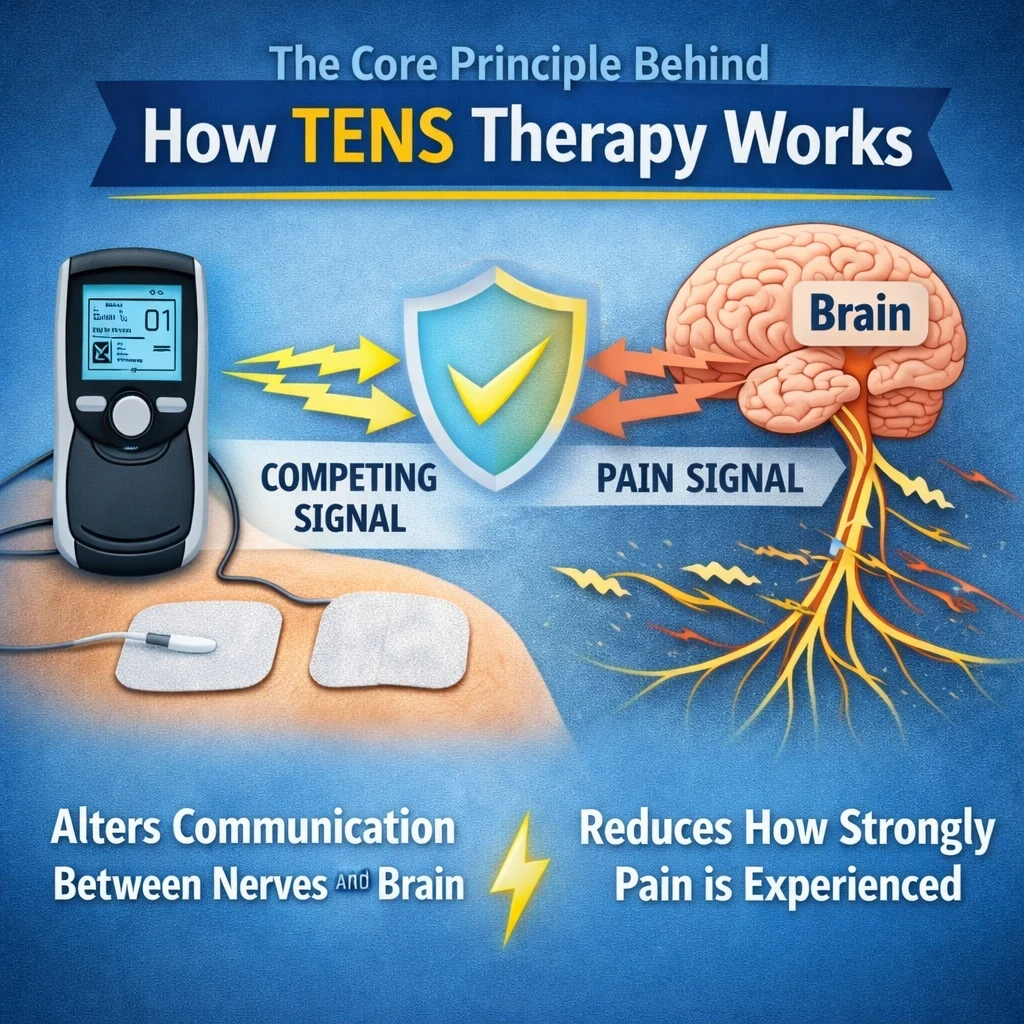
At its core, how TENS therapy works comes down to altering communication between nerves and the brain.
Pain is not just about injury. It is about signals. TENS introduces a competing signal into that system.
This can:
- Reduce how strongly pain is transmitted
- Change how the brain interprets the signal
- Make discomfort feel less intense
This is why relief often happens during use rather than long after.
Shop Top Quality TENS Pain Therapy Devices Here.
The Pain Gate Theory Explained
One of the main explanations for how TENS therapy works is the pain gate theory.
This theory suggests that non-painful signals can partially block painful signals before they reach the brain.
When the TENS unit stimulates sensory nerves:
- It creates a competing signal
- The nervous system prioritises that signal
- Less pain information gets through
Think of it as interrupting the pain message before it fully arrives.
Natural Pain Relief Response
Another important part of how TENS therapy works involves the body’s natural chemistry.
TENS may help trigger the release of endorphins. These are natural pain-relieving chemicals produced by the body.
This may:
- Reduce pain perception
- Create a mild calming effect
- Support short-term relief
This effect varies, but it helps explain why some people feel better even after a session ends.
What a TENS Session Feels Like
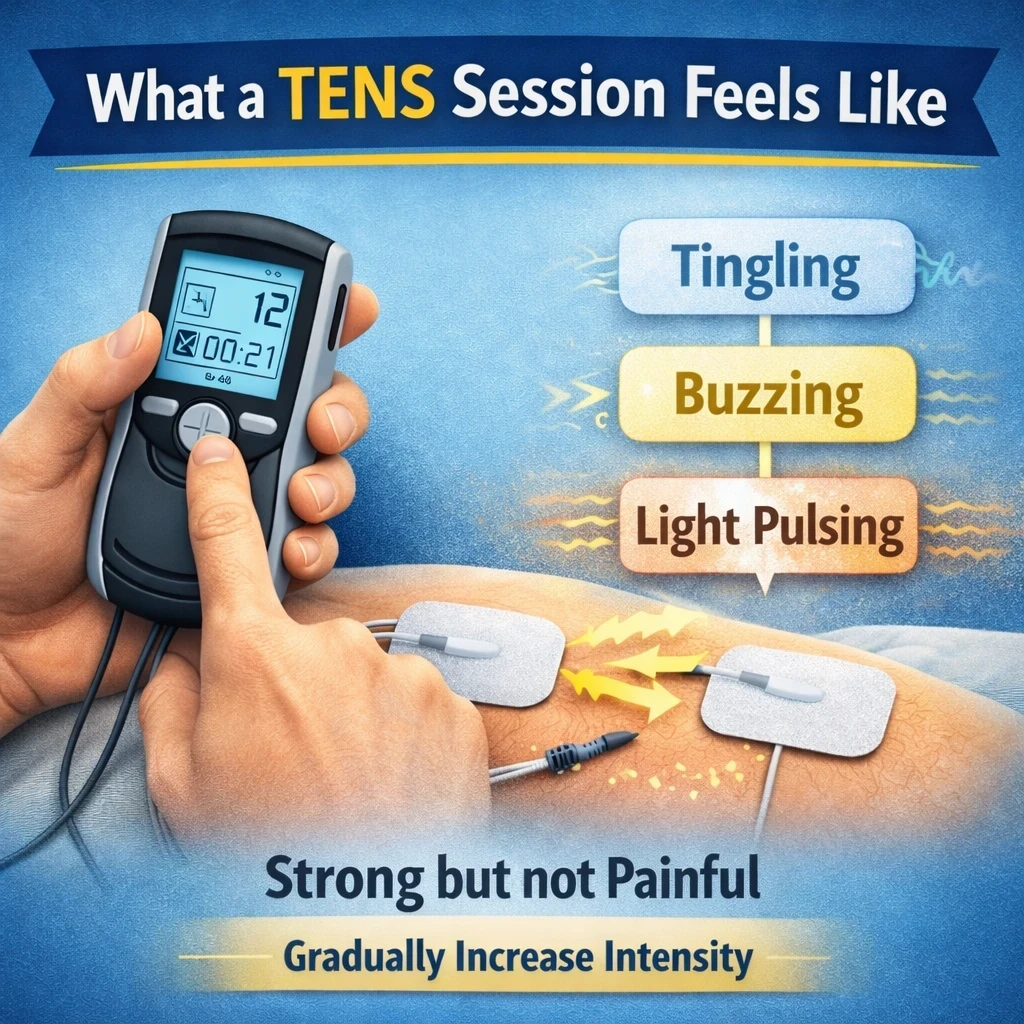
Most people experience:
- Tingling
- Buzzing
- Light pulsing
It should feel strong but comfortable, not painful.
A typical session includes:
- Placing pads near the painful area
- Starting at a low intensity
- Gradually increasing the setting
- Using it for 15 to 30 minutes
For recovery-focused use, see
TENS therapy for muscle recovery

Where TENS Therapy May Help
TENS is often used as a supportive option for:
- Back pain
- Neck and shoulder tension
- Muscle soreness
- Joint discomfort
- Nerve-related pain
It works best when combined with movement, pacing, and strengthening rather than used on its own.
Shop for Top Quality Assured TENS Pain Therapy Devices Ĥere.
What TENS Therapy Can and Cannot Do
TENS therapy may:
- Reduce pain during use
- Help you move more comfortably
- Support daily activity
However, it cannot:
- Fix underlying structural issues
- Replace proper rehabilitation
- Work the same for everyone
For a complete breakdown, see
TENS therapy benefits
Why Results Vary
Not everyone gets the same results from TENS therapy.
Pain is influenced by:
- Nervous system sensitivity
- Movement habits
- Stress and sleep
- Duration of the condition
Some people feel immediate relief. Others feel only mild changes.
Some benefit only while using the device.
Small adjustments like pad placement and intensity can make a big difference.
How to Use TENS More Effectively
To improve results:
- Place pads near the painful area, not directly on irritated skin
- Start low and increase intensity gradually
- Use it regularly, not just once
- Combine with movement or exercise
Used this way, how TENS therapy works becomes more practical and consistent.
Safety Considerations
TENS is generally safe, but not suitable for everyone.
Avoid or seek advice if you have:
- A pacemaker
- Certain heart conditions
- Specific medical concerns
Do not place pads on broken skin or sensitive areas like the front of the neck.
Balanced Perspective
The reality of how TENS therapy works is simple. It changes how pain signals are processed. It may block signals, shift attention, and support natural pain relief responses.
It is not a cure. But it can be a useful tool to help reduce discomfort and support more confident movement.
Scientific Study Links
https://pubmed.ncbi.nlm.nih.gov/35144946/