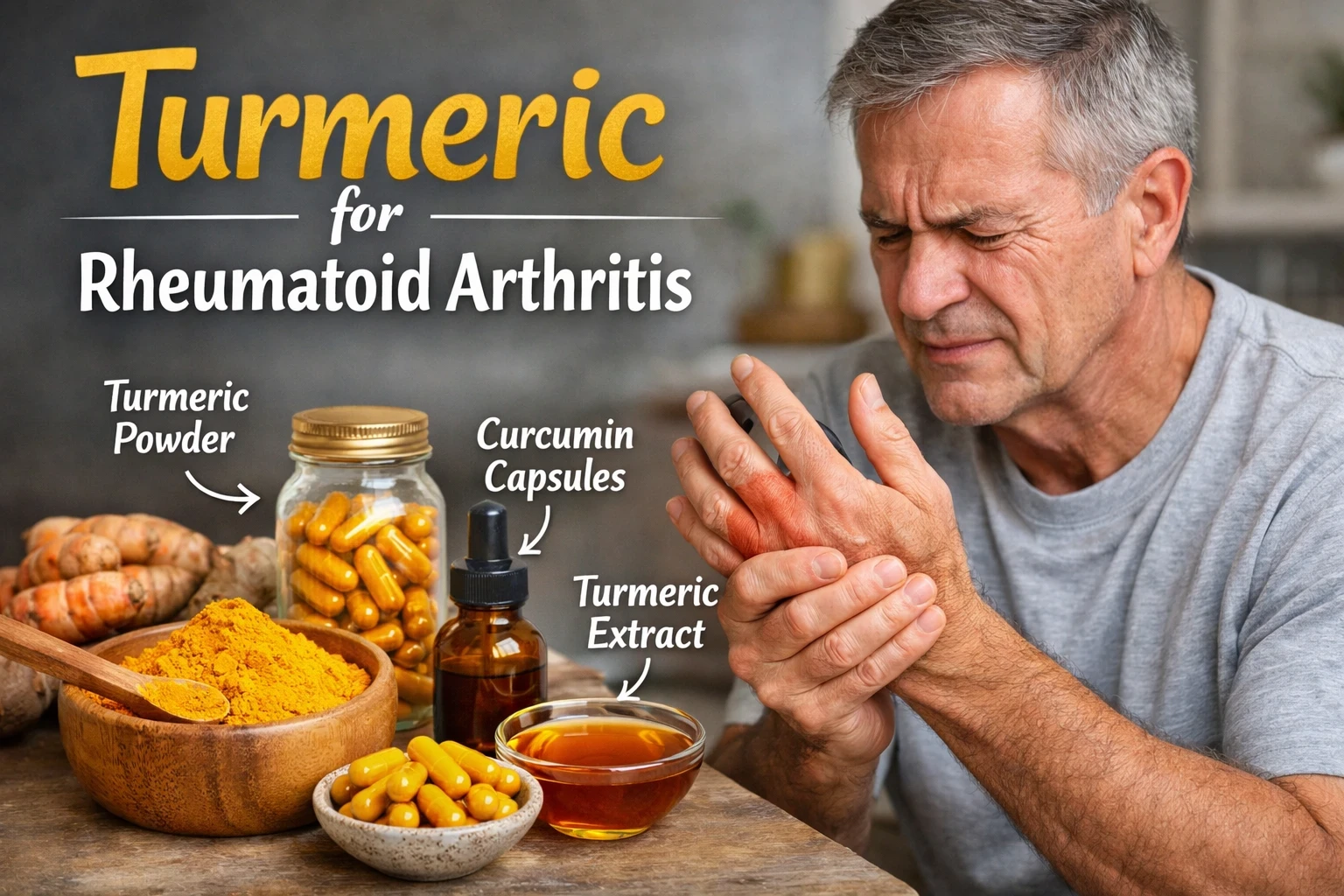
Turmeric for rheumatoid arthritis
Turmeric for rheumatoid arthritis is often explored by people living with joint pain, swelling, and long-term inflammation who want supportive options alongside medical care.
Rheumatoid arthritis is an autoimmune condition.
The immune system mistakenly attacks joint tissue.
This leads to pain, stiffness, warmth, and fatigue.
Inflammation is a central driver of symptoms.
That ongoing inflammatory load is why turmeric continues to attract interest.
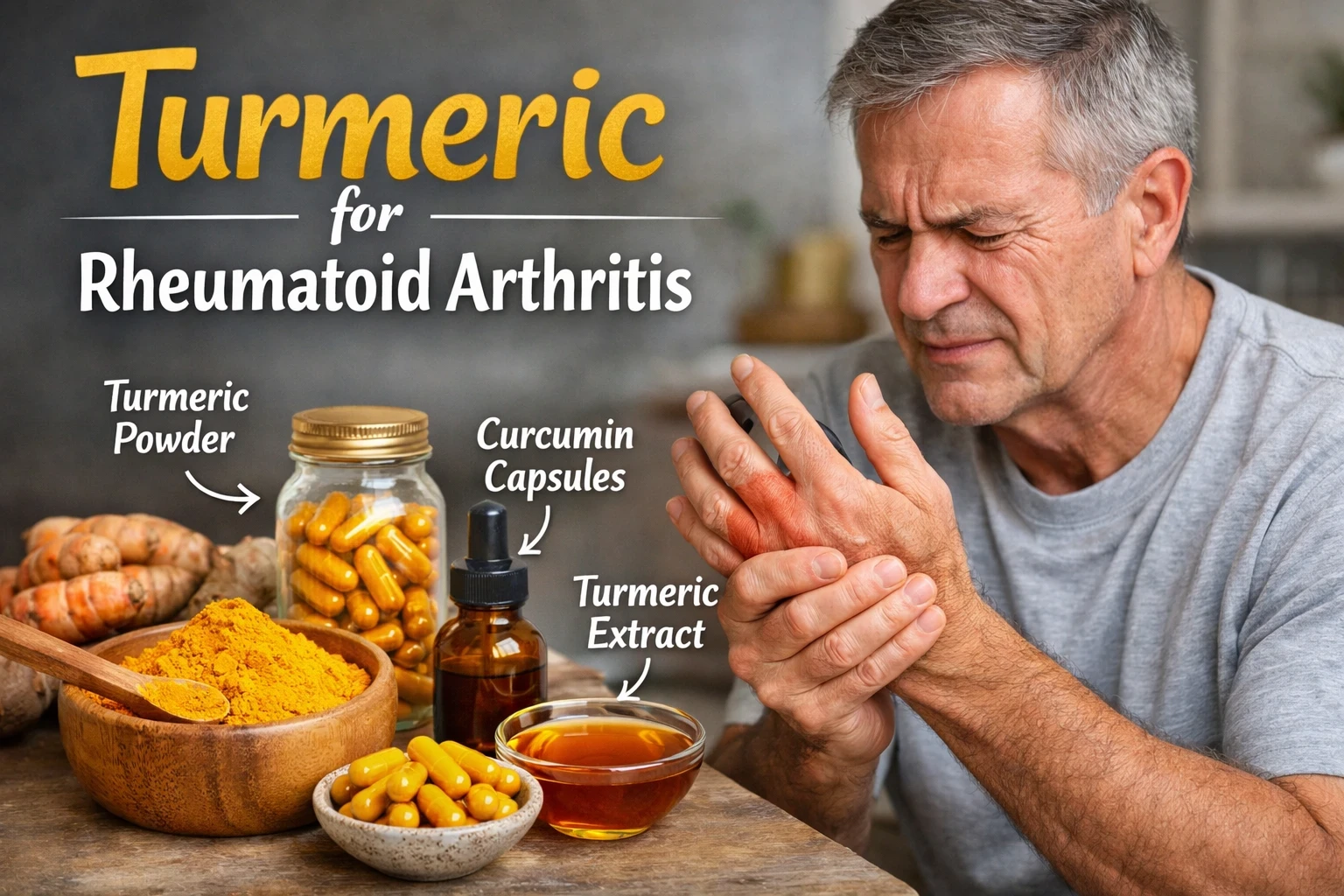
Why turmeric for rheumatoid arthritis is commonly discussed
Turmeric is a yellow spice used for centuries in food and traditional practices.
Its main active compound is curcumin.
Curcumin is not responsible for flavour.
It is responsible for most of turmeric’s biological activity.
Studies indicate curcumin may play a role in regulating inflammation-related mechanisms within the body.
For people with rheumatoid arthritis, this matters.
Inflammation does not switch off easily.
Anything that may help calm that background activity is worth understanding.
Turmeric vs curcumin: an important distinction
This is where confusion often starts.
Whole turmeric powder contains only 2–5% curcumin.
The rest is starch and fibre.
That means:
- Cooking with turmeric is healthy
- But the curcumin dose is very small
Most research related to turmeric for rheumatoid arthritis focuses on curcumin extracts, not food turmeric alone.
Food use supports general health.
Supplement forms are used when people are targeting inflammation more directly.

Different forms of turmeric and curcumin explained simply
Culinary turmeric (powder or fresh root)
- Mild support
- Best for daily nutrition
- Low curcumin concentration
Helpful, but limited for active rheumatoid arthritis symptoms.
Standard curcumin extracts
- Concentrated curcumin
- Much stronger than food sources
- Poor absorption on their own
Enhanced-absorption curcumin
This is the form most often recommended.
Common enhancement methods include:
- Curcumin combined with black pepper (piperine)
- Phytosome curcumin (bound to phospholipids)
- Liposomal curcumin
Absorption matters.
Without it, most curcumin passes straight through the body.
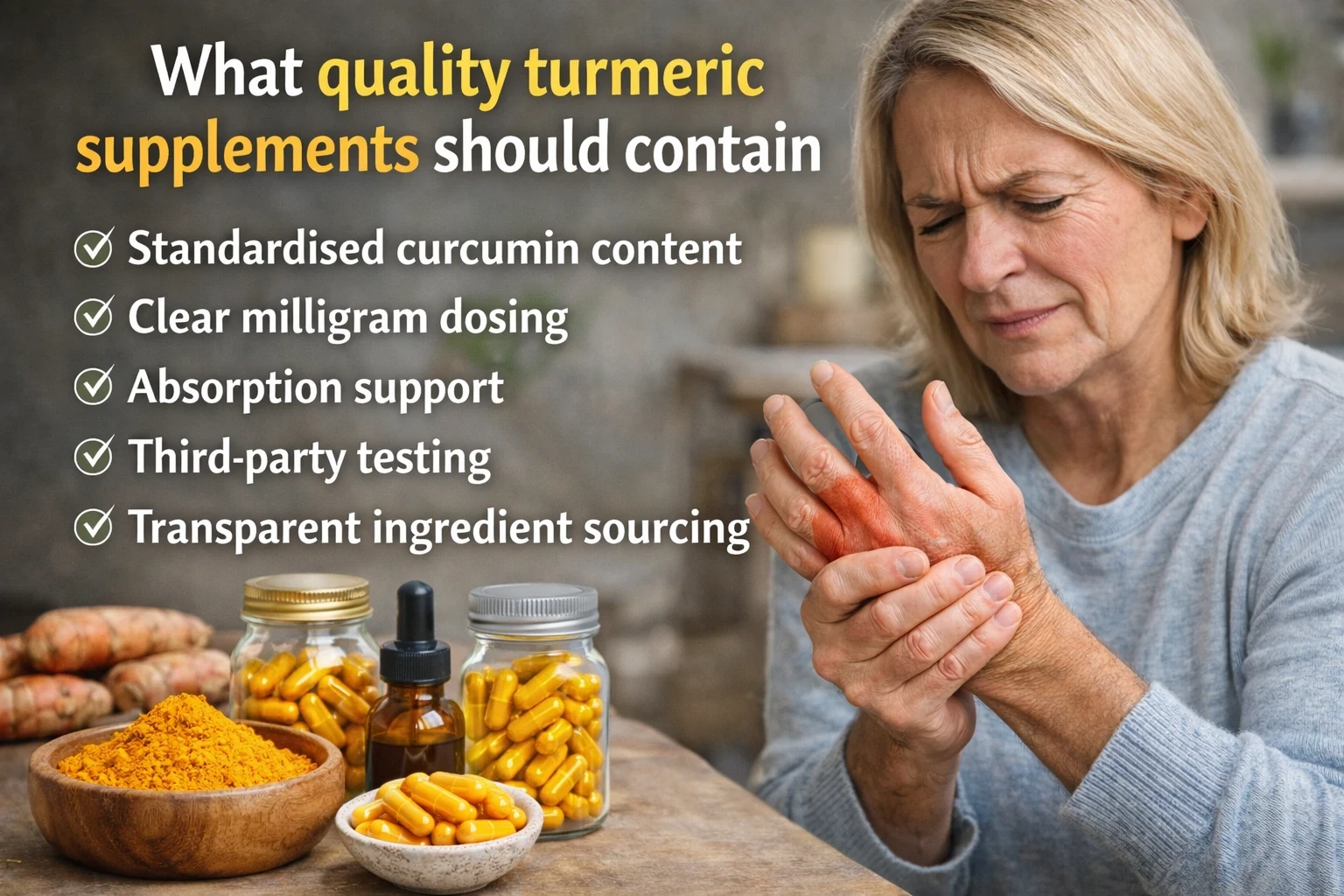
What quality turmeric supplements should contain
Quality matters more than brand names.
Look for:
- Standardised curcumin content
- Clear milligram dosing
- Absorption support listed on the label
- Third-party testing
- Transparent ingredient sourcing
Be cautious of products that:
- Use vague “proprietary blends”
- Do not list curcumin content
- Make cure claims
For turmeric for rheumatoid arthritis, clarity beats marketing.
Popular turmeric supplement brands people choose
This is not medical advice.
These brands are often selected due to formulation quality and transparency.
Commonly used examples include:
- Thorne Curcumin Phytosome
- Doctor’s Best Curcumin C3 Complex
- Life Extension Super Bio-Curcumin
- Gaia Herbs Turmeric Supreme
The key factor is absorption, not price or popularity.
How turmeric fits into a broader rheumatoid arthritis approach
Turmeric works best as part of a wider system.
Not as a standalone solution.
Many people combine turmeric for rheumatoid arthritis with:
- Gentle movement
- Stress regulation
- Sleep support
- Nervous-system calming strategies
You may find these related resources helpful:
- Pain relief without medicationshttps://beyond-pain-relief.com/natural-calm-pain-relief-solutions/
- Understanding Neuropathic Pain
- Arthritis and mental health
Inflammation is influenced by more than joints alone.
Typical curcumin doses used in research
Commonly studied ranges include:
- 500–1,000 mg of curcumin daily
- Split into two doses
- Taken with food
Many people start at the lower end.
This helps assess tolerance.
Effects, when they occur, are gradual.
Think weeks, not days.
Safety considerations
Turmeric is generally well tolerated.
But it is not suitable for everyone.
Extra caution is advised if you:
- Take blood-thinning medication
- Have gallbladder disease
- Are preparing for surgery
- Are pregnant
Always speak with a healthcare professional before adding supplements, especially with rheumatoid arthritis.
What turmeric can and cannot do
It is important to stay realistic.
Turmeric for rheumatoid arthritis:
- May support inflammatory balance
- May help some people feel less stiff
- Does not replace prescribed treatment
- Does not work the same for everyone
Some people notice benefits.
Others do not.
That variability is normal.
Final thoughts
Turmeric is not a cure.
But it is also not meaningless.
When quality, formulation, and expectations are realistic, turmeric for rheumatoid arthritis can be a sensible supportive option within a wider care plan.
Support the system.
Do not chase quick fixes.
Scientific studies
https://pubmed.ncbi.nlm.nih.gov/17569207/
https://pubmed.ncbi.nlm.nih.gov/24672236/