Natural Alternatives To Painkillers
Natural Alternatives to Painkillers:
Natural alternatives to painkillers are becoming increasingly popular among people who want to manage pain without relying heavily on medication.
Many conventional painkillers can be helpful in the short term, but long-term use may lead to unwanted side effects such as stomach irritation, cardiovascular strain, tolerance, or dependency.
Because of this, more individuals are exploring natural alternatives to painkillers that support the body rather than override it.
 Pain is not always a sign of damage. In many chronic conditions, pain persists because the nervous system has become overprotective.
Natural approaches often aim to reduce inflammation, support joint and muscle health, and calm pain sensitivity over time.
When used appropriately, natural alternatives to painkillers can complement medical care and lifestyle changes.
Why People Look for Natural Alternatives to Painkillers
For acute injuries, short-term medication can be useful.
However, when pain becomes persistent, relying solely on painkillers may not address the underlying contributors such as inflammation, poor movement patterns, stress, or reduced tissue resilience.
Natural alternatives to painkillers focus on supporting these systems instead of masking symptoms.
Many people also prefer natural options because they are often better tolerated, suitable for long-term use, and aligned with a broader health-focused lifestyle.
To find out more information on natural alternatives to painkillers go here.
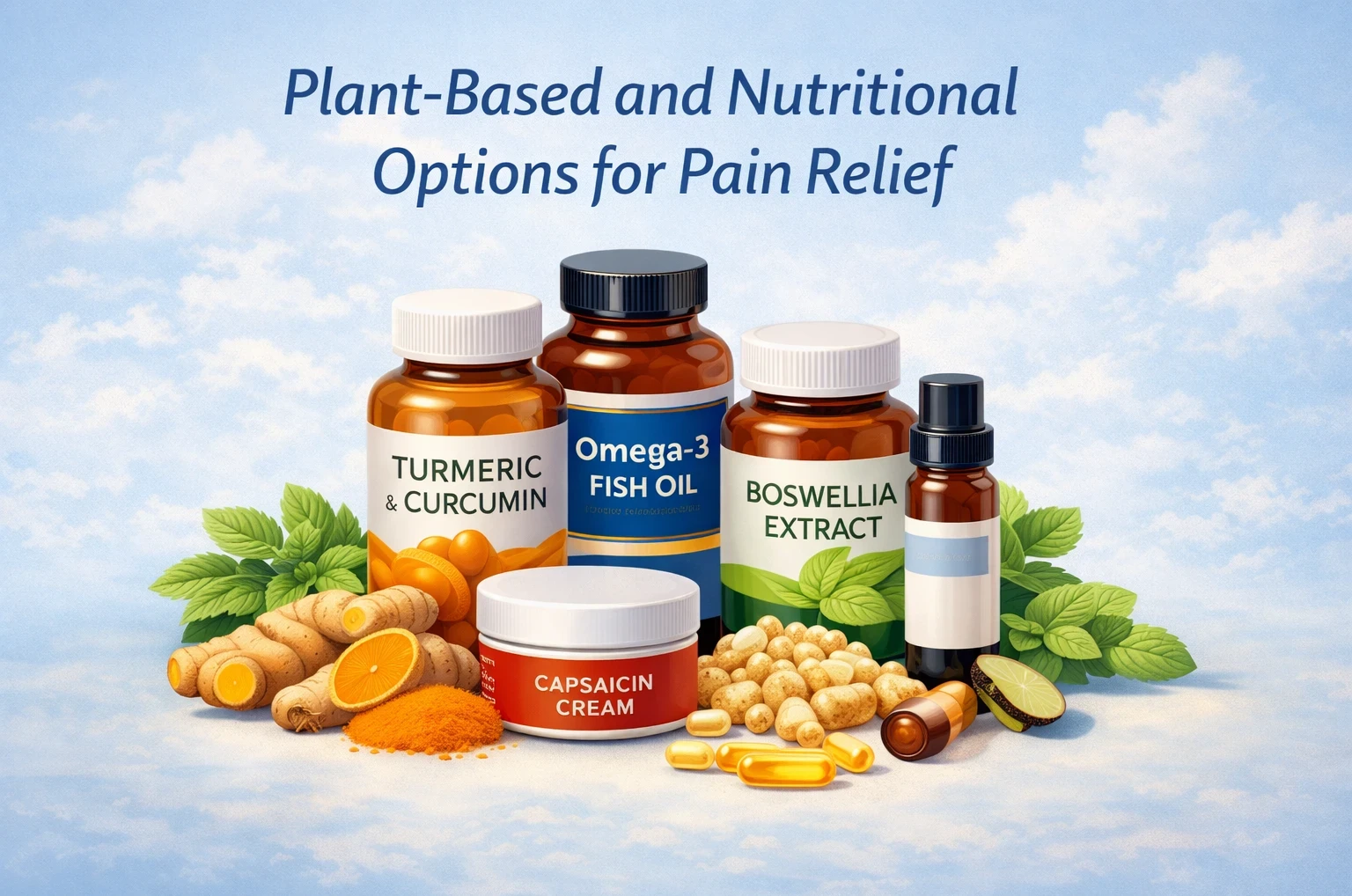
Plant-Based and Nutritional Options for Pain Relief
Curcumin (Turmeric Extract)
Curcumin is the active compound found in turmeric and is widely studied for its anti-inflammatory properties.
It works by influencing inflammatory pathways involved in joint pain, stiffness, and muscle discomfort.
Curcumin is commonly used by people with arthritis or general inflammatory pain.
Because curcumin is poorly absorbed on its own, high-quality supplements often include black pepper extract (piperine) to improve absorption.
This makes curcumin one of the most researched natural alternatives to painkillers for long-term inflammatory support.
Boswellia Serrata
Boswellia, sometimes called Indian frankincense, has been used traditionally to support joint comfort and mobility.
It helps regulate inflammatory processes linked to stiffness and reduced movement, particularly in osteoarthritis.
Boswellia does not work like a painkiller; instead, it supports gradual reduction of inflammation with consistent use.
Ginger
Ginger contains active compounds known as gingerols, which have anti-inflammatory and antioxidant effects.
Ginger is often used for muscle soreness, joint discomfort, and exercise-related pain.
It can be taken as a supplement, added to food, or consumed as tea.
As a gentle option, ginger is frequently included in natural alternatives to painkillers for people sensitive to stronger supplements.
Omega-3 Fatty Acids
Omega-3 fatty acids, found in fish oil and algae-based supplements, play a role in reducing systemic inflammation.
They are commonly used to support joint health and may help reduce stiffness and discomfort over time.
Omega-3s are not fast-acting, but consistent intake supports overall inflammatory balance.
Natural Topical and Physical Approaches
Heat and Cold Therapy

Heat and cold therapy are simple but effective natural alternatives to painkillers.
Cold therapy can help calm swelling and sharp pain after activity, while heat can relax tight muscles and improve circulation in stiff or sore areas.
These approaches are especially helpful for localised pain.
Capsaicin Creams
Capsaicin, derived from chilli peppers, is used in topical creams to reduce pain signalling.It works by reducing substance P, a chemical involved in transmitting pain signals.
Capsaicin creams are often used for joint pain and nerve-related discomfort.
To find out more information on natural alternatives to painkillers go here.
Movement as a Natural Alternative to Painkillers
Gentle, consistent movement is one of the most powerful natural alternatives to painkillers available.
While it may seem counterintuitive, avoiding movement often increases pain sensitivity over time.
Low-impact activities such as walking, swimming, cycling, and controlled strength exercises help restore confidence in movement and support tissue health.
Movement improves circulation, strengthens supportive muscles, and helps retrain the nervous system to interpret sensations more accurately.
For many people, movement becomes a long-term pain-management strategy rather than a short-term fix.
Supplements and Products for Natural Pain Support
High-quality supplement brands focus on clean ingredients, bioavailability, and evidence-based formulations.
Some people also explore supportive products available through trusted online platforms that specialise in nutritional and wellness solutions.
When choosing supplements as natural alternatives to painkillers, it is important to look for transparency, third-party testing, and clearly labelled ingredients.
To find out more information on natural alternatives to painkillers go here
A Balanced, Long-Term Approach
Natural alternatives to painkillers work best when combined rather than used in isolation. For example:
- Anti-inflammatory supplements to support internal balance
- Regular movement to improve strength and confidence
- Heat or cold therapy for symptom relief
- Stress management and sleep support to reduce pain sensitivity
This combined approach focuses on long-term improvement rather than short-term suppression.
To find out more information on natural alternatives to painkillers go here
Affiliate & Educational Disclaimer
This article is for educational purposes only and does not constitute medical advice.
Some links on this page may be affiliate links, meaning the website may earn a small commission at no additional cost to you if a purchase is made.
Always consult a qualified healthcare professional before starting any new supplement, product, or pain-management approach, especially if you have underlying health conditions or are taking medication.