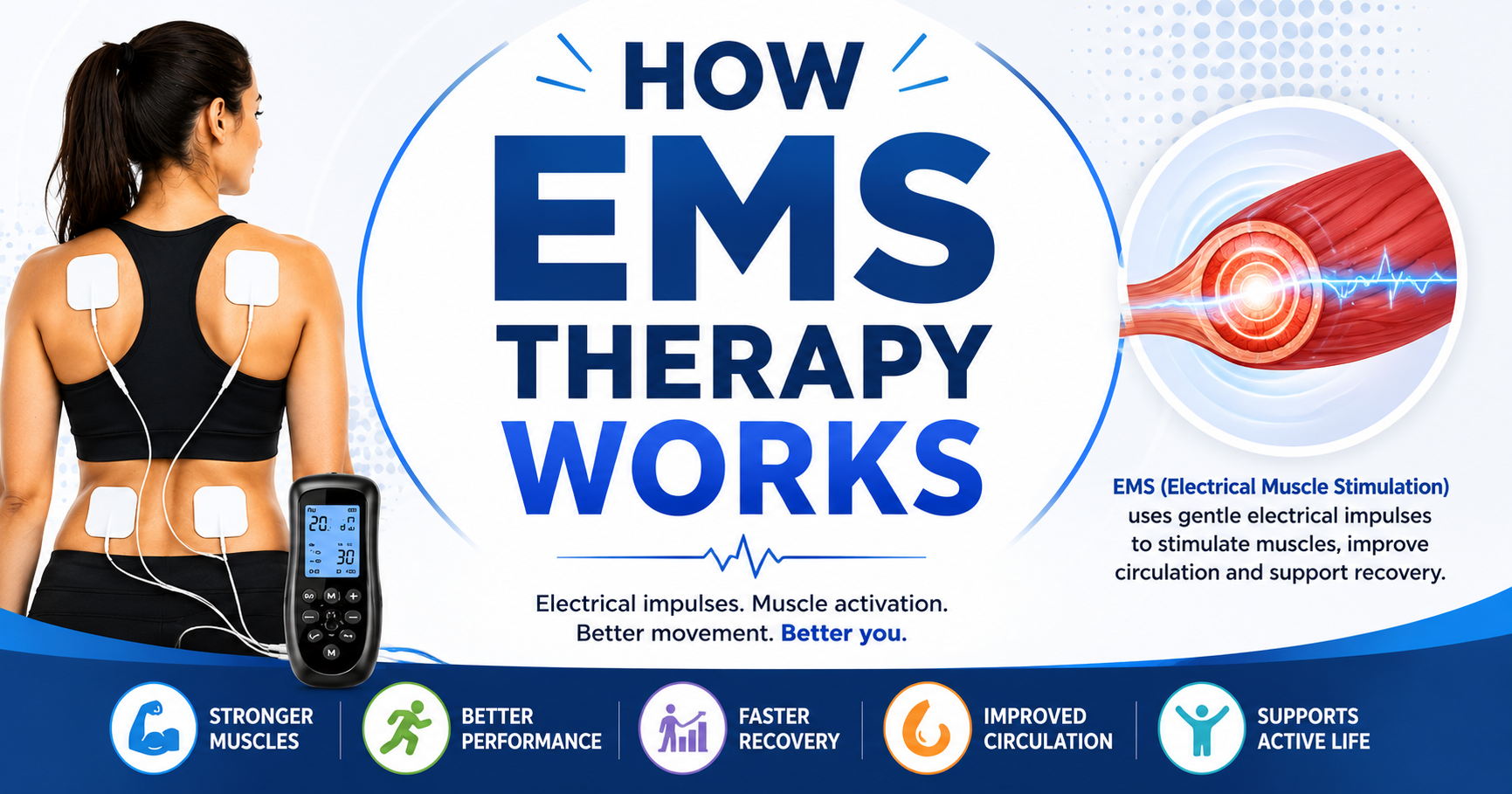
How EMS Therapy Works EMS Therapy Works As
How EMS Therapy Works
How EMS therapy works is interesting because used correctly EMS therapy can have an impact on pain relief.
A lot of people are looking at their options beyond drugs to manage pain, support recovery and improve muscle function.
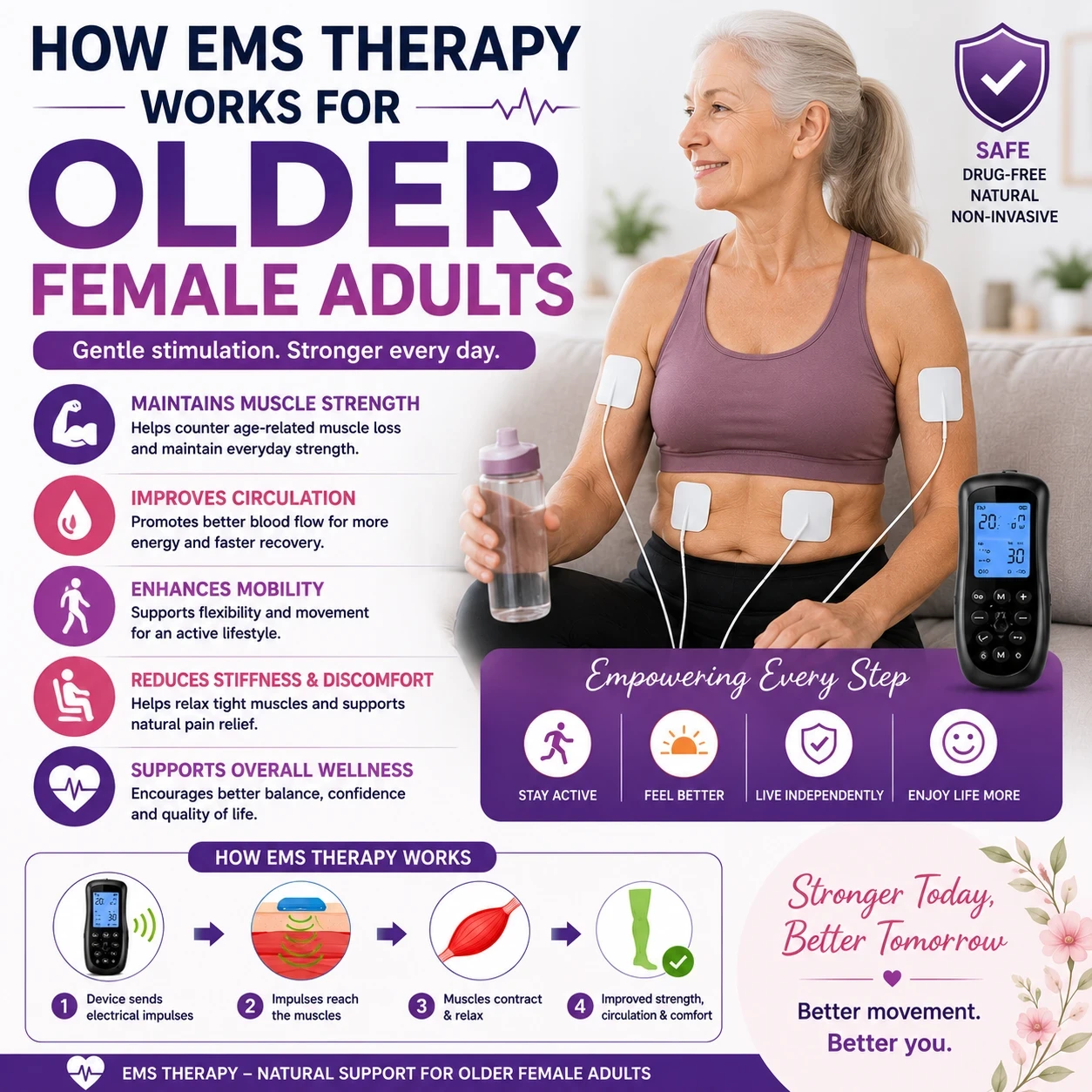
EMS stands for electrical muscle stimulation. It uses gentle electrical impulses to activate muscles through pads placed on the skin. Many people use EMS therapy to support movement, reduce stiffness, and help muscles work more effectively after injury or long periods of inactivity.
Unlike traditional exercise alone, EMS therapy can stimulate muscles even when movement is limited. This is one reason why athletes, physiotherapists, and people with chronic pain often explore EMS therapy as part of a wider recovery plan.
What Is EMS Therapy?
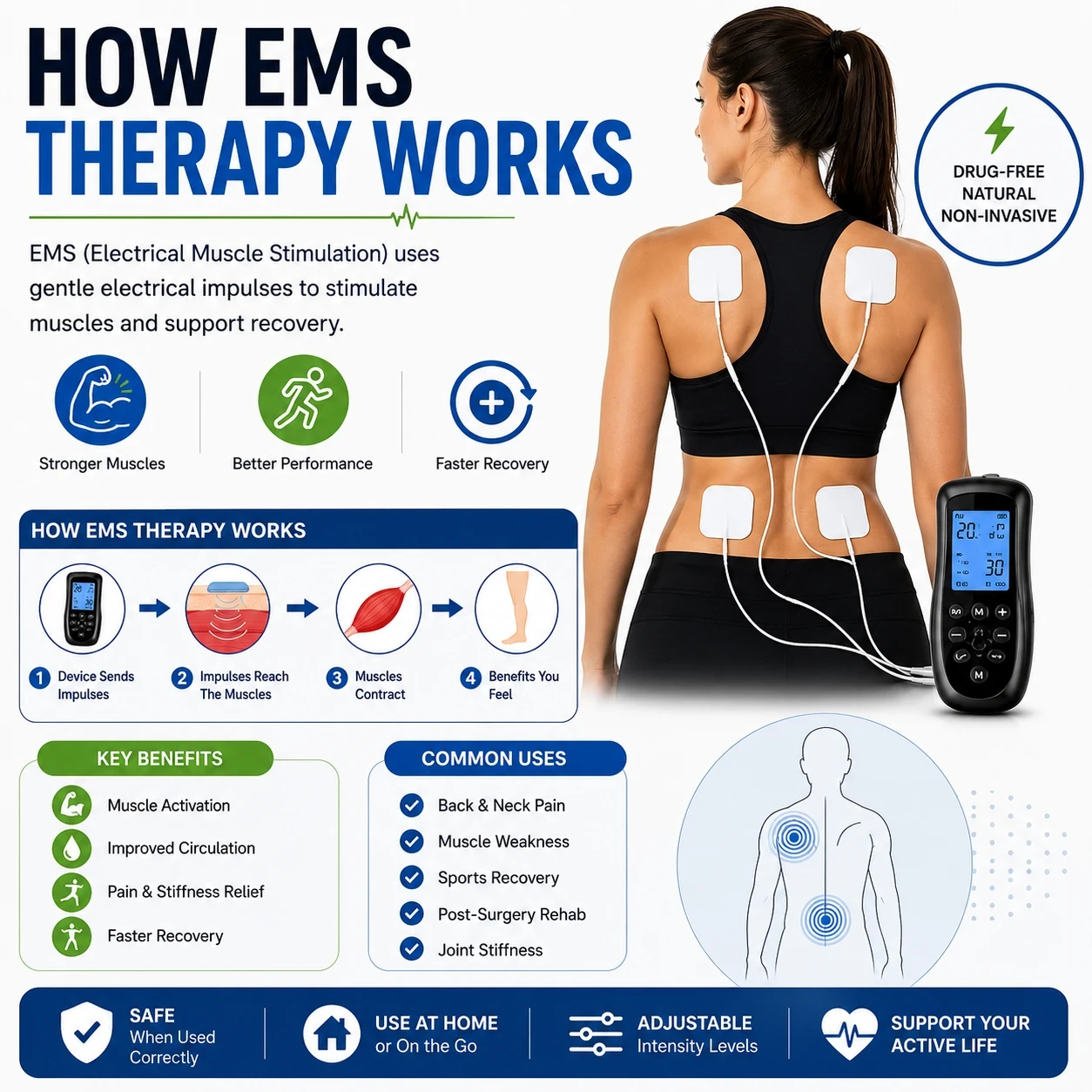
Understanding how EMS therapy works starts with understanding the basics of electrical muscle stimulation. EMS devices send low-level electrical signals through adhesive pads attached to the body. These signals encourage muscles to contract and relax in a controlled way.
The technology has been used in rehabilitation clinics for many years. It is commonly used to help improve circulation, support weak muscles, and assist recovery after surgery or injury.
EMS therapy is different from TENS therapy. TENS mainly targets nerves for pain relief, while EMS focuses more directly on muscle stimulation and contraction.
If you want to learn more about pain-relief technology, read best TENS unit for arthritis.
How it Works on the Muscles
How EMS therapy works involves electrical impulses communicating with the body in a similar way to signals sent naturally from the brain. During movement, the brain sends messages through the nervous system telling muscles to contract. EMS devices imitate part of this process using controlled electrical pulses.
When the pads are placed over targeted muscles, the impulses trigger repeated contractions. These contractions may help:
- Support muscle activation
- Improve circulation
- Reduce muscle stiffness
- Assist rehabilitation exercises
- Support recovery after activity
Some people use EMS therapy after periods of inactivity when muscles have weakened. Others use it alongside stretching, movement therapy, or physiotherapy programs.
Who Uses EMS Therapy?
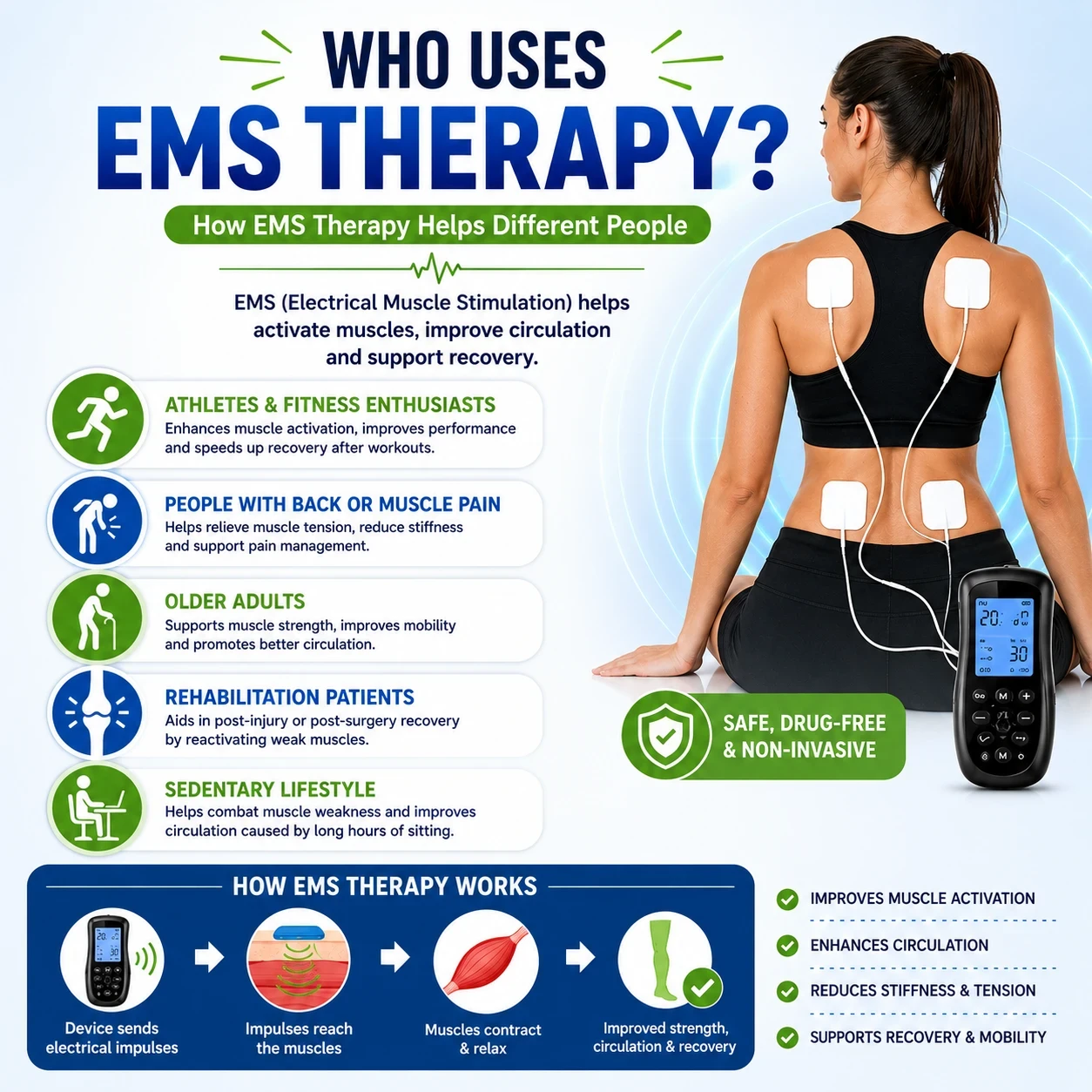
Many different groups are interested in how EMS therapy works. Athletes sometimes use EMS after training sessions to support recovery. Older adults may use it to help maintain muscle activity. Physiotherapists also use EMS during rehabilitation programs.
EMS therapy may also be used by people experiencing:
- Back discomfort
- Muscle weakness
- Joint stiffness
- Reduced mobility
- Post-injury recovery challenges
People managing long-term discomfort sometimes combine EMS with other supportive strategies like heat therapy and gentle exercise.
You can also explore does EMS therapy reduce osteoarthritis pain for more information about how EMS is being discussed for joint-related discomfort.
EMS Therapy and Circulation
Another important part of how EMS therapy works involves circulation. Muscle contractions naturally encourage blood flow. Better circulation may help deliver oxygen and nutrients to muscles and surrounding tissues.
Some people report that EMS sessions leave muscles feeling looser or more active afterward. While results vary between individuals, improved circulation is one reason EMS devices are commonly included in recovery routines.
For people who spend long hours sitting or who struggle with reduced movement, gentle muscle stimulation may help the body stay more active throughout the day.
Can This Therapy Help With Pain?
Research into how EMS therapy works for pain management is still developing, but many users report that it may help reduce discomfort linked to muscle tension and inactivity.
EMS therapy does not cure underlying conditions. However, stimulating muscles may help improve support around painful joints and encourage movement.
Some people combine EMS therapy with:
- Stretching programs
- Walking routines
- Heat therapy
- Massage
- Supportive braces
You may also find this guide helpful: back pain treatment science-backed human guide.
Choosing an EMS Therapy Device
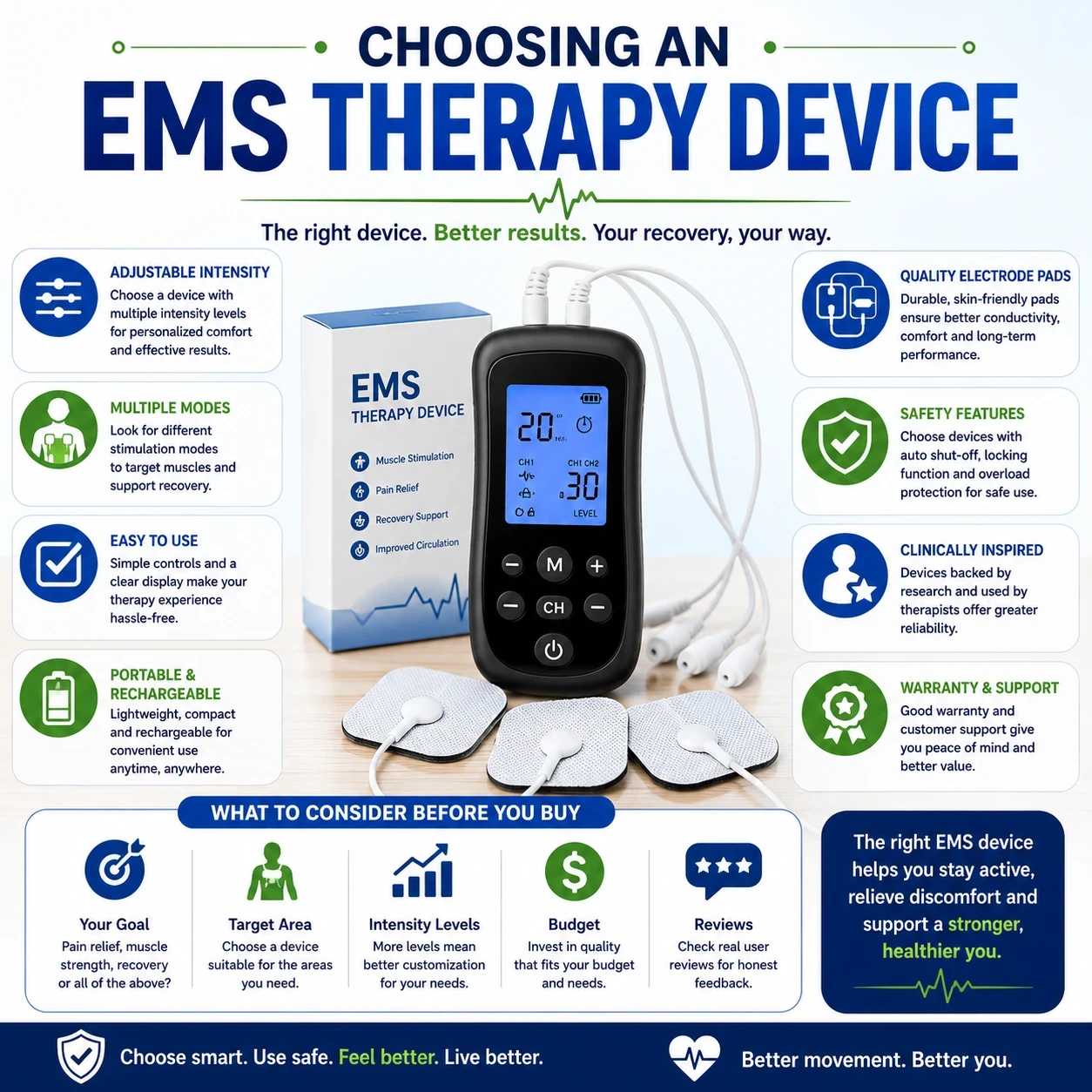
If you are exploring how EMS therapy works, choosing a reliable EMS device is important. Look for devices that offer adjustable intensity settings, comfortable pads, and clear instructions.
Some EMS devices also combine EMS and TENS technology in one unit. This allows users to switch between muscle stimulation and nerve-based pain relief settings depending on their needs.
One option worth exploring is the Vive Health EMS and TENS Unit, which combines multiple therapy modes in a portable design.
People using EMS therapy for the first time should start slowly and follow device instructions carefully.
How Often Should This Therapy Be Used?
How often EMS therapy is used depends on individual goals and comfort levels. Some people use EMS several times per week during rehabilitation, while others use shorter sessions after exercise or during recovery periods.
It is usually recommended to begin with lower intensity settings and shorter sessions until the body adapts to the stimulation. Consistency often matters more than intensity.
If pain increases or irritation develops, therapy should be paused and medical advice should be considered.
Safety Considerations
Although how EMS therapy works may sound simple, it is still important to use these devices responsibly. EMS therapy may not be suitable for everyone.
People with pacemakers, certain heart conditions, epilepsy, or pregnancy should seek medical guidance before using EMS devices.
Pads should never be placed over broken skin, directly over the heart, or on sensitive areas of the body.
Most users tolerate EMS therapy well when devices are used correctly and according to instructions.
The Growing Interest in EMS Therapy
The growing interest in how EMS therapy works reflects a wider shift toward non-drug approaches to pain management and muscle recovery. Many people are searching for supportive tools that encourage movement and help them stay active without relying entirely on medication.
EMS therapy is not a miracle solution, but it may become a useful part of a balanced recovery and movement plan when combined with healthy lifestyle habits.
Conclusion
How EMS therapy works comes down to controlled electrical impulses stimulating muscles in a safe and targeted way. By encouraging muscle contractions, EMS therapy may support circulation, recovery, movement, and muscle activation for some people.
As interest in non-invasive pain support continues to grow, EMS devices are becoming more widely used at home and in rehabilitation settings. Choosing quality devices, using sensible intensity levels, and combining EMS with movement and healthy habits may help people get the best results.
External Research Study:
Emerging Osteoarthritis Treatment Involves Electrically Stimulating Muscles