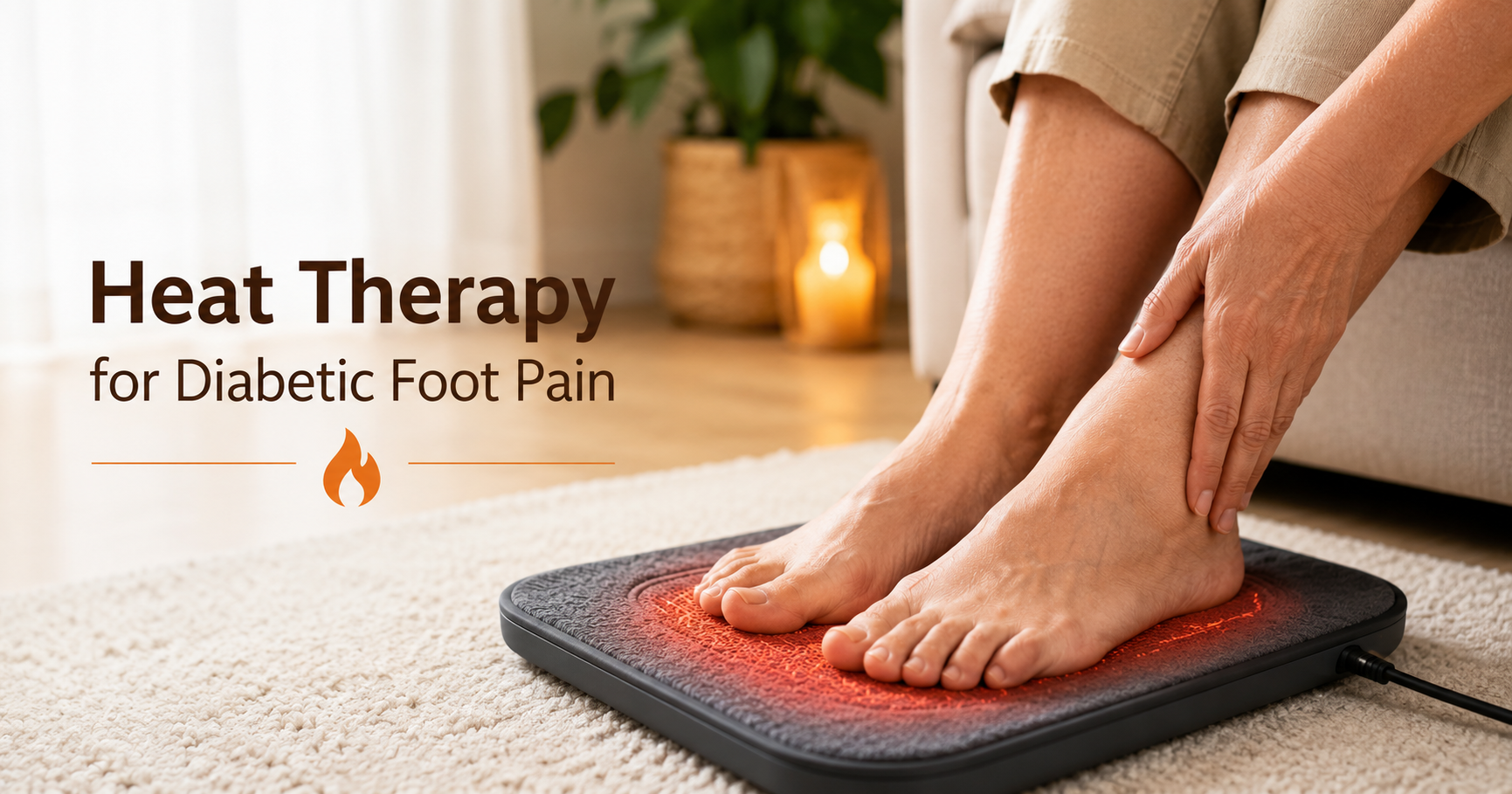
Heat Therapy For Diabetic Foot Pain Helpful Ways To Relieve Pain
Heat Therapy for Diabetic Foot Pain
Heat therapy for diabetic foot pain is becoming a popular option for people looking for gentle ways to ease burning, aching, stiffness, and discomfort in the feet. Many people living with diabetes experience nerve irritation, poor circulation, or ongoing sensitivity that can make standing, walking, or sleeping uncomfortable.
While heat therapy is not a cure for diabetic foot pain, it may help improve comfort, relaxation, and blood flow when used carefully.
Diabetic foot pain can affect daily life in many ways. Some people describe sharp tingling sensations, while others experience numbness mixed with soreness or cramping. The discomfort may come and go or remain constant throughout the day. Heat therapy offers a simple approach that many people use alongside lifestyle changes, supportive footwear, movement, and professional medical care.

What Causes Diabetic Foot Pain?
Diabetic foot pain is often linked to nerve damage known as diabetic neuropathy. High blood sugar levels over time can affect the nerves and blood vessels in the feet. This may lead to pain, tingling, numbness, burning sensations, or increased sensitivity.
Poor circulation can also contribute to diabetic foot pain.
Reduced blood flow may slow healing and increase stiffness in the muscles and soft tissues.
Some people notice the discomfort becomes worse during colder weather, after long periods of standing, or late at night.
Other factors that may contribute include:
- Nerve irritation
- Poor circulation
- Muscle tightness
- Foot swelling
- Joint stiffness
- Improper footwear
- Lack of movement
Understanding the cause of the discomfort is important because diabetic foot pain can sometimes hide injuries or skin damage that may not be immediately noticeable.
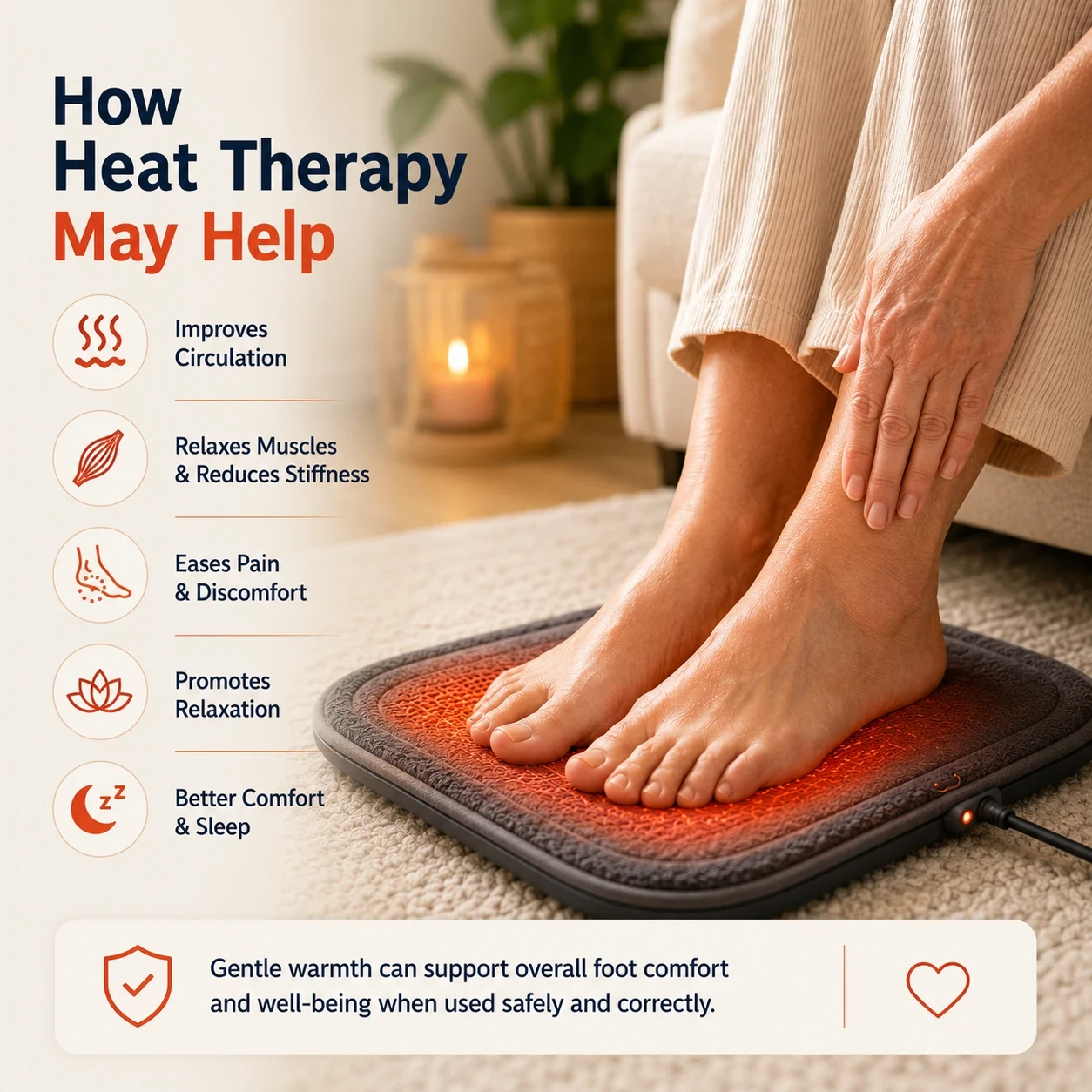
How Heat Therapy for Diabetic Foot Pain May Help
Heat therapy for diabetic foot pain works by gently warming the tissues in the feet. Warmth may encourage circulation, relax muscles, and reduce feelings of tightness or stiffness. Many people find that warmth creates a calming effect that temporarily eases discomfort.
Some people use heating pads, warm foot wraps, heated slippers, or warm water foot baths for short periods. Others prefer infrared heat products designed to provide steady warmth without excessive heat exposure.
Potential benefits of heat therapy may include:
- Temporary pain relief
- Improved relaxation
- Reduced stiffness
- Better comfort during rest
- Improved circulation support
- A soothing warming sensation
Many people combine heat therapy with other supportive approaches such as gentle movement, stretching, massage, or supportive footwear.
Explore heat therapy products Here.
Heated footwear boot therapy here.
Using Heat Therapy Safely
Safety is extremely important when using heat therapy for diabetic foot pain. Some people with diabetic neuropathy may have reduced sensation in their feet. This means they may not notice when heat becomes too hot, increasing the risk of burns or skin damage.
To reduce risk:
- Always use low or moderate heat
- Never place heating pads directly on bare skin
- Limit sessions to short periods
- Check the skin regularly
- Avoid sleeping with heating devices
- Test water temperature carefully before foot baths
- Stop immediately if redness or irritation develops
People with severe circulation problems, open wounds, ulcers, or infections should speak with a healthcare professional before trying heat therapy.
Explore how to use heat therapy for foot pain here.
Heat Therapy and Circulation
One reason people explore heat therapy for diabetic foot pain is the connection between warmth and circulation. Warmth may help blood vessels widen slightly, allowing blood to move more freely through the area. Better circulation may help reduce feelings of coldness or stiffness in the feet.
Although heat therapy may improve comfort, it is important to understand that it does not reverse nerve damage caused by diabetes. Instead, it may provide temporary support as part of a broader pain management plan.
Some people notice the best results when using gentle heat in combination with:
- Regular walking
- Foot stretching exercises
- Healthy blood sugar management
- Hydration
- Comfortable footwear
- Daily foot care routines

Different Types of Heat Therapy
There are several ways people use heat therapy for diabetic foot pain depending on comfort levels and personal preference.
Heating Pads
Electric heating pads provide controlled warmth and are commonly used while resting. A towel or cloth barrier should always be placed between the skin and the heating surface.
Warm Foot Baths
Warm water foot baths may help relax sore feet and reduce tension. Water should never be too hot, especially for people with reduced sensation.
Infrared Heat Therapy
Some people use infrared heat devices because they deliver gentle penetrating warmth. These products are often marketed for muscle relaxation and circulation support.
Heated Socks or Slippers
Heated footwear products may help keep feet warm during colder weather. Temperature settings should remain low and comfortable.
When Heat Therapy May Not Be Appropriate
Heat therapy for diabetic foot pain is not suitable for everyone. People with open sores, skin infections, severe swelling, or active ulcers should avoid direct heat unless advised by a healthcare professional.
If diabetic foot pain suddenly becomes severe, changes colour, or is linked to swelling or wounds, medical attention should be sought promptly.
Signs that require professional assessment may include:
- Skin breakdown
- Foot ulcers
- Severe redness
- Loss of balance
- Rapid swelling
- Signs of infection
- Increasing numbness

Simple Lifestyle Habits That May Help
Many people find the best results come from combining heat therapy with daily foot care and healthy habits. Small changes may help reduce stress on the feet and improve comfort over time.
Helpful habits may include:
- Checking the feet daily
- Keeping blood sugar levels controlled
- Wearing cushioned shoes
- Avoiding walking barefoot
- Staying physically active
- Maintaining a healthy weight
- Using supportive insoles
Heat therapy works best as part of a broader self-care routine rather than a standalone solution.
Read more on foot pain causes.
Final Thoughts on Heat Therapy for Diabetic Foot Pain
Heat therapy for diabetic foot pain may offer temporary comfort for people dealing with stiffness, aching, burning sensations, or tension in the feet. Gentle warmth can help many people relax and improve overall comfort levels, particularly during colder weather or periods of inactivity.
However, caution is essential because reduced sensation in diabetic feet can increase the risk of accidental burns. Using low heat, limiting treatment time, and checking the skin regularly are important safety steps.
For many people, combining heat therapy with movement, supportive footwear, blood sugar management, and daily foot care may provide the most balanced approach to long-term comfort and foot health.
More on foot pain.
External Reference:
Diabetic Foot Problems – National Institute of Diabetes and Digestive and Kidney Diseases