Folic Acid for Energy Levels
Folic acid for energy levels is often overlooked, yet it plays a quiet but essential role in how your body produces and maintains energy throughout the day.
If you’ve been feeling run down, mentally foggy, or low on stamina, understanding how folic acid works could help you make smarter, supportive choices.
What Is Folic Acid and Why It Matters
Folic acid is the synthetic form of vitamin B9, a water-soluble vitamin that your body needs for several important functions.
Naturally occurring folate is found in foods like leafy greens, beans, and citrus fruits, but many people rely on supplements to maintain consistent levels.
When it comes to folic acid for energy levels, its importance comes down to how your body creates and uses energy at a cellular level.
Without enough folic acid, your body can struggle to perform basic processes efficiently.
Shop for Quality Assured Folic Acid Supplements Here
How Folic Acid Supports Energy Production
Your body doesn’t just “create energy” randomly—it relies on a series of biochemical reactions.
Folic acid is largely invested in the majority of these:
Red blood cell formation (oxygen delivery)
DNA synthesis and repair
Amino acid metabolism
When these systems run smoothly, your energy levels tend to feel more stable and consistent.
Low levels, on the other hand, can lead to fatigue, weakness, and reduced mental clarity—often subtle at first, but noticeable over time.
The Link Between Folic Acid and Fatigue
One of the most common signs of low folic acid is persistent tiredness.
This is often linked to anemia, where the body produces fewer healthy red blood cells.
Less oxygen delivery means less usable energy.
That’s why folic acid for energy levels is often discussed alongside general fatigue and recovery.
While it’s not a stimulant, it supports the systems that naturally keep your energy balanced.
If you’re noticing these symptoms, it may help to review common warning signs in this guide on folic acid deficiency symptoms.
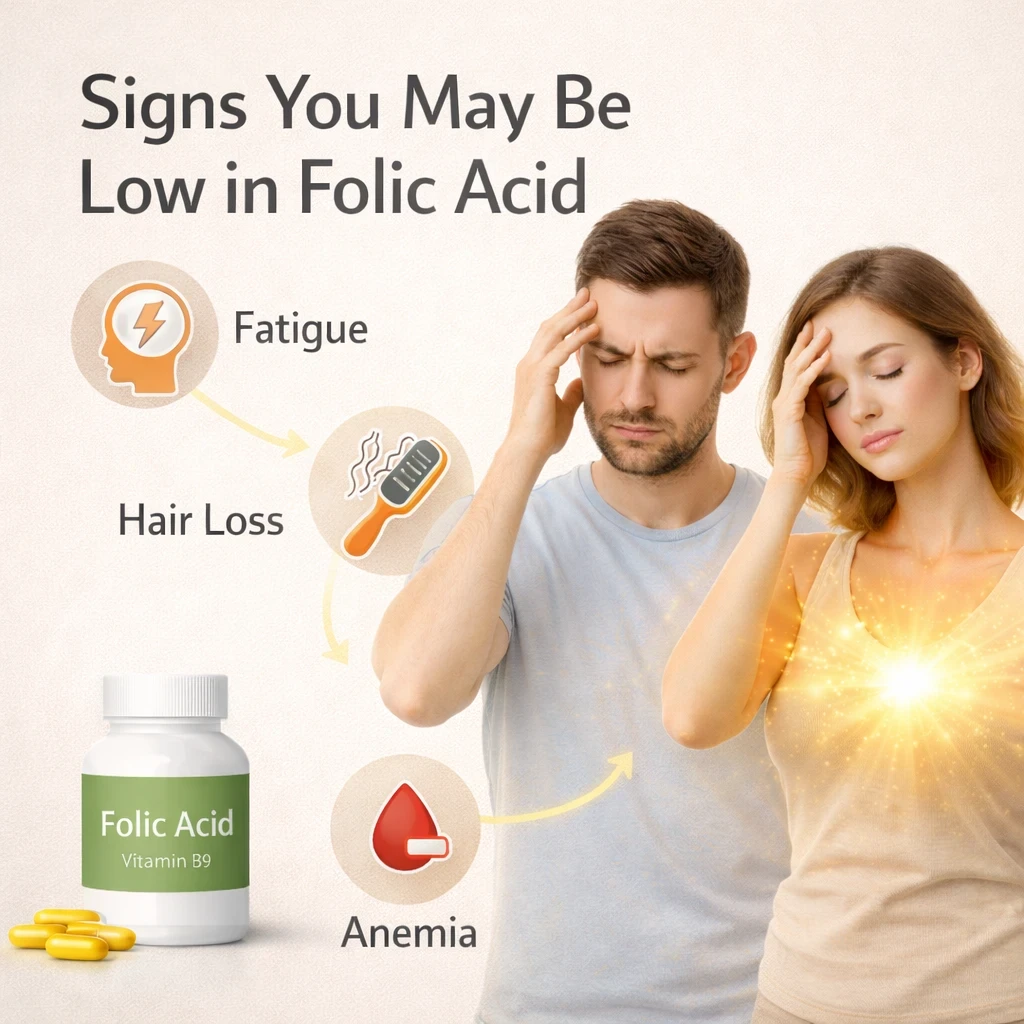
Signs You May Be Low in Folic Acid
Not everyone recognises the signs early, but here are a few indicators:
Ongoing fatigue
Brain fog or poor concentration
Pale skin
Irritability
These can build gradually, making them easy to overlook.
Shop for Quality Assured Folic Acid Supplements Here
Who May Benefit Most
Certain groups are more likely to benefit from improving folic acid intake:
Women of childbearing age
People with low dietary intake
Those experiencing ongoing fatigue
Older adults
If you’re unsure how to improve intake, this practical guide on how to increase folic acid intake safely gives simple, safe strategies.
Food Sources That Support Natural Energy
Getting folate from food is often the best place to start. Strong options include:
Leafy greens (spinach, kale) Lentils and beans
Citrus fruits
Avocados
Fortified cereals
These foods support folic acid for energy levels naturally, while also improving overall nutrition.

Supplements: When They Make Sense
Diet isn’t always enough, especially if your body has higher demands. Folic acid supplements can help maintain consistent levels—but quality matters.
If you’re considering supplements, this guide on quality folic acid supplements can help you choose more effectively.
How Much Folic Acid Do You Need?
Most adults need around 400 mcg daily, though needs can vary depending on lifestyle and health factors. Taking more than needed doesn’t improve energy further—it’s about balance and consistency.
Additional Benefits Beyond Energy
While focusing on folic acid for energy levels, it also supports: Brain function Heart health Healthy pregnancy Cell repair and renewal.
This makes it a well-rounded nutrient, not just an “energy” vitamin.
What Folic Acid Can and Can’t Do
Folic acid can:
Support natural energy production Reduce fatigue linked to deficiency Improve overall balance
It cannot:
Provide instant energy like caffeine Replace sleep or hydration
Fix deeper health issues alone
A Balanced Conclusion
If your energy has been low for a while, folic acid is worth considering—but it’s just one part of the picture.
Better sleep, hydration, stress management, and nutrition all work together.
Even small improvements—like adding folate-rich foods or correcting a deficiency—can make a noticeable difference over time.
Frequently Asked Questions
Can folic acid boost energy quickly?
No, it works gradually by supporting internal processes.
Is folic acid the same as folate?
No—folate is natural, folic acid is synthetic.
Can deficiency cause fatigue?
Yes, especially when linked to anemia.
Should I take it daily?
Many people benefit from daily intake, but stick to recommended amounts.
Scientific Reference https://pubmed.ncbi.nlm.nih.gov/19924338/