Best Treatments For Rib Cage Pain
Best Treatments for Rib Cage Pain
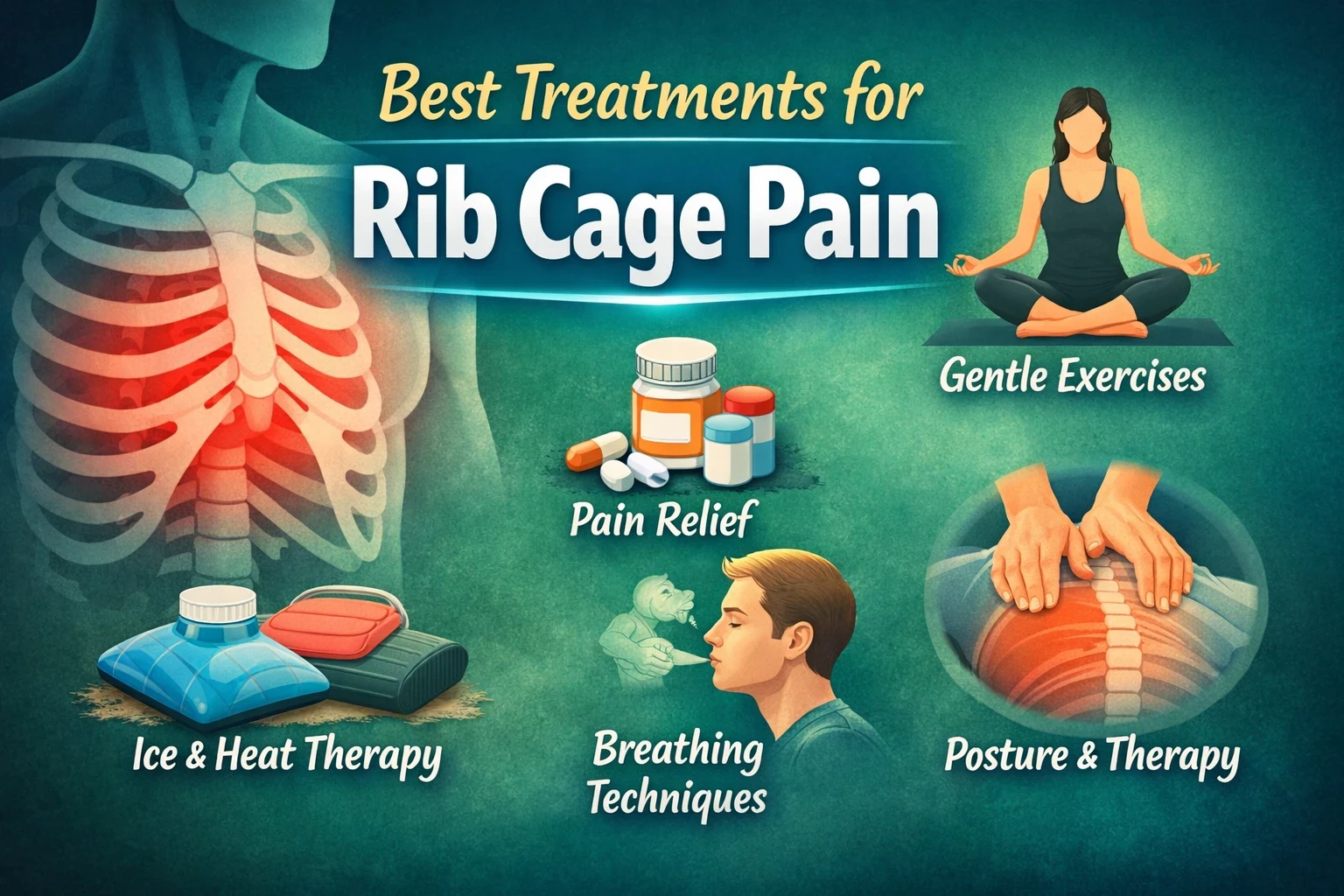
Best treatments for rib cage pain often depend on the underlying cause, but many cases involve muscle strain, inflammation, or irritation of the cartilage where the ribs connect to the breastbone.
Because the rib cage expands and contracts with every breath, even small injuries or inflammation can create sharp or persistent discomfort.
Understanding the best treatments for rib cage pain can help reduce inflammation, restore normal movement, and support a smoother recovery.
Understanding Rib Cage Pain
Before exploring the best treatments for rib cage pain, it helps to understand why rib cage pain occurs.
The rib cage is made up of bones, cartilage, muscles, and joints that move constantly during breathing and upper-body movement.
Inflammation of the rib cartilage is a common cause of pain in this region.
One condition associated with rib cartilage irritation is Tietze syndrome, where swelling and inflammation develop where the ribs connect to the breastbone.
Other common contributors include:
- Intercostal muscle strain
- Rib joint irritation
- Poor posture and chest muscle tension
- Repetitive upper-body activity
- Thoracic spine stiffness
- Stress-related breathing patterns
Recognising these causes helps guide the best treatments for rib cage pain.
Temporary Rest and Activity Modification
One of the most effective best treatments for rib cage pain is temporary rest combined with activity modification.
If the pain started after lifting, coughing, or sudden movement, the rib joints or surrounding muscles may be irritated.
Reducing activities that aggravate symptoms allows inflammation to settle.
Helpful strategies include:
- Avoid heavy lifting for a short period
- Reduce repetitive upper-body movement
- Modify activities that trigger pain
- Maintain supportive posture while sitting
Short-term rest can allow irritated tissues to recover, but prolonged inactivity should be avoided.
Gradual movement is often recommended as part of recovery strategies discussed in pain relief techniques.

Anti-Inflammatory Approaches
Reducing inflammation is another important component of the best treatments for rib cage pain.
Inflammation around rib joints or cartilage can cause sharp discomfort when breathing, twisting, or coughing.
Managing inflammation can help relieve pressure on these sensitive structures.
Common strategies include:
- Anti-inflammatory medications
- Ice therapy during acute irritation
- Heat therapy to relax tight muscles
- Gentle mobility exercises
Some individuals also explore nutritional approaches that support inflammation control.
These options are discussed in best supplements for pain relief.
Plant-based options are also explored in natural pain relief herbs, where several traditional anti-inflammatory herbs are discussed.
Gentle Stretching and Rib Mobility Exercises
Once acute irritation begins to improve, movement becomes one of the best treatments for rib cage pain.
The rib cage relies on coordinated movement between the chest, spine, and shoulders.
When these structures become stiff, pressure can build in the rib joints.
Helpful exercises may include:
- Chest opening stretches
- Shoulder blade mobility exercises
- Gentle torso rotations
- Thoracic spine extension exercises
Restoring mobility helps reduce tension around the rib cage and supports more comfortable breathing.
Movement-based recovery strategies are also explored in how to cope with chronic pain, which explains how gradual activity supports pain recovery.
Breathing and Relaxation Techniques
Breathing patterns can strongly influence rib cage discomfort.
Shallow breathing or chest-dominant breathing can overload the muscles between the ribs.
For this reason, breathing techniques are often included among the best treatments for rib cage pain.
Helpful methods include:
- Diaphragmatic breathing
- Slow controlled breathing
- Gentle rib expansion exercises
- Relaxation techniques that reduce chest tension
These approaches encourage more balanced rib cage movement and help calm the nervous system.
You can learn more about the relationship between the nervous system and pain in pain education and how pain works.

Posture Correction and Thoracic Spine Mobility
Poor posture is another common contributor to rib cage pain.
Sitting for long periods with rounded shoulders can place excessive strain on the rib joints and chest muscles.
Improving posture is therefore one of the best treatments for rib cage pain in many situations.
Helpful adjustments include:
- Sitting with the chest open and shoulders relaxed
- Taking regular breaks from prolonged sitting
- Performing thoracic spine mobility exercises
- Strengthening upper-back muscles
These strategies reduce mechanical stress on the rib cage and support better movement patterns.
A Balanced Perspective on Rib Cage Pain Treatment
Most cases of rib cage pain improve gradually with conservative care.
As inflammation settles and mobility improves, symptoms often reduce over time.
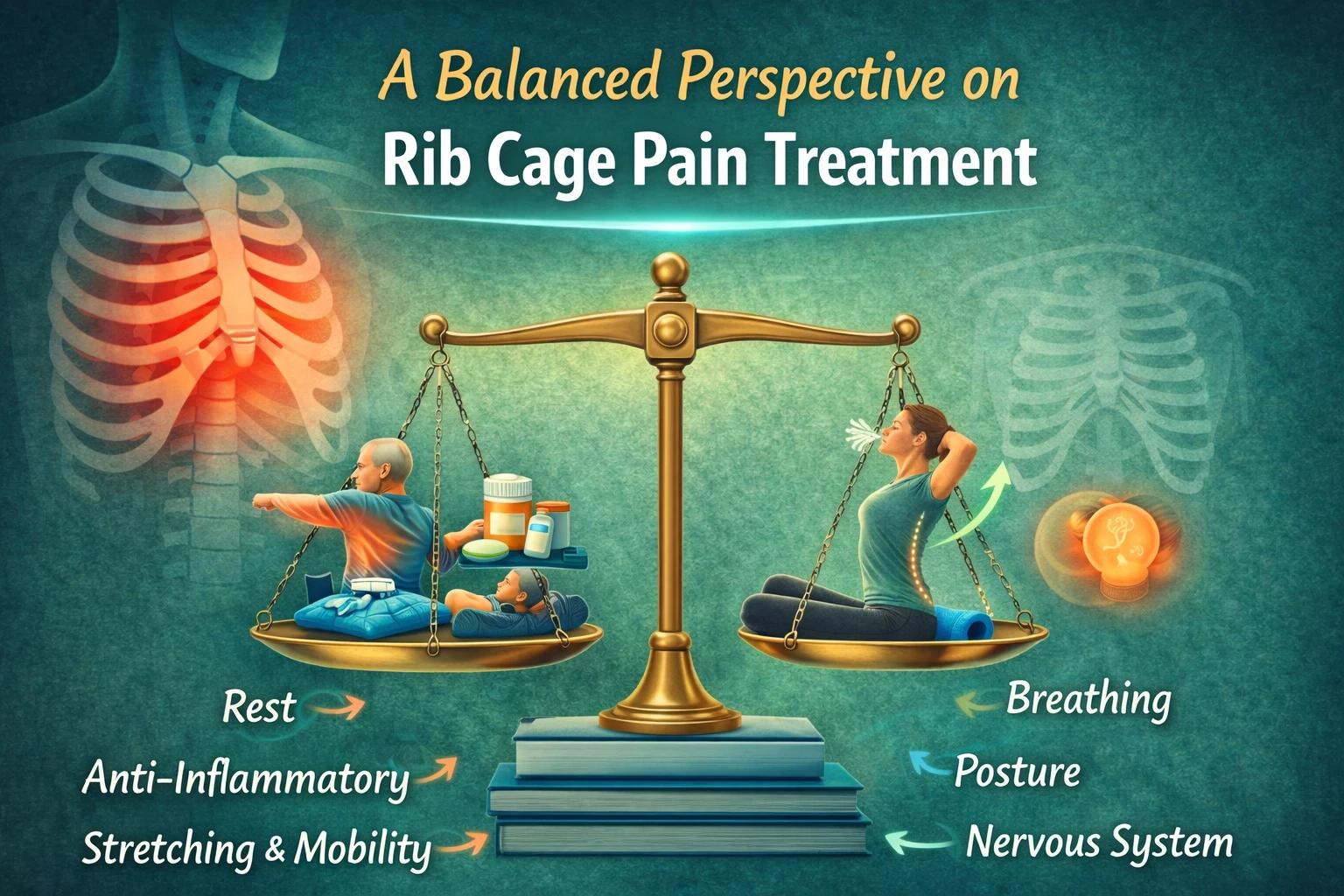
The best treatments for rib cage pain usually involve combining several approaches rather than relying on a single method.
These may include:
- Activity modification
- Gentle stretching and mobility work
- Anti-inflammatory strategies
- Breathing exercises
- Posture improvement
- Nervous system calming techniques
Because pain is influenced by both physical and neurological factors, modern pain management often focuses on layered strategies that support the whole body.
If symptoms persist, worsen, or are associated with chest pressure or breathing difficulty, medical assessment is important to rule out other conditions.
For most people, however, combining movement, posture correction, and inflammation control can gradually restore comfort and allow the rib cage to move freely again.
FAQ: Best Treatments for Rib Cage Pain
What is the fastest way to relieve rib cage pain?
The fastest relief often involves combining several of the best treatments, including temporary rest, anti-inflammatory strategies, and gentle breathing exercises.
Ice packs can help during the early stages of inflammation, while heat therapy may relax tight muscles once the irritation begins to settle.
How long does rib cage pain usually last?
Rib cage pain caused by muscle strain or inflammation often improves within a few days to a few weeks.
Recovery may be faster when supportive approaches such as posture correction, gentle stretching, and strategies discussed in pain relief techniques are used consistently.
Can poor posture cause rib cage pain?
Yes. Poor posture can place strain on the muscles and joints around the rib cage, particularly when sitting for long periods with rounded shoulders.
Improving posture and restoring thoracic spine mobility can be important parts of the best treatments.
When should I see a doctor for rib cage pain?
Medical advice should be sought if rib cage pain is severe, persistent, or accompanied by symptoms such as shortness of breath, chest pressure, dizziness, or fever.
While most rib cage pain is related to musculoskeletal causes, chest pain should always be assessed carefully.
Can stretching help rib cage pain?
Yes. Gentle stretching exercises that open the chest and improve thoracic spine mobility may reduce tension in the muscles between the ribs.
Movement strategies similar to those used in chronic pain recovery approaches can help restore normal rib movement and support gradual healing.
Scientific Studies
https://pubmed.ncbi.nlm.nih.gov/29667876/
https://pubmed.ncbi.nlm.nih.gov/31189034/
https://pubmed.ncbi.nlm.nih.gov/28771643/