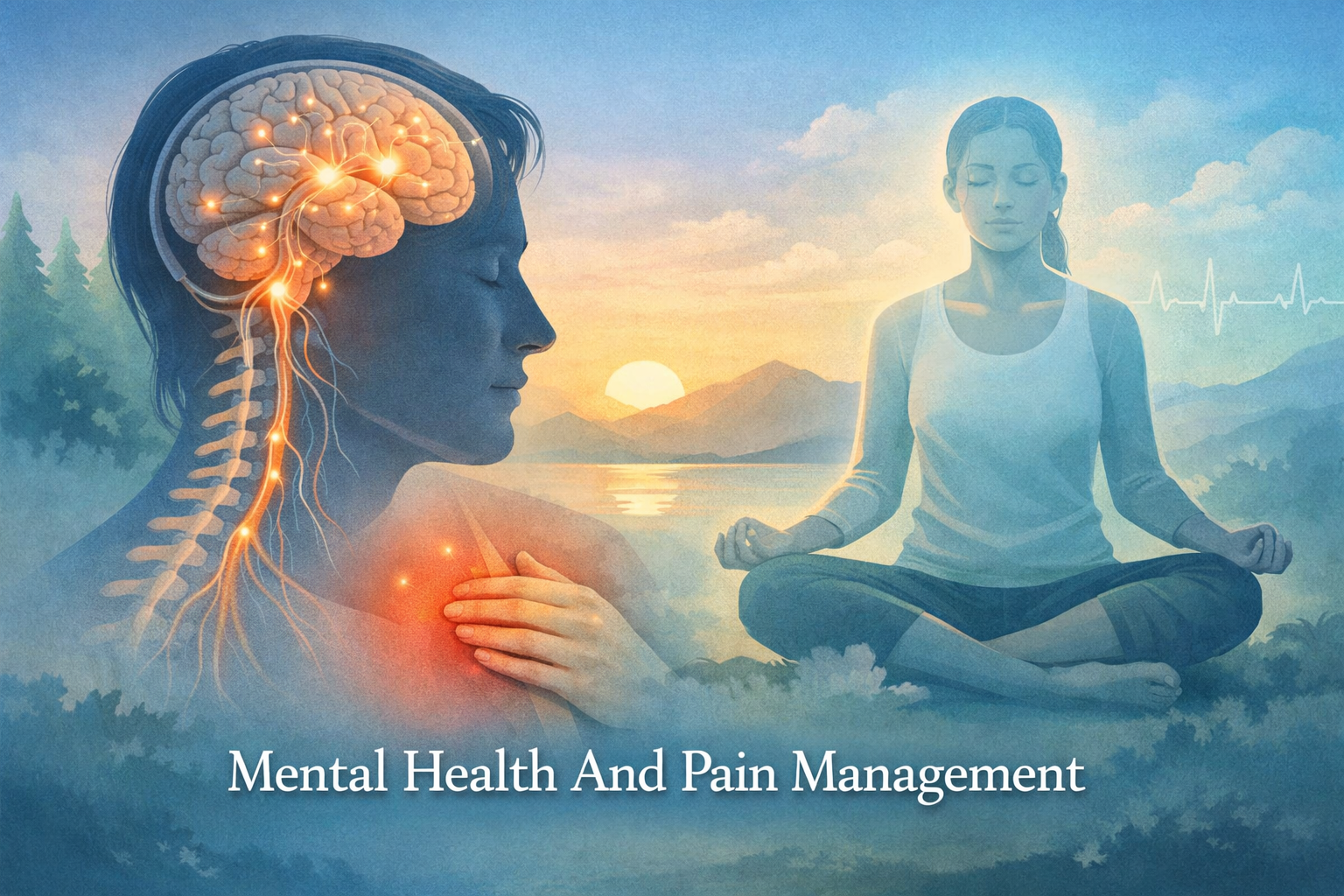
Mental Health And Pain Management
Mental Health And Pain Management
Mental Health And Pain Management Through the lens of Mental Health And Pain Management helps explain why symptoms fluctuate even when no new physical injury is present.
This pillar article offers a steady, repeatable approach designed to reduce nervous system overload and support long-term recovery.
Understanding the Connection Between Mental Health And Pain Management
Pain is not a simple warning signal from injured tissue. It is a protective response generated by the nervous system.
When the brain senses threat—whether physical, emotional, or psychological—it increases sensitivity as a form of protection. Stressful thoughts, anxiety, and ongoing worry can all raise this protective response.
Key influences include:
- Emotional pressure and overload
- Fear-driven interpretations of pain
- Reduced confidence in movement
- Prolonged stress responses
Pain shaped by these factors is still genuine. The difference lies in how the nervous system processes information.
The Nervous System’s Central Role in Pain
Your nervous system constantly evaluates safety.
When it concludes that conditions are unsafe, pain output increases to encourage protection and caution.
Sensitivity often rises due to:
- Alarmist explanations about pain
- Constant focus on symptoms
- Irregular or poor sleep
- Avoidance of normal movement
Learning how pain is produced can interrupt this cycle:
Mental Health Factors That Commonly Intensify Pain
Mental Health And Pain Management frequently overlap in predictable ways.
Anxiety
- Heightened awareness of bodily sensations
- Persistent anticipation of flare-ups
- Increased muscle tension
Low Mood
- Reduced engagement with daily activities
- Lower belief in recovery
- Withdrawal from movement
Prolonged Stress
- Disturbed sleep patterns
- Slower physical adaptation
- Ongoing nervous system activation
These responses are protective by design, not personal failings.
Practical Approaches to Mental Health And Pain Management
Effective pain management focuses on lowering perceived threat rather than forcing the body to “push through.”
Use Gentle Movement to Restore Confidence
Movement becomes helpful when it feels safe and controllable:
- Short walks
- Light mobility exercises
- Gradual strengthening within tolerance
Understanding how movement load interacts with pain can reduce fear:
Reduce Fear Through Clear Explanations
Fear heightens pain sensitivity. Clarity reduces it.
- Pain does not automatically mean harm
- Symptoms can persist without damage
- Confidence improves functional outcomes
Education often reduces pain even before physical changes occur.
Support Sleep Without Pressure
Sleep disruption increases pain sensitivity, but chasing “perfect sleep” often backfires.
Helpful strategies include:
- Consistent sleep routines
- Minimising evening stimulation
- Prioritising comfort over performance
Small improvements still support nervous system regulation.
Acknowledge Emotional Load
Mental Health And Pain Management improve when emotional stress is recognised rather than ignored.
- Slow breathing techniques
- Writing thoughts related to pain
- Talking openly about stress and uncertainty
Unaddressed emotional strain often sustains pain cycles.
For further guidance:
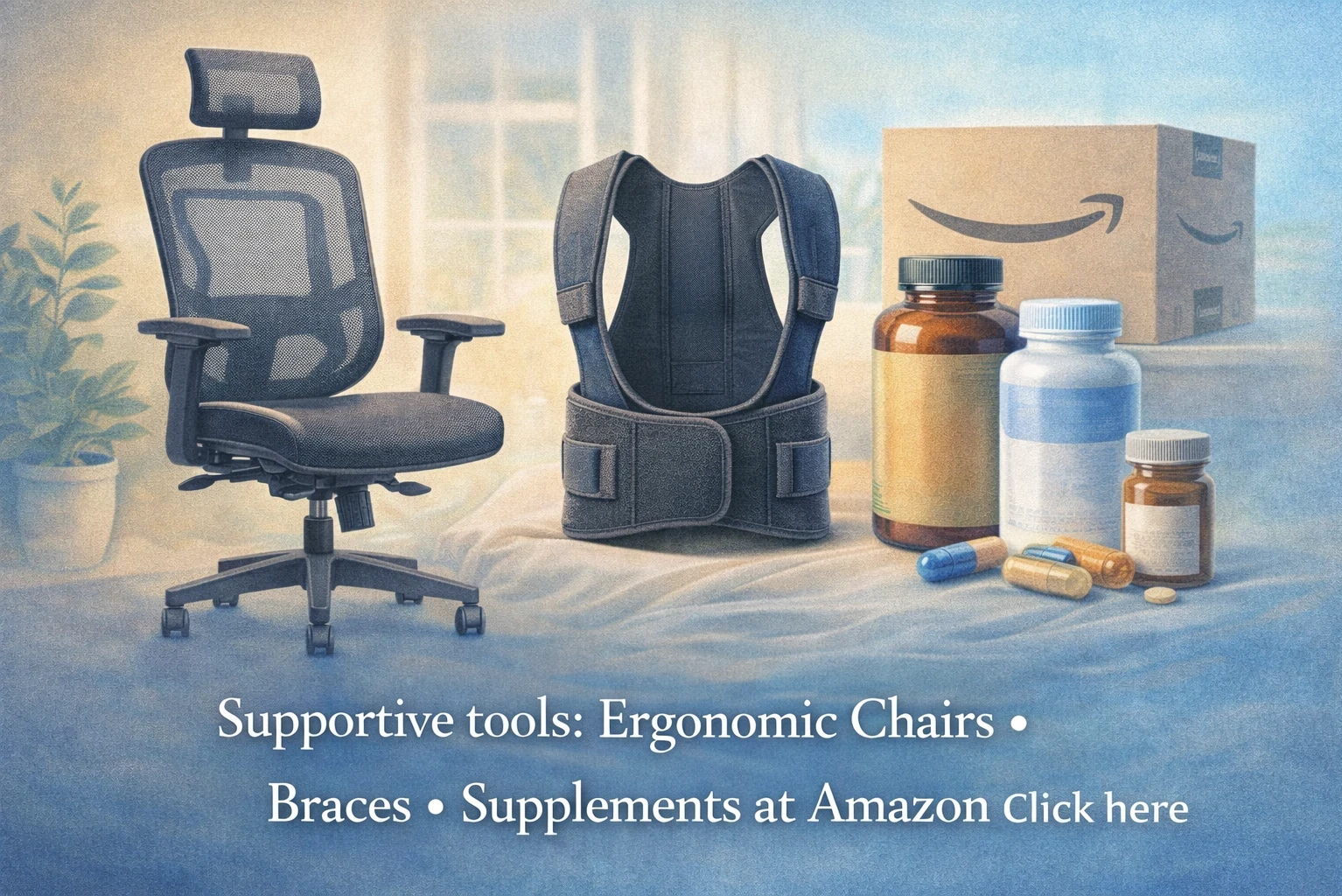
The Role of Supportive Tools
Ergonomic chairs, braces, and supplements can reduce daily strain and improve comfort. However, they work best when used as supportive aids rather than primary solutions.
Most effective when they:
- Reduce unnecessary physical stress
- Support comfortable movement
- Encourage activity instead of avoidance
Tools should support recovery, not replace understanding.
Building a Sustainable Mental Health And Pain Management Strategy
Rather than focusing solely on eliminating pain, consider:
- What helps my nervous system feel calmer today?
- What movement feels achievable right now?
- What explanations reduce fear instead of increasing it?
Consistency and reassurance are more effective than intensity.
Key Takeaway
Mental Health And Pain Management are closely intertwined through the nervous system. Pain often improves when the system feels safer, more supported, and less threatened.
Meaningful change does not require drastic interventions. Small, steady steps repeated over time can significantly reduce pain impact.
Scientific Research (Further Reading)