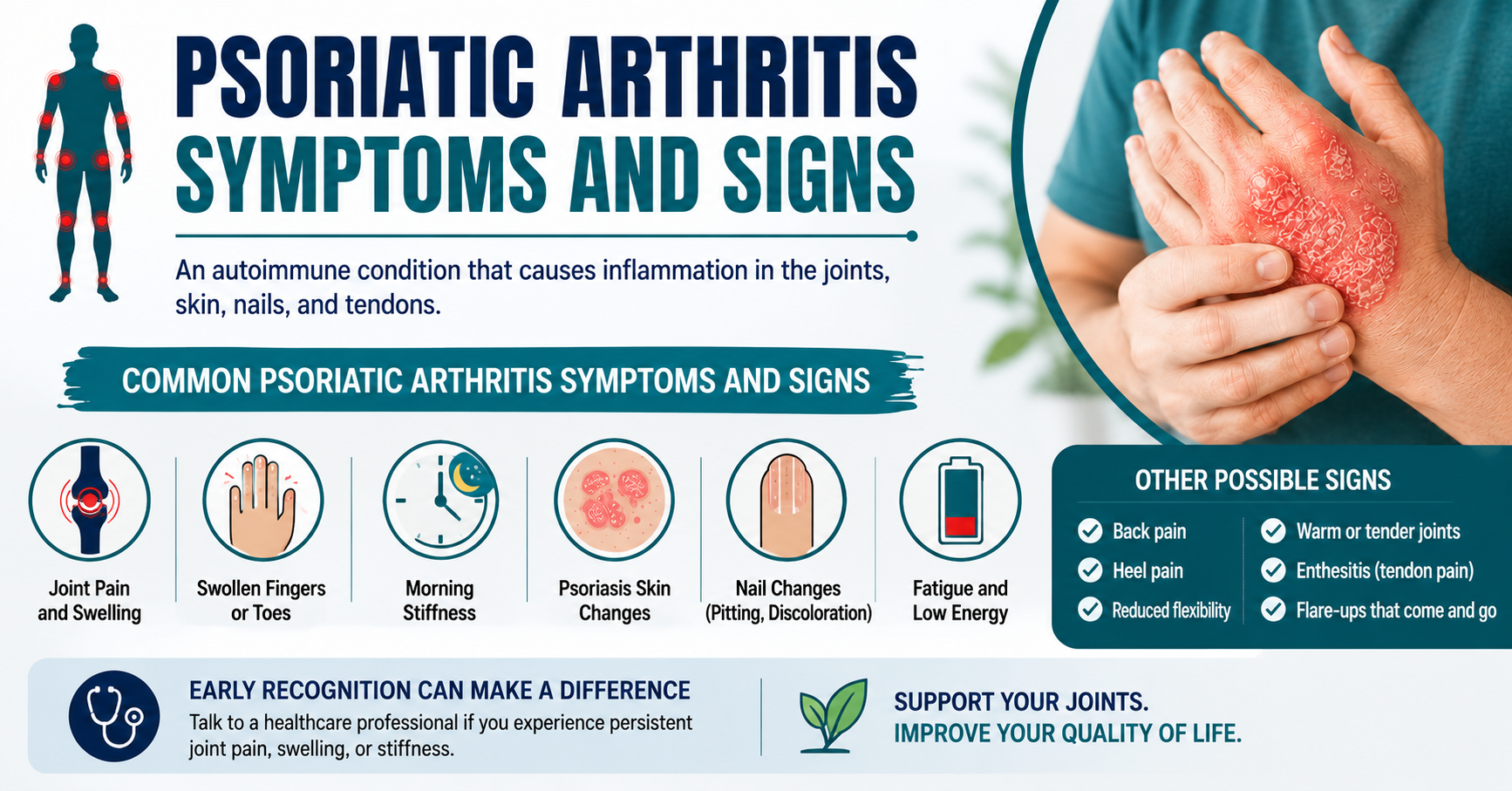
Psoriatic Arthritis Symptoms and Signs
Psoriatic arthritis symptoms and signs can adversely affect more parts of the body apart from your joints.
Some of the early signs noticed by people with psoriatic arthritis is stiffness, fatigue, swelling or fingers pain or toes.
These early signs point to the possibility of an inflammatory condition that links to psoriasis.
Early recognition may help people seek support sooner and improve long-term joint health.
Psoriatic arthritis is an autoimmune condition that causes inflammation in the joints and surrounding tissues.
It commonly develops in people who already have psoriasis, although joint symptoms may sometimes appear first. The condition can vary from mild to severe and often changes over time.
Psoriatic Arthritis Symptoms and Signs?
The most common psoriatic arthritis symptoms and signs include joint pain, swelling, stiffness, and fatigue. Some people experience symptoms in only a few joints, while others notice discomfort throughout the body.
Common symptoms include:
- Swollen fingers or toes
- Morning stiffness
- Pain in the knees, hips, feet, or hands
- Reduced flexibility
- Warm or tender joints
- Fatigue and low energy
- Lower back pain
- Nail changes such as pitting or crumbling
Many people describe stiffness being worse after rest or first thing in the morning. Symptoms may improve slightly with gentle movement during the day.
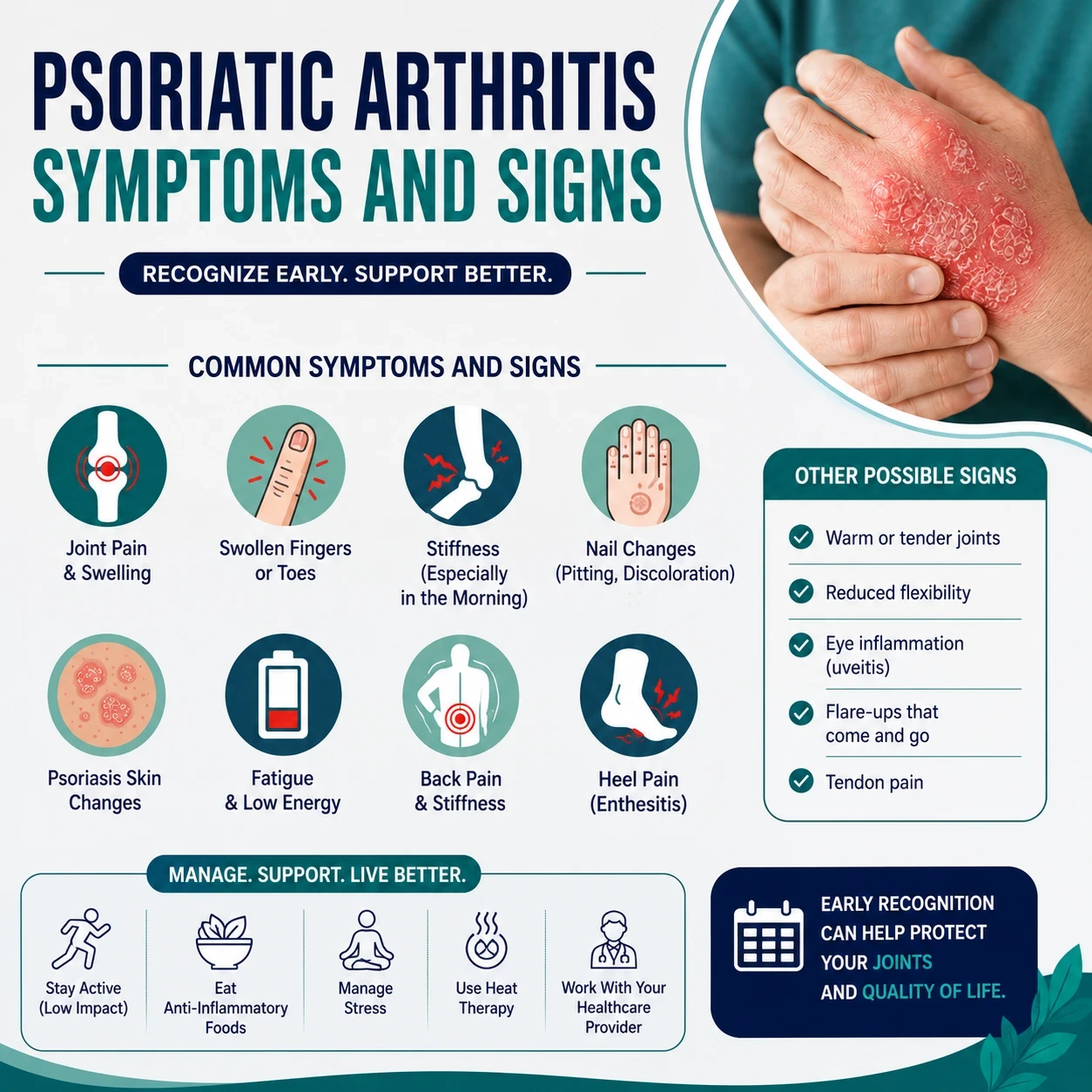
Joint Pain and Swelling
Joint pain is one of the most noticeable psoriatic arthritis symptoms people experience. The inflammation may affect one side of the body or both sides. Knees, ankles, wrists, and fingers are common problem areas.
Unlike ordinary wear-and-tear joint pain, inflammatory pain often feels deep, warm, and persistent. Swelling can make rings tight or shoes uncomfortable.
Some people benefit from combining movement, heat therapy, and supportive products to manage discomfort. TENS therapy for arthritis pain relief is one option many people explore alongside lifestyle changes.
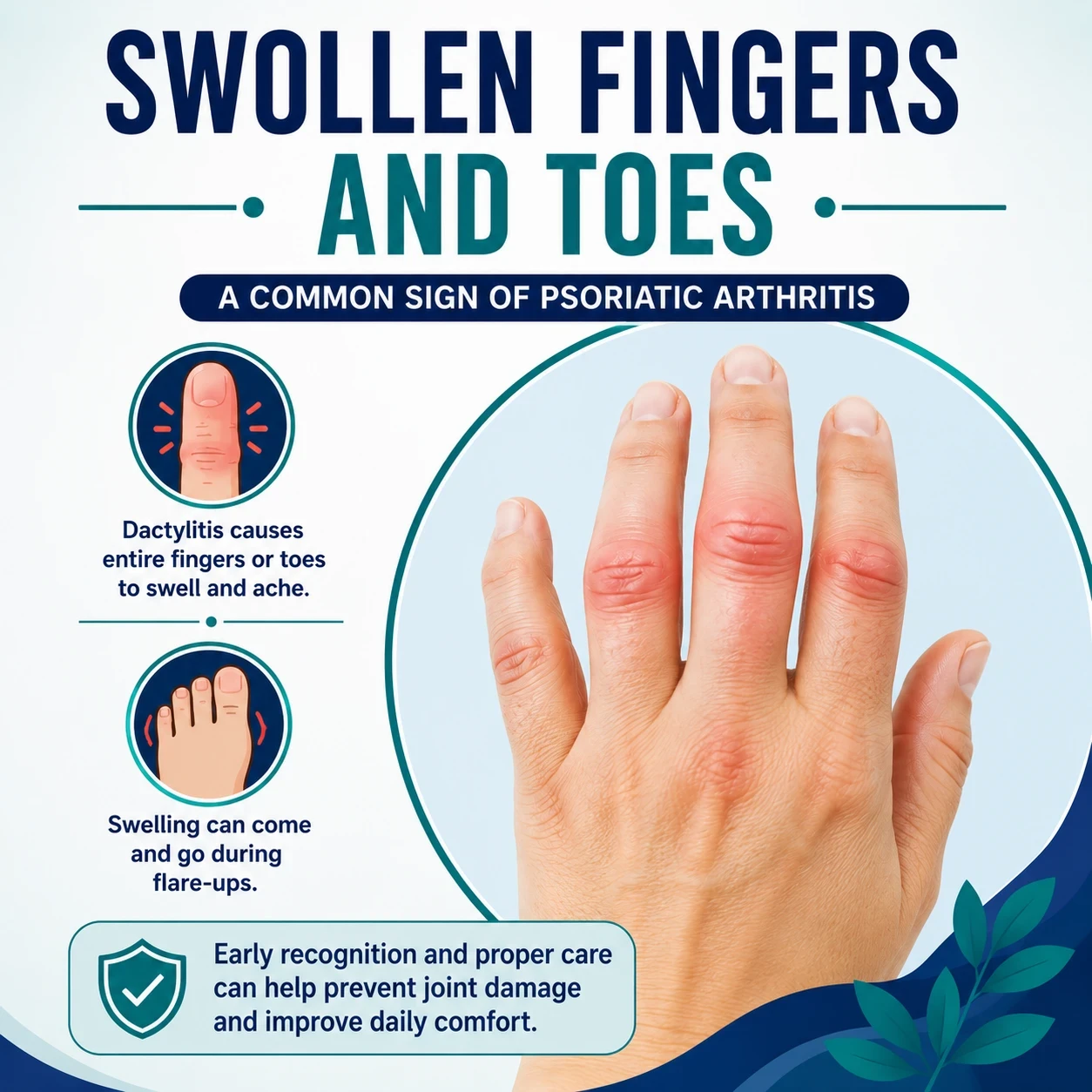
Swollen Fingers and Toes
One of the classic psoriatic arthritis symptoms and signs is dactylitis, often called “sausage fingers” or “sausage toes.” Entire fingers or toes may become swollen, painful, and difficult to move.
This type of inflammation can affect grip strength, walking comfort, and daily activities. Swelling may come and go during flare-ups.
People often look for gentle ways to support sore joints during these periods. Some use EMS and TENS therapy devices for joint discomfort to help relax surrounding muscles and support comfort at home.
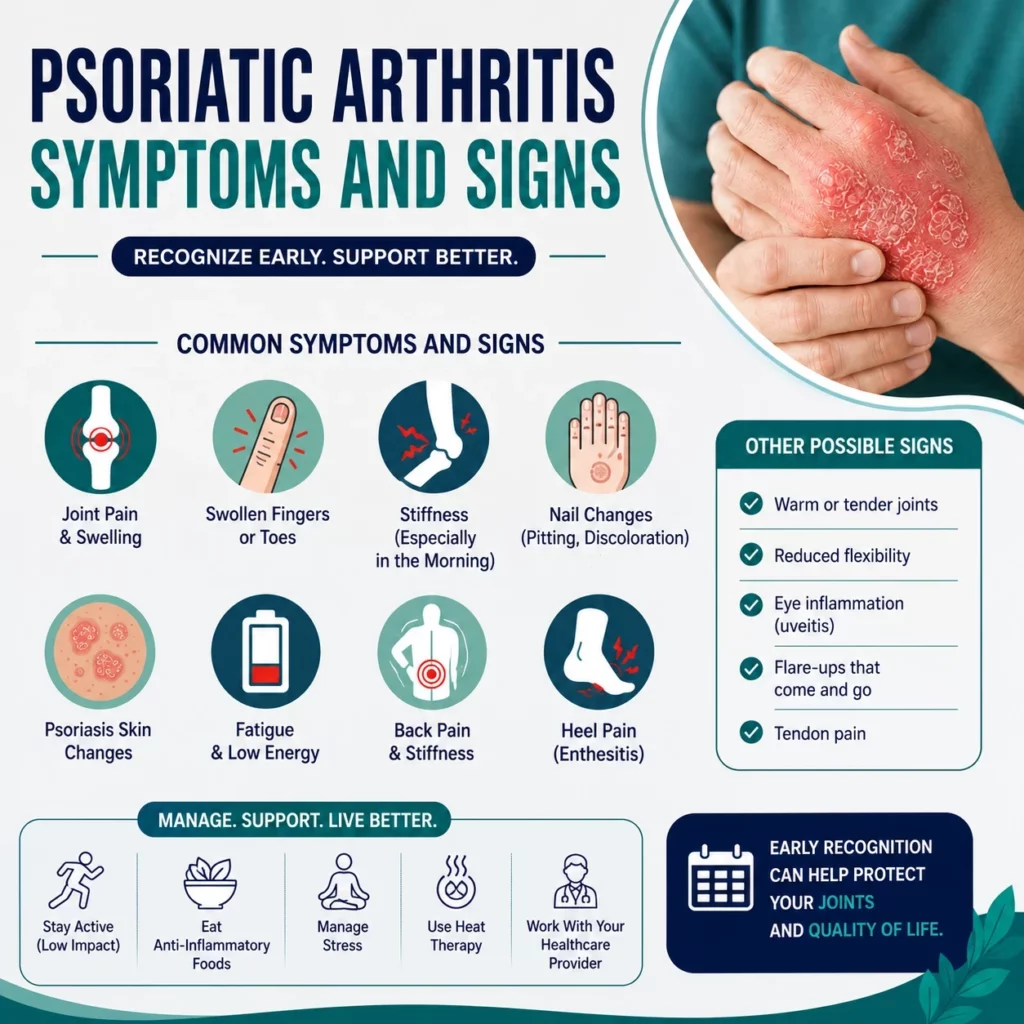
Skin and Nail Changes
Psoriasis skin symptoms are closely connected to psoriatic arthritis. Thick, red, flaky patches commonly appear on the scalp, elbows, knees, or lower back.
Nail symptoms are also common and may include:
- Pitting in the nails
- Nails separating from the nail bed
- Discoloration
- Crumbly nail texture
Sometimes nail changes appear before severe joint symptoms begin.
Fatigue and Low Energy
Fatigue is one of the most overlooked psoriatic arthritis symptoms. Chronic inflammation can leave people feeling physically and mentally drained.
Many people experience:
- Low motivation
- Brain fog
- Poor sleep quality
- Daytime exhaustion
Pain itself may also contribute to sleep disruption and stress. Gentle daily movement, pacing activities, and supportive recovery habits may help reduce flare-related fatigue.
Back Pain and Heel Pain
Psoriatic arthritis symptoms and signs do not only affect the hands and knees. The spine, lower back, heels, and tendons can also become inflamed.
Some people notice:
- Stiffness in the lower back
- Pain when standing after sitting
- Heel pain near the Achilles tendon
- Foot discomfort during walking
Inflammation where tendons attach to bone is called enthesitis. This can make everyday movement uncomfortable.
Natural remedies for joint pain and arthritis may help support overall comfort when combined with medical advice and healthy lifestyle habits.

What Can Trigger Flare-Ups?
Psoriatic arthritis symptoms and signs often come in waves called flare-ups. During a flare, pain and stiffness may suddenly worsen.
Common triggers may include:
- Stress
- Poor sleep
- Illness or infection
- Cold weather
- Physical overexertion
- Long periods of inactivity
Learning personal triggers can help some people better manage symptoms over time.
Daily Support Strategies
There is no single solution for psoriatic arthritis, but many people combine several supportive strategies together.
Helpful approaches may include:
- Gentle stretching
- Low-impact exercise
- Weight management
- Stress reduction
- Heat therapy
- Anti-inflammatory eating habits
- Supportive recovery products
Some people also use warming therapies to ease stiffness. Infrared heat therapy products for arthritis support are commonly used to help soothe tight muscles and stiff joints.
When to Seek Medical Advice
Persistent joint swelling, ongoing fatigue, or unexplained stiffness should not be ignored. Early support may help reduce long-term joint damage and improve quality of life.
A healthcare professional may use physical examination, imaging scans, blood tests, and symptom history to assess psoriatic arthritis.
People who already have psoriasis should pay particular attention to new joint discomfort or swelling.
Living With Psoriatic Arthritis
Living with psoriatic arthritis symptoms and signs can be physically and emotionally challenging, especially during flare-ups. However, many people learn to manage symptoms through consistent routines, movement, stress management, and supportive therapies.
The condition affects everyone differently. Some experience mild occasional symptoms, while others require more ongoing support. Listening to the body, avoiding overexertion, and staying proactive may help improve day-to-day comfort.
Building healthy habits over time often plays an important role in supporting mobility, energy, and overall well-being.
External Research Study:
Arthritis Foundation – Psoriatic Arthritis