What Is Sciatica Pain?Sciatica Pain Is A Type Of Nerve-related
What Is Sciatica Pain?
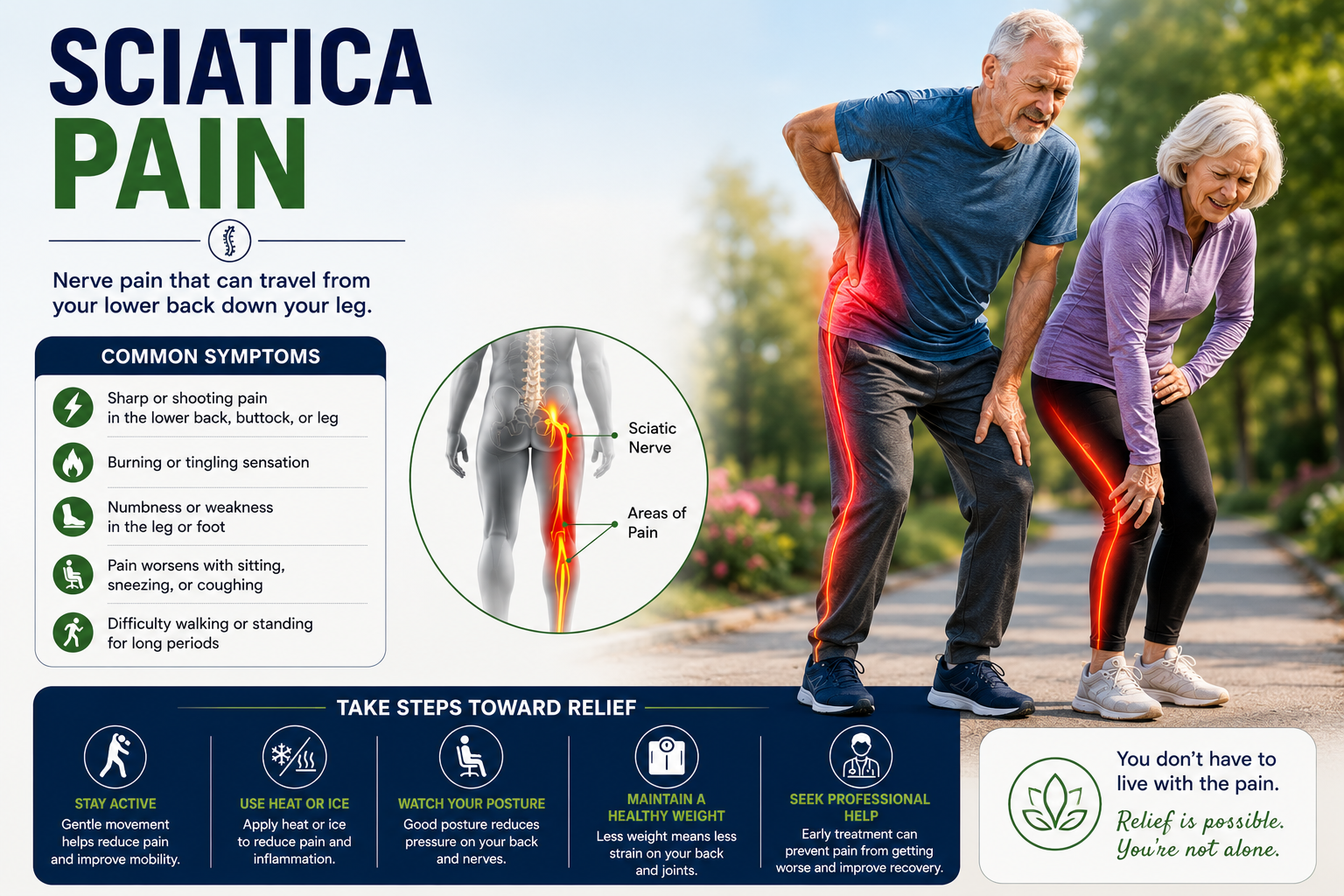
Sciatica pain is a type of nerve-related discomfort that usually starts in the lower back and travels through the buttock, hip, and down the leg. Many people describe the sensation as burning, shooting, tingling, or electric-like discomfort that can interfere with movement, sleep, and daily activities.
Unlike general muscle soreness, this condition involves irritation or compression of the sciatic nerve. The sciatic nerve is the largest nerve in the body and runs from the lower spine into both legs. When the nerve becomes irritated, symptoms may spread far beyond the lower back.
Understanding how chronic pain develops in the body can help explain why nerve-related symptoms sometimes continue even after the original irritation improves.
What Causes Sciatica?
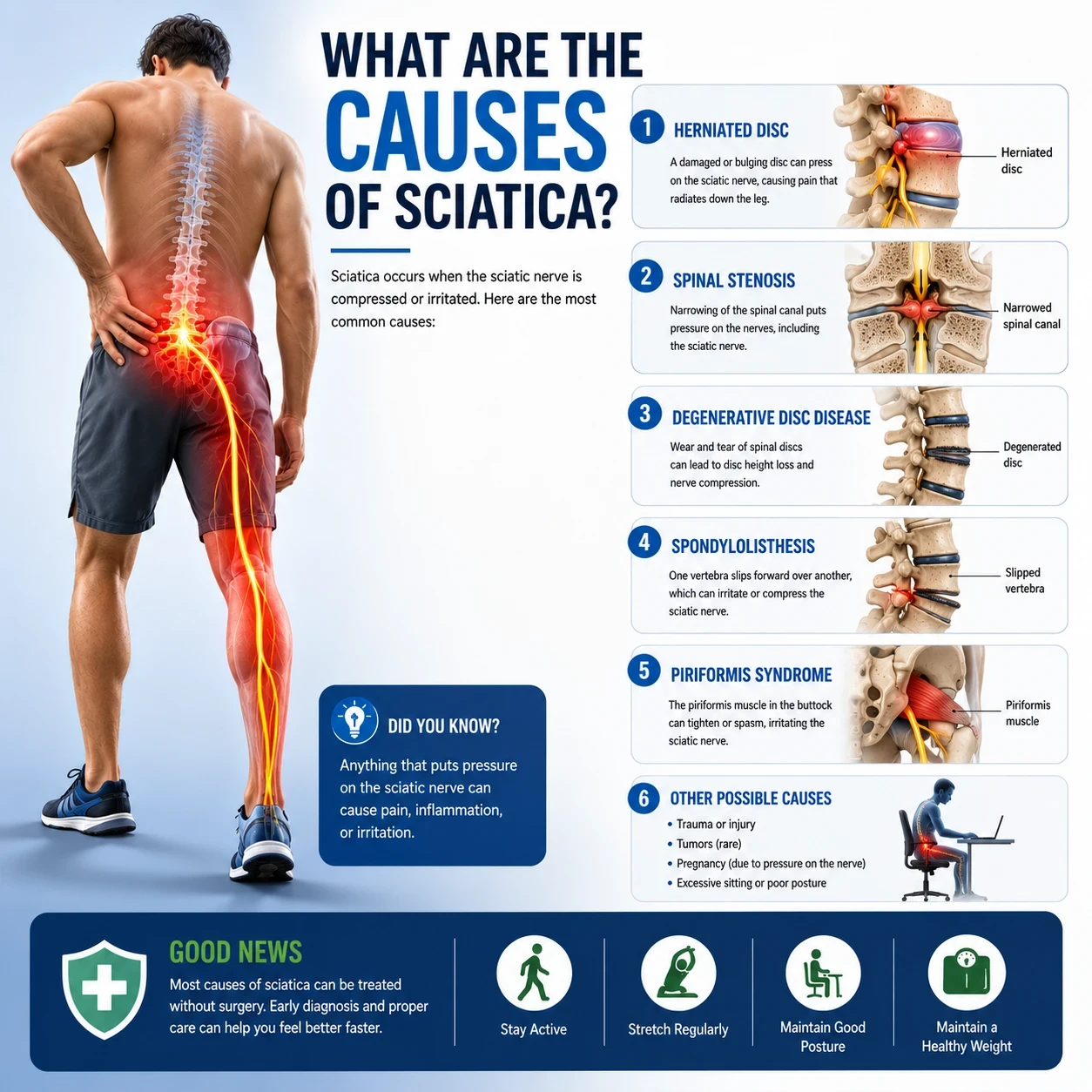
Sciatic nerve irritation is usually linked to pressure, inflammation, or compression near the lower spine. Several conditions may contribute to this problem.
- Herniated or bulging discs
- Spinal narrowing
- Muscle tension around the pelvis
- Poor posture and prolonged sitting
- Heavy lifting injuries
- Degenerative spinal changes
- Inflammation around spinal joints
- Reduced movement and muscle weakness
Many people develop symptoms gradually rather than from one major injury. Long periods of sitting, poor lifting habits, stress, inactivity, and repeated strain can all contribute to sciatic nerve irritation.
Common Symptoms
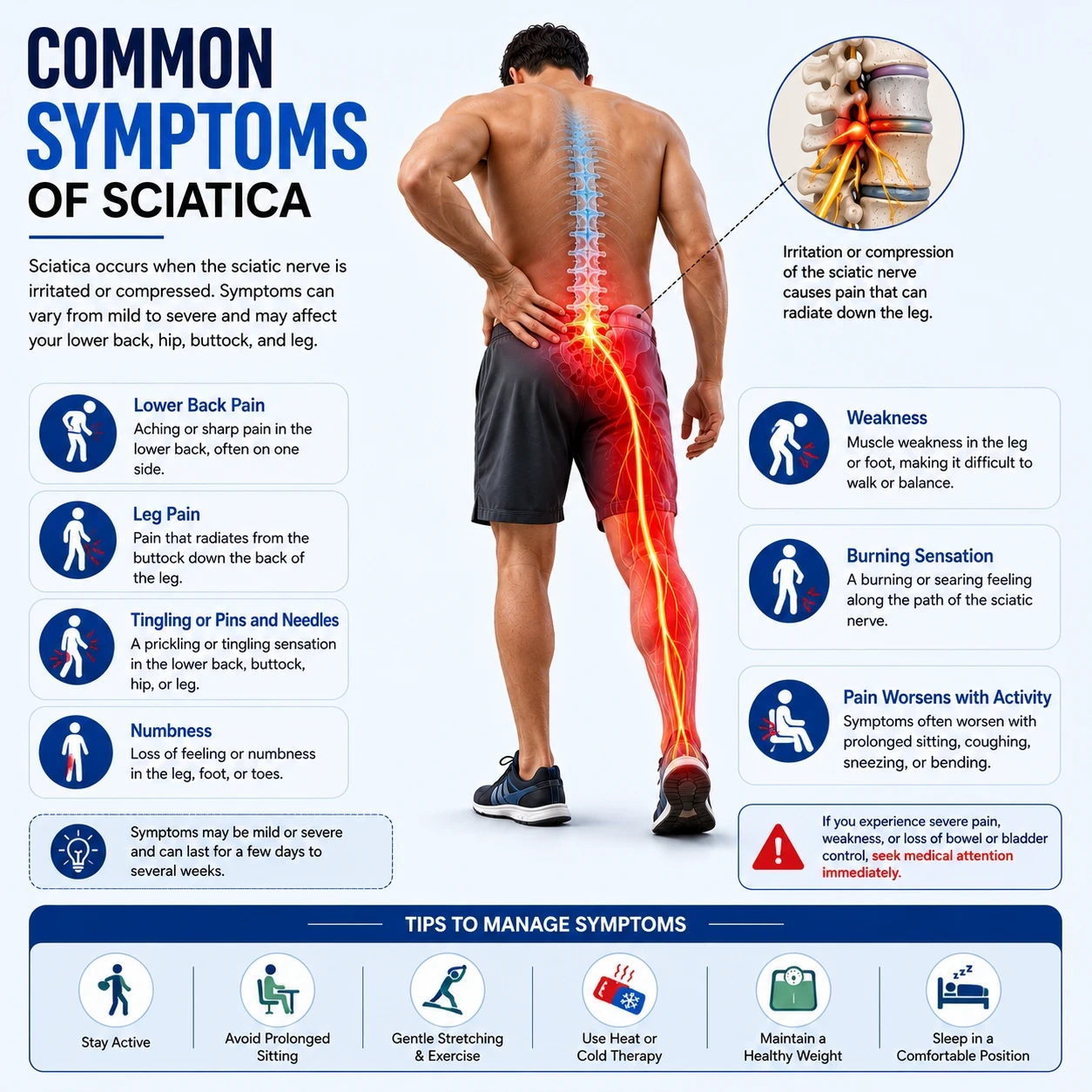
This type of nerve irritation affects people differently. Some experience mild discomfort while others struggle with severe pain that limits movement and sleep.
Common symptoms include:
- Pain running from the lower back into the leg
- Burning sensations in the buttock or thigh
- Tingling or pins and needles
- Numbness in parts of the leg or foot
- Weakness while walking
- Pain that worsens while sitting
- Sharp discomfort during coughing or bending
- Tightness in the lower back and hip
Some people mainly feel symptoms in the leg rather than the back. Others experience alternating flare-ups depending on posture, movement, and activity levels.
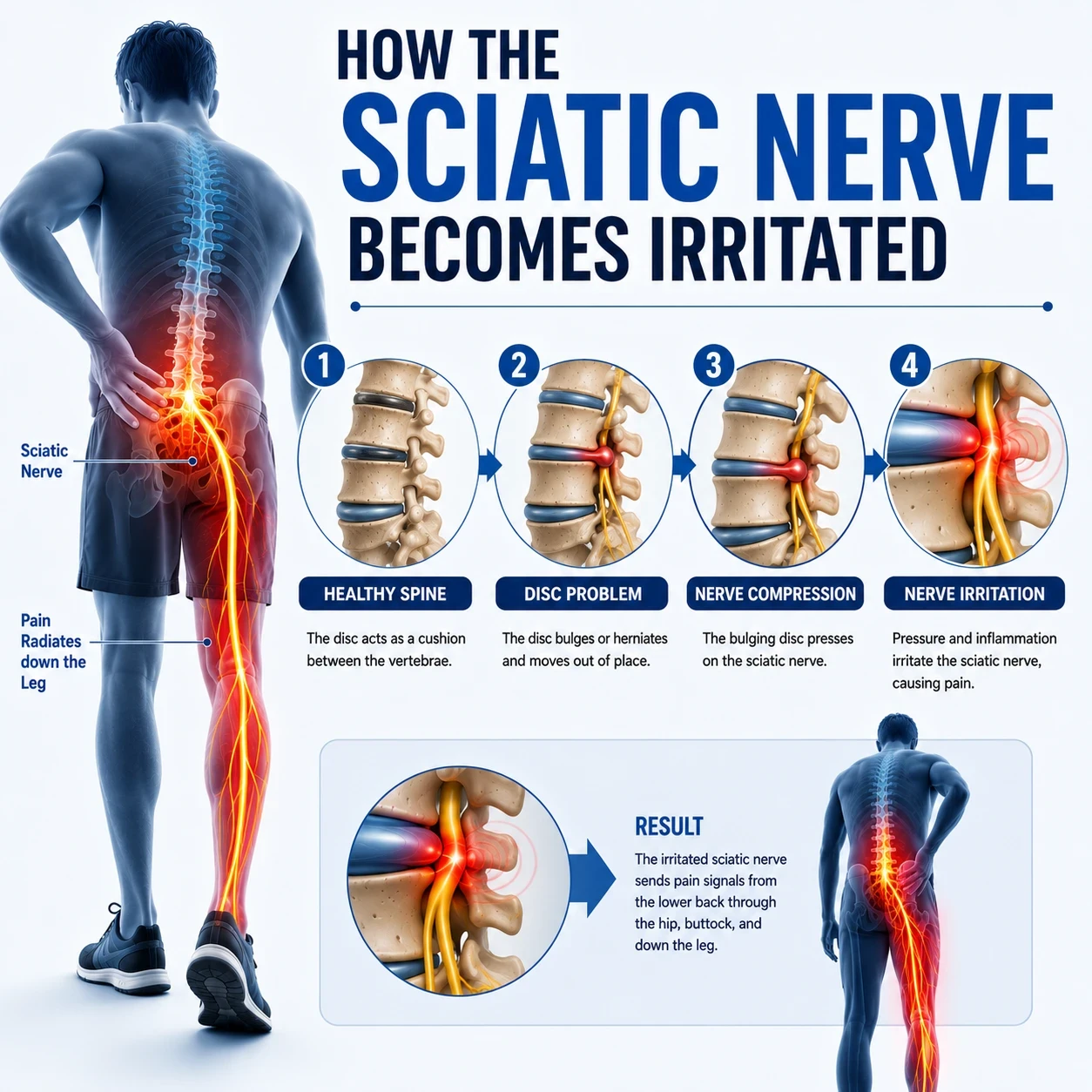
How the Sciatic Nerve Becomes Irritated
The sciatic nerve passes through several muscles, joints, and spinal structures before reaching the legs. When surrounding tissues become inflamed or compressed, the nerve can become highly sensitive.
Disc irritation is one of the most common causes. A bulging or herniated disc may place pressure on nearby nerve roots. This pressure can trigger inflammation and discomfort that travels along the nerve pathway.
Muscle tightness can also contribute to ongoing symptoms. Tight hip and glute muscles may increase pressure around the nerve and restrict movement. This is why gentle mobility exercises sometimes reduce discomfort over time.
Understanding how nerve pain works helps explain why nerve sensitivity can continue even after tissues begin healing.
Sciatica vs General Back Pain
General back pain often stays localized in the lower back muscles or spinal joints. Sciatic nerve irritation is different because symptoms usually radiate into the buttock and leg.
Back pain may feel dull, stiff, or aching. Nerve irritation is often described as sharp, electric, burning, or shooting. Sitting for long periods commonly worsens symptoms because pressure around the nerve increases.
Some people experience both conditions together. Muscle tension, reduced mobility, and spinal irritation can overlap and make recovery more difficult.
Why Symptoms Can Become Chronic
Persistent nerve irritation sometimes develops because the nervous system becomes increasingly sensitive over time. Ongoing inflammation, fear of movement, poor sleep, stress, and inactivity may all contribute to long-term nerve sensitivity.
When movement decreases, muscles around the lower back and hips often become weaker and tighter. This can place additional strain on surrounding tissues and increase irritation.
People with chronic symptoms may begin avoiding normal activities because they fear triggering flare-ups. Unfortunately, too little movement can sometimes increase stiffness and pain sensitivity.
Learning why back pain can persist is important because nerve-related leg symptoms often follow similar patterns involving the nervous system, muscles, and spinal structures.
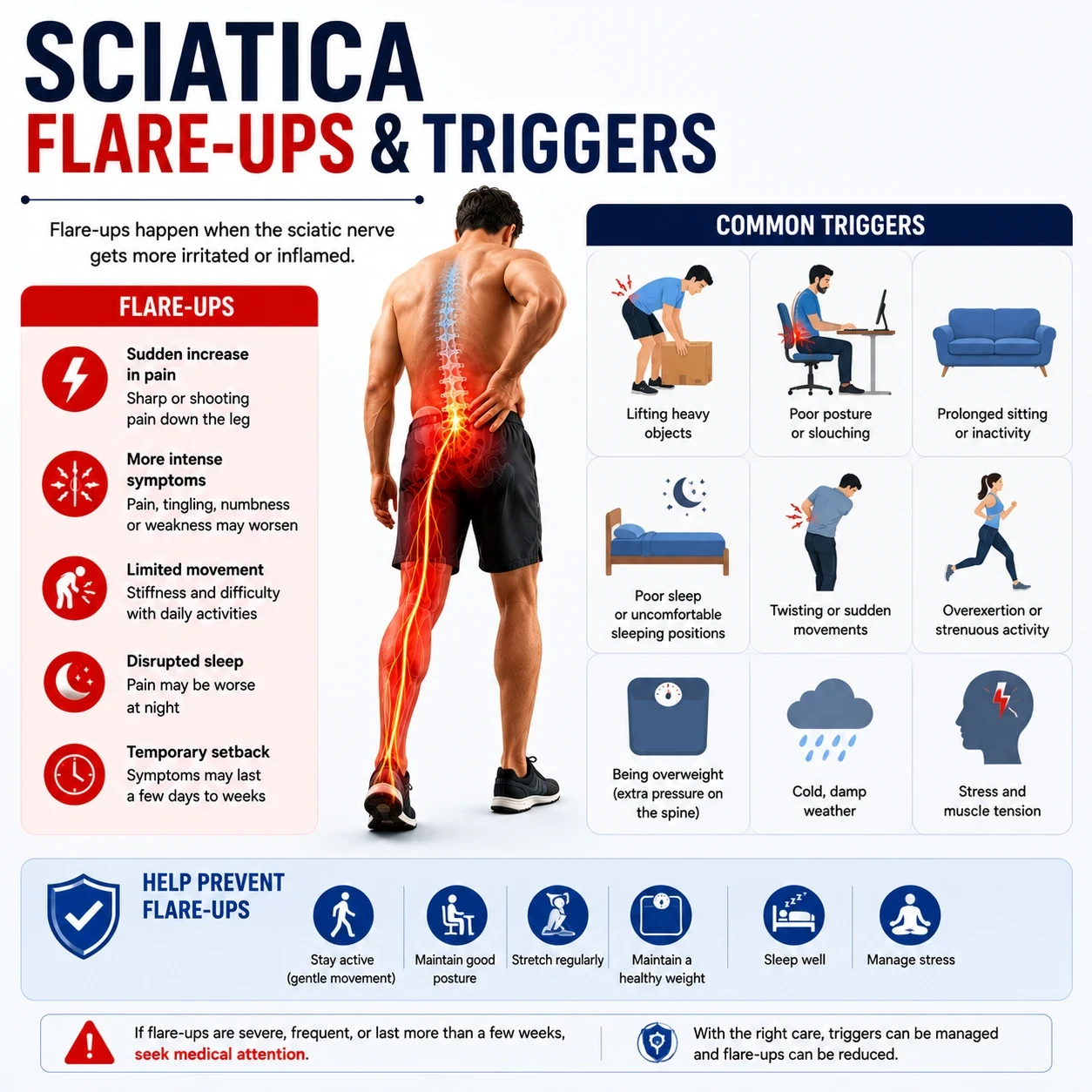
Flare-Ups and Triggers
Flare-ups can happen suddenly or build gradually over several days. Many episodes occur after prolonged sitting, lifting awkwardly, poor sleep, stress, or overactivity.
Common triggers include:
- Long car journeys
- Desk work without movement breaks
- Heavy lifting
- Twisting movements
- Poor sleep position
- Reduced physical activity
- Stress and muscle tension
Flare-ups do not always mean serious damage has occurred. In many cases, irritated nerves become temporarily more sensitive before gradually calming again.
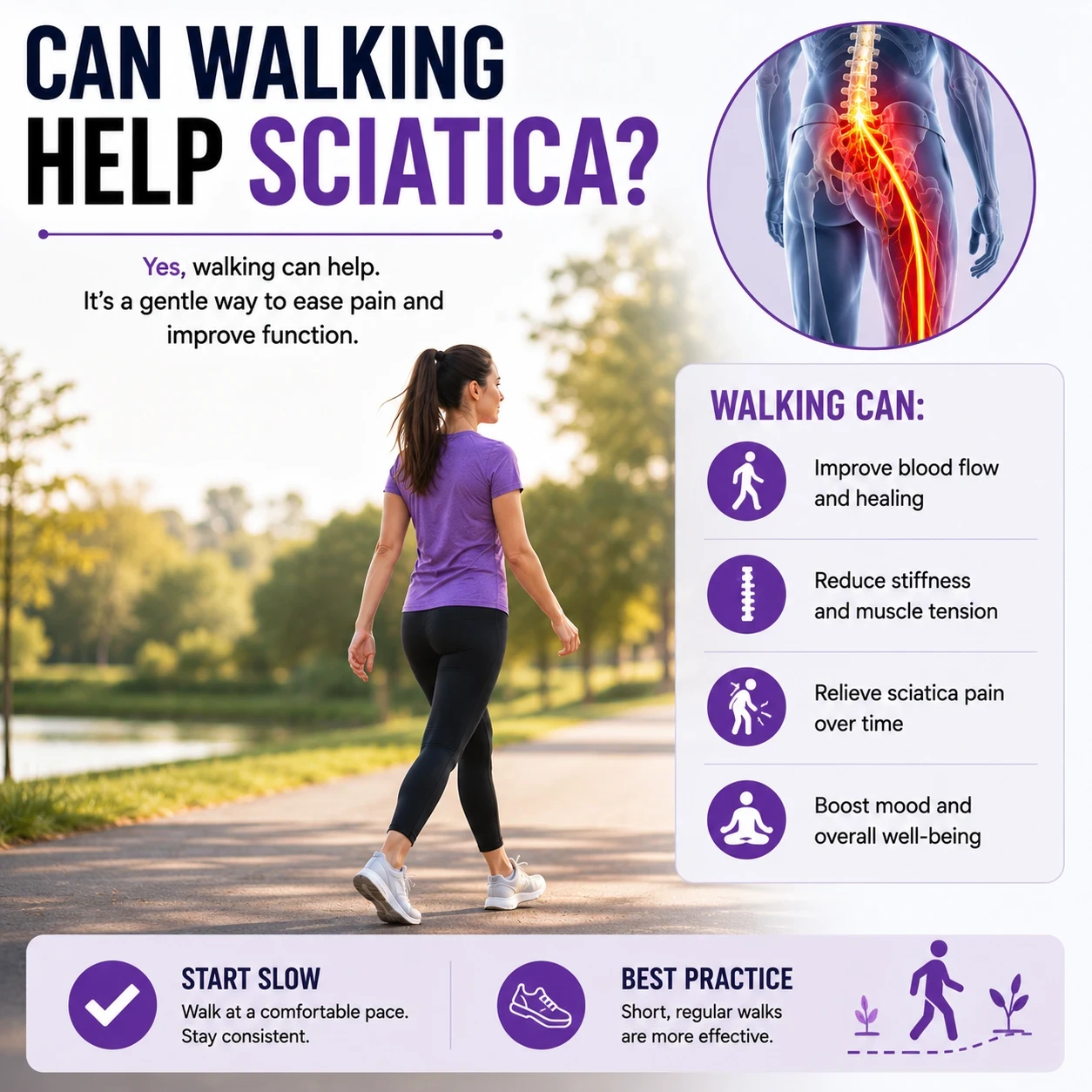
Can Walking Help?
Gentle walking often helps improve circulation, reduce stiffness, and encourage healthier movement patterns. Short regular walks may reduce prolonged pressure on the sciatic nerve.
However, intensity matters. Walking too far during a severe flare-up can sometimes worsen symptoms temporarily. Many people respond best to shorter, consistent walks combined with rest and gentle stretching.
Movement helps maintain strength around the lower back, hips, and pelvis. Stronger supportive muscles may reduce pressure around irritated spinal structures over time.
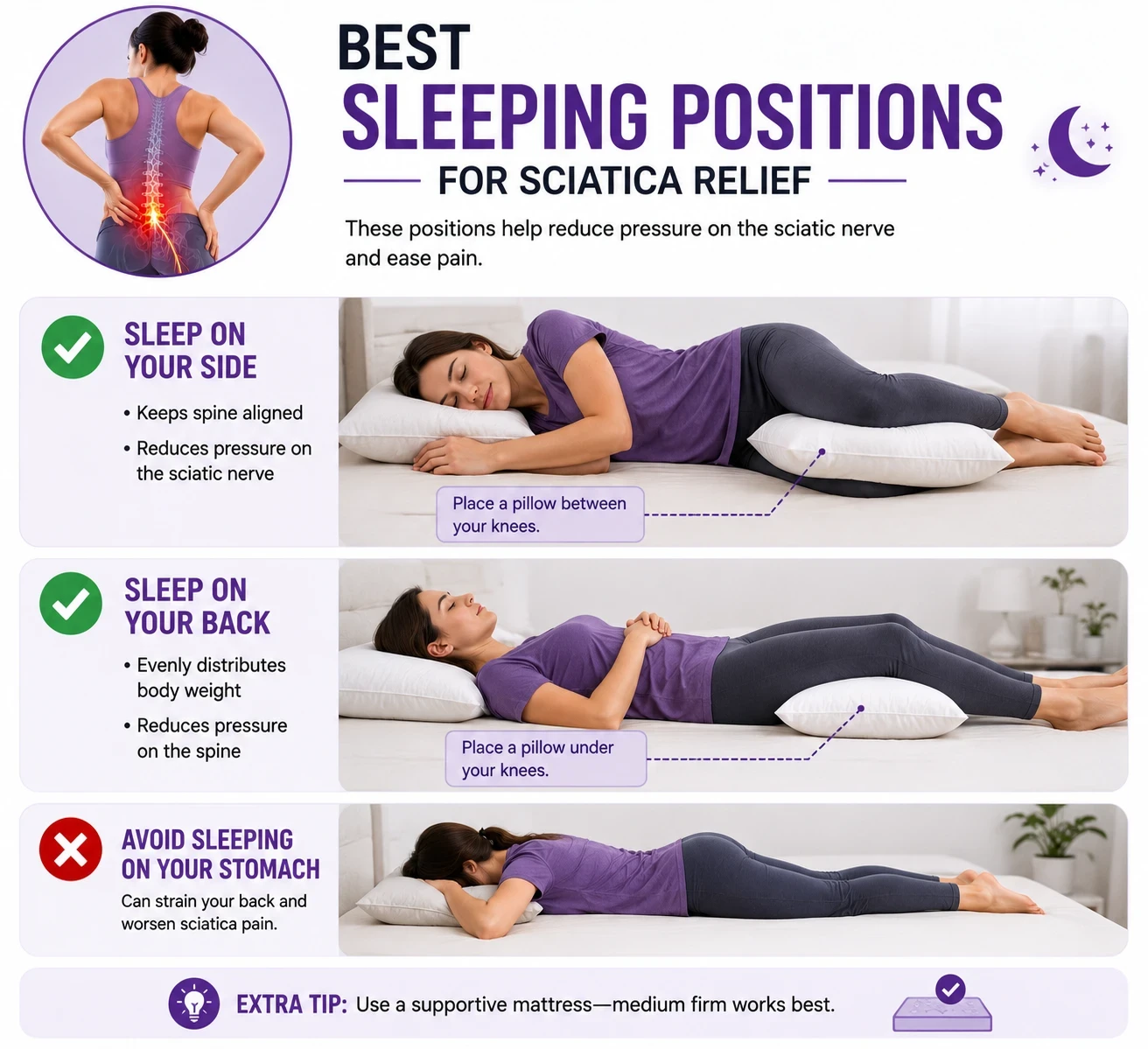
Best Sleeping Positions
Poor sleeping posture can increase pressure around the lower back and hips. Adjusting sleep position may help reduce overnight irritation.
Many people feel more comfortable:
- Sleeping on the side with a pillow between the knees
- Sleeping on the back with a pillow under the knees
- Using supportive mattresses
- Avoiding stomach sleeping during flare-ups
Improving sleep is important because poor rest can increase pain sensitivity and slow recovery.
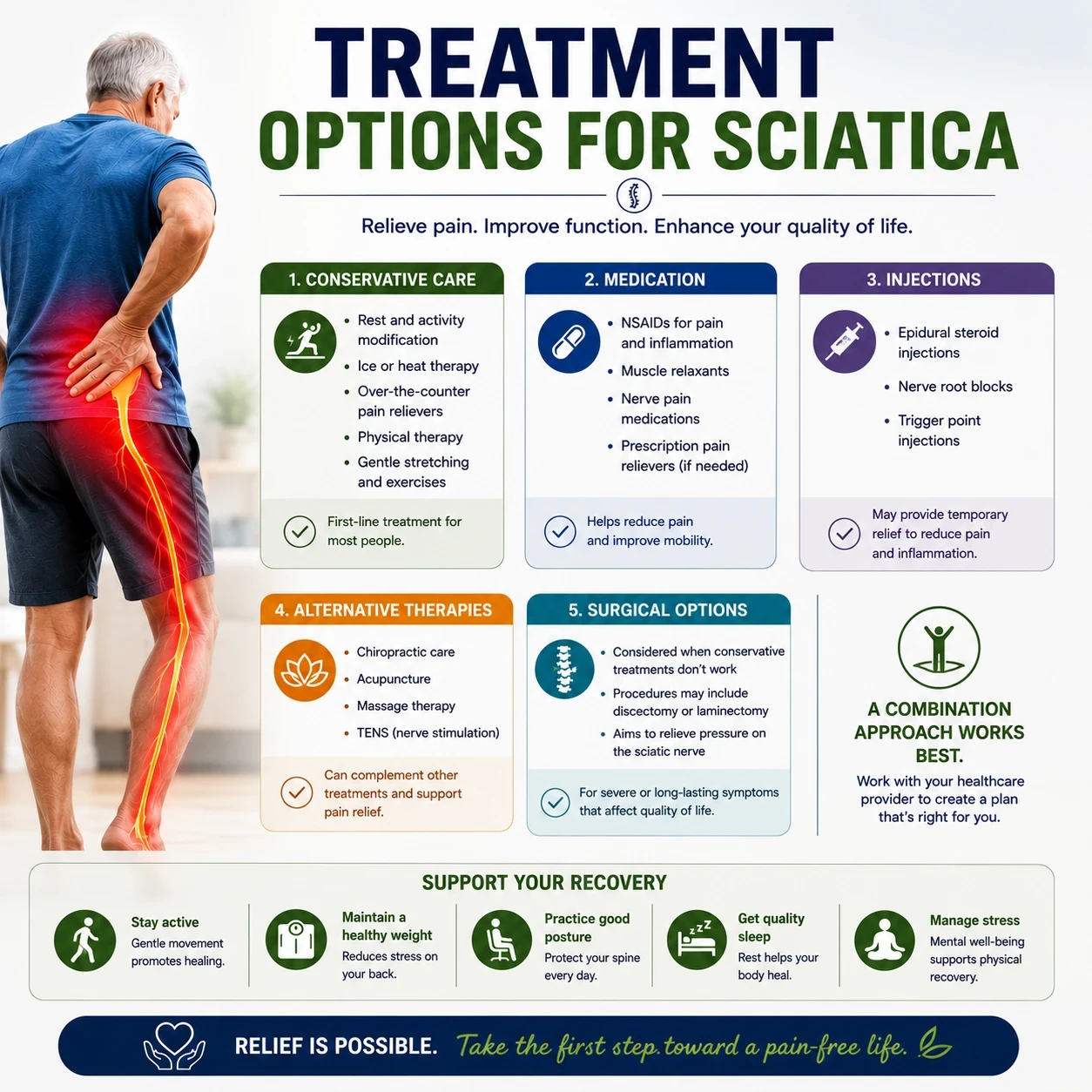
Treatment Options
Most cases improve gradually with conservative treatment approaches. Recovery often involves reducing irritation while improving movement and strength over time.
Common treatment options include:
- Gentle mobility exercises
- Walking programs
- Heat therapy
- TENS therapy
- Physical therapy
- Posture correction
- Stretching routines
- Massage therapy
- Anti-inflammatory strategies
- Lifestyle adjustments
Many people benefit from combining several approaches rather than relying on one solution alone.

Heat Therapy Support
Heat therapy may help relax tight muscles surrounding the lower back and hips. Improved circulation can sometimes reduce stiffness and make movement easier.
Infrared heat pads are commonly used at home because they provide consistent warmth over larger areas of the lower back.
You can learn more about how heat therapy supports pain relief and recovery strategies.
Explore infrared heat therapy options here
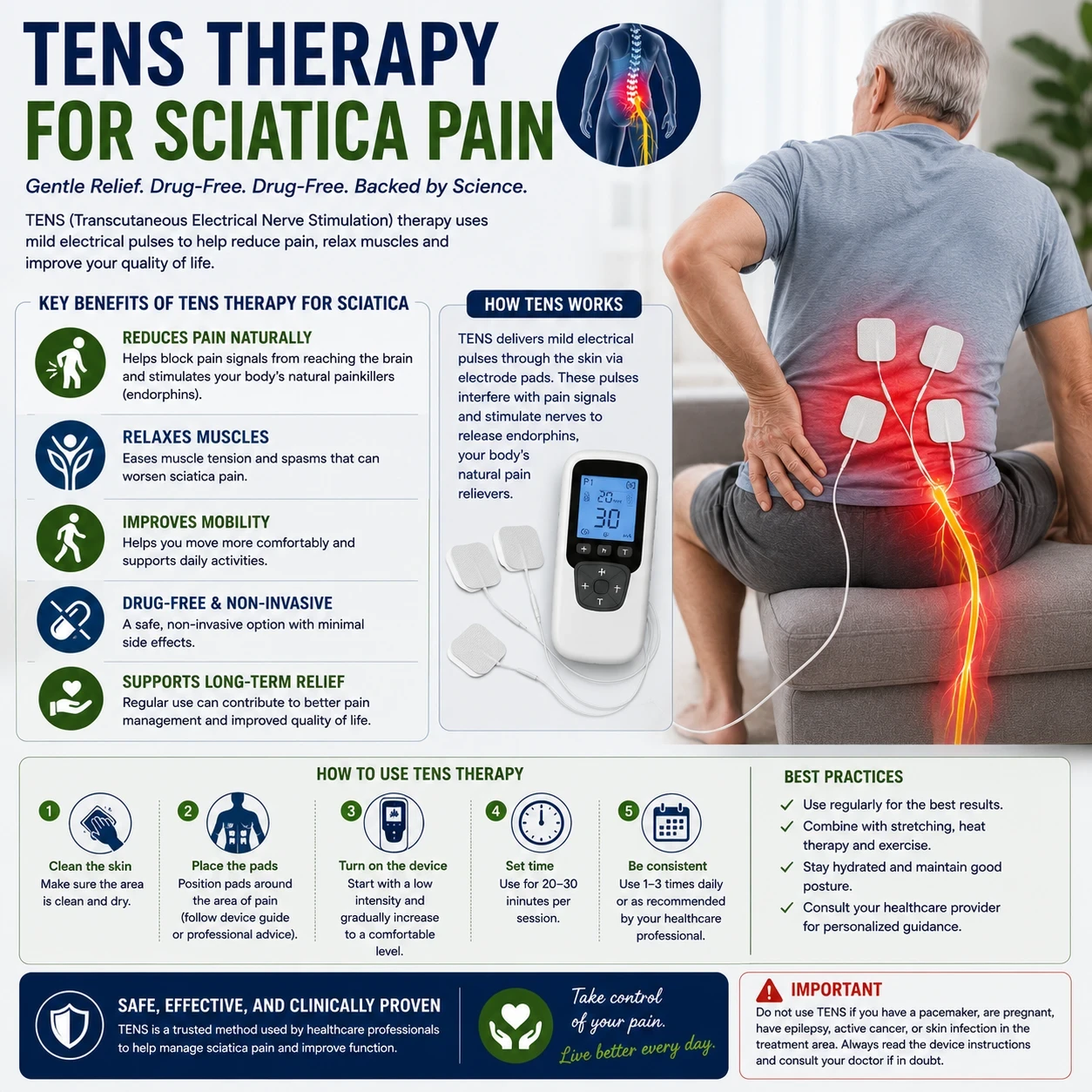
TENS Therapy
TENS therapy uses mild electrical stimulation to help interfere with pain signals. Some people find TENS therapy useful during flare-ups or after activity.
TENS devices are often used alongside movement, stretching, and heat therapy rather than as standalone solutions.
Shop TENS therapy devices here

CBD and Recovery Support
Some people use CBD oils, creams, or muscle balms to support relaxation and recovery during flare-ups. While research is still developing, CBD products are commonly used as part of broader pain management routines.
Topical CBD products are often applied around tense muscles in the lower back, hips, and legs.
Explore CBD oils for pain support
View CBD muscle recovery products
How Stress Affects Recovery
Stress can increase muscle tension, disrupt sleep, and heighten nervous system sensitivity. This may increase symptom intensity during difficult periods.
Many people notice stronger flare-ups during stressful weeks involving poor sleep, reduced activity, or emotional strain.
Relaxation strategies such as breathing exercises, gentle stretching, walking, and pacing activity levels may help calm the nervous system over time.
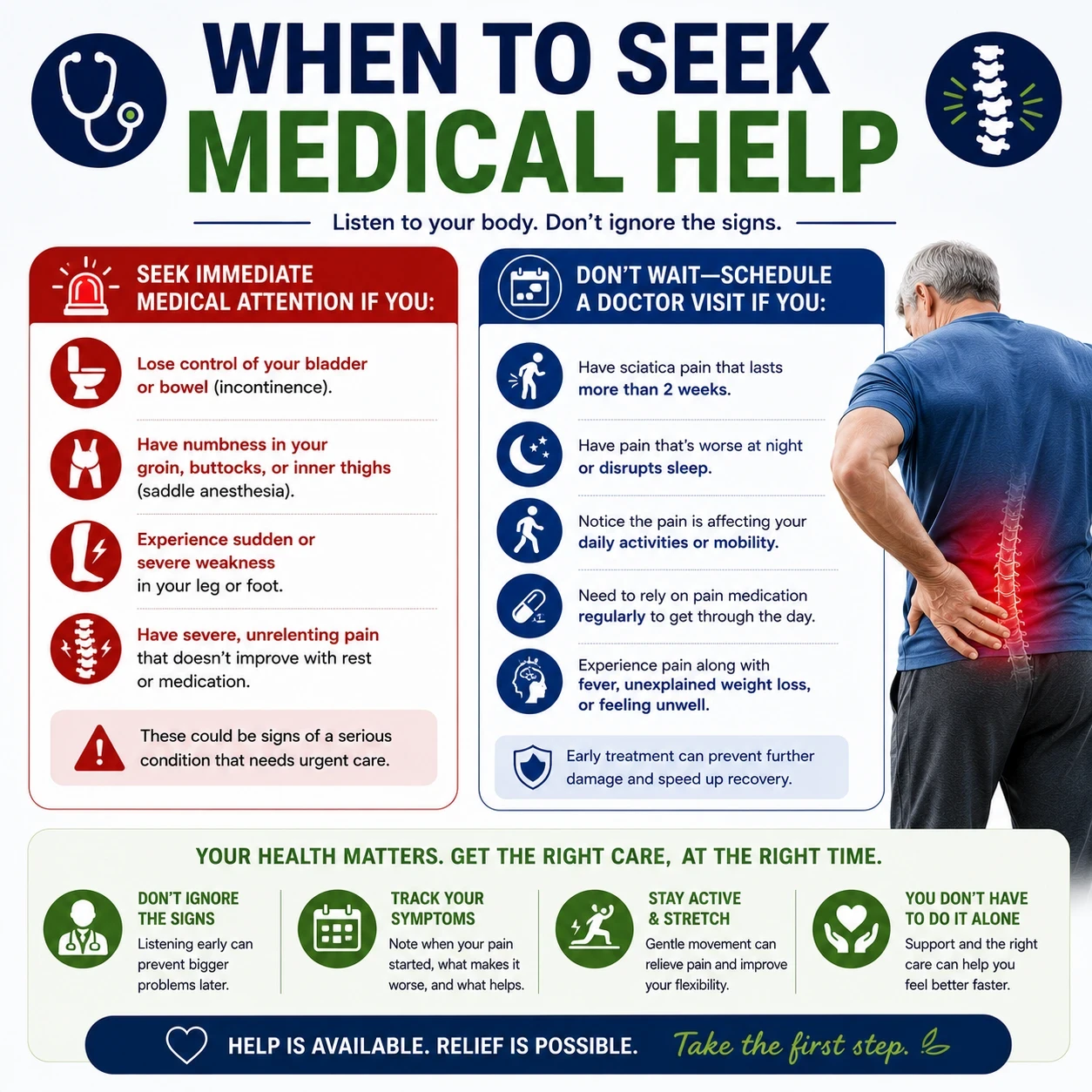
When to Seek Medical Help
Most cases improve gradually, but certain symptoms require medical assessment.
Seek professional help if symptoms involve:
- Loss of bladder or bowel control
- Severe leg weakness
- Rapid worsening symptoms
- Fever alongside back pain
- Numbness around the groin
- Pain after major trauma
- Symptoms lasting several months without improvement
Persistent nerve irritation may benefit from professional guidance involving movement assessment, rehabilitation planning, and pain education.
Living With Ongoing Nerve Pain
Recovery often takes patience and consistency. Small daily improvements usually matter more than aggressive short-term treatments.
People who manage symptoms successfully often focus on:
- Regular movement
- Improving posture
- Better sleep habits
- Reducing prolonged sitting
- Building core and hip strength
- Managing stress
- Using supportive therapies consistently
Ongoing nerve irritation can feel overwhelming during severe flare-ups, but many people gradually improve with education, movement, and long-term recovery strategies.
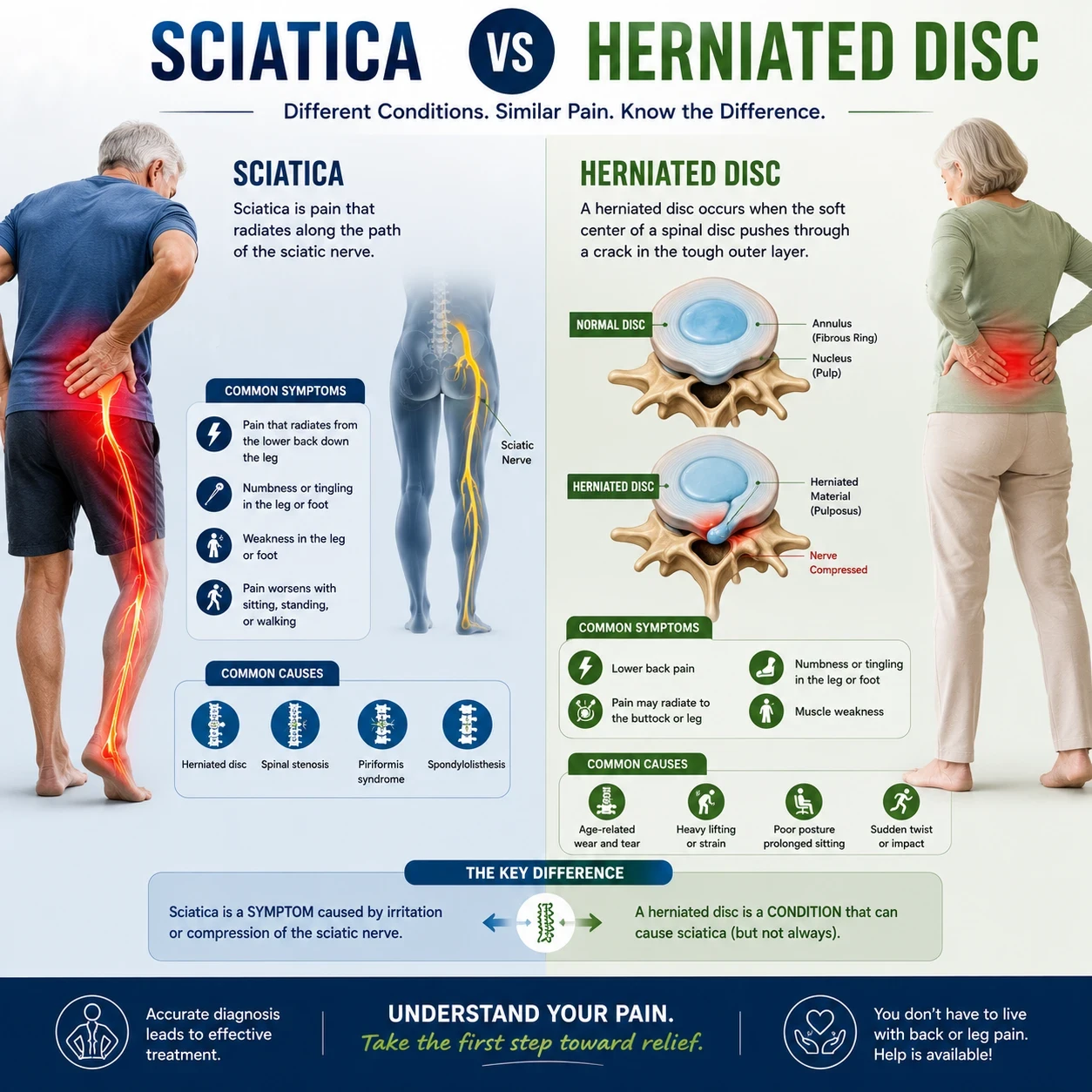
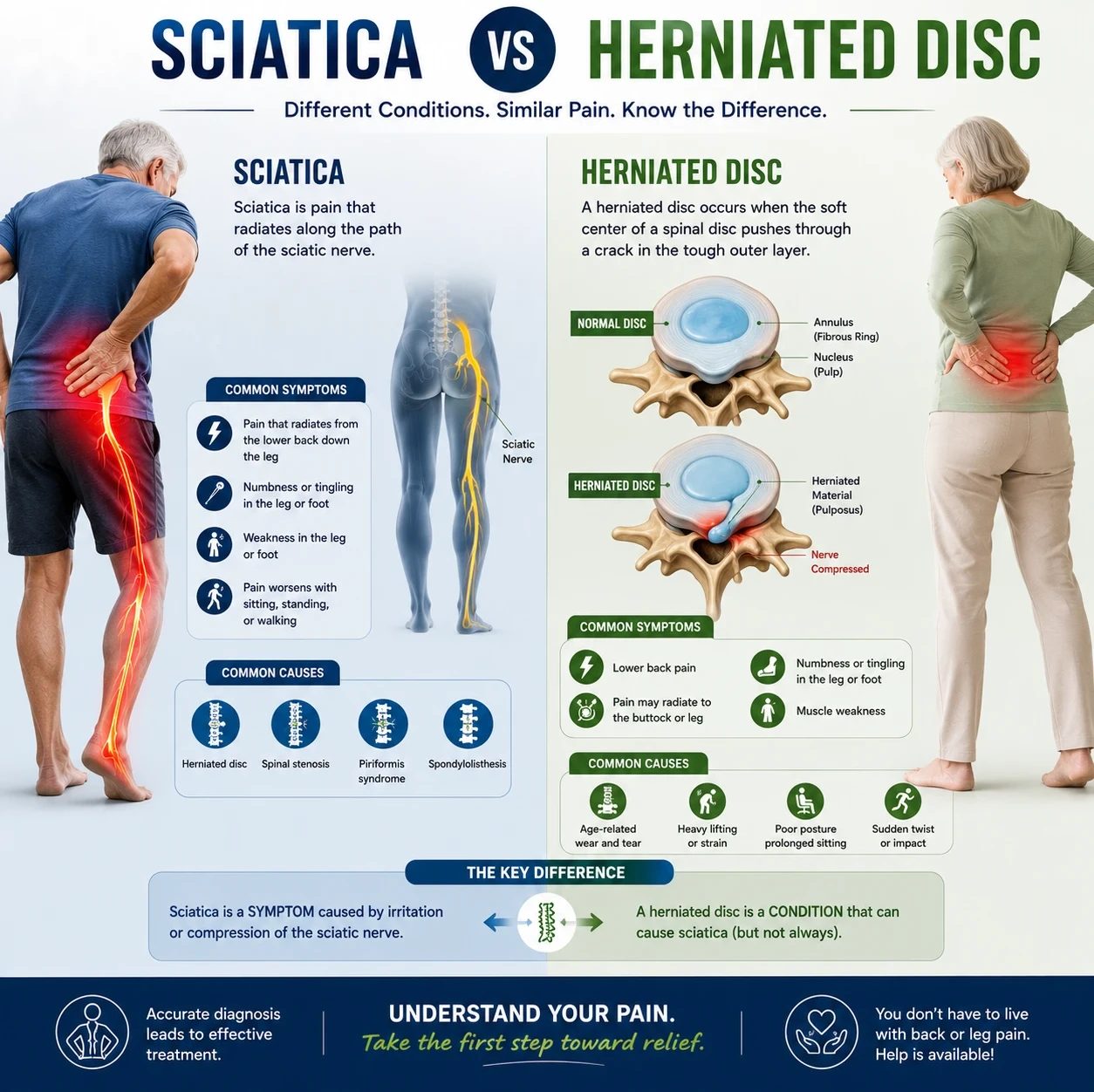
Sciatica vs Herniated Disc
Many people assume sciatica and herniated discs are the same thing, but they are slightly different. A herniated disc is one possible cause of sciatic nerve irritation. When a spinal disc bulges or leaks outward, it may place pressure on nearby nerve roots that connect to the sciatic nerve.
However, not all cases involve disc damage. Tight muscles, spinal narrowing, inflammation, poor movement patterns, and long-term posture problems may also contribute to symptoms.
Some people have visible disc bulges on scans without any discomfort at all, while others experience severe nerve irritation with only minor structural changes. This is why recovery often involves more than simply focusing on scans or structural findings.
Understanding the difference between structural changes and nervous system sensitivity can help reduce fear around movement and recovery.
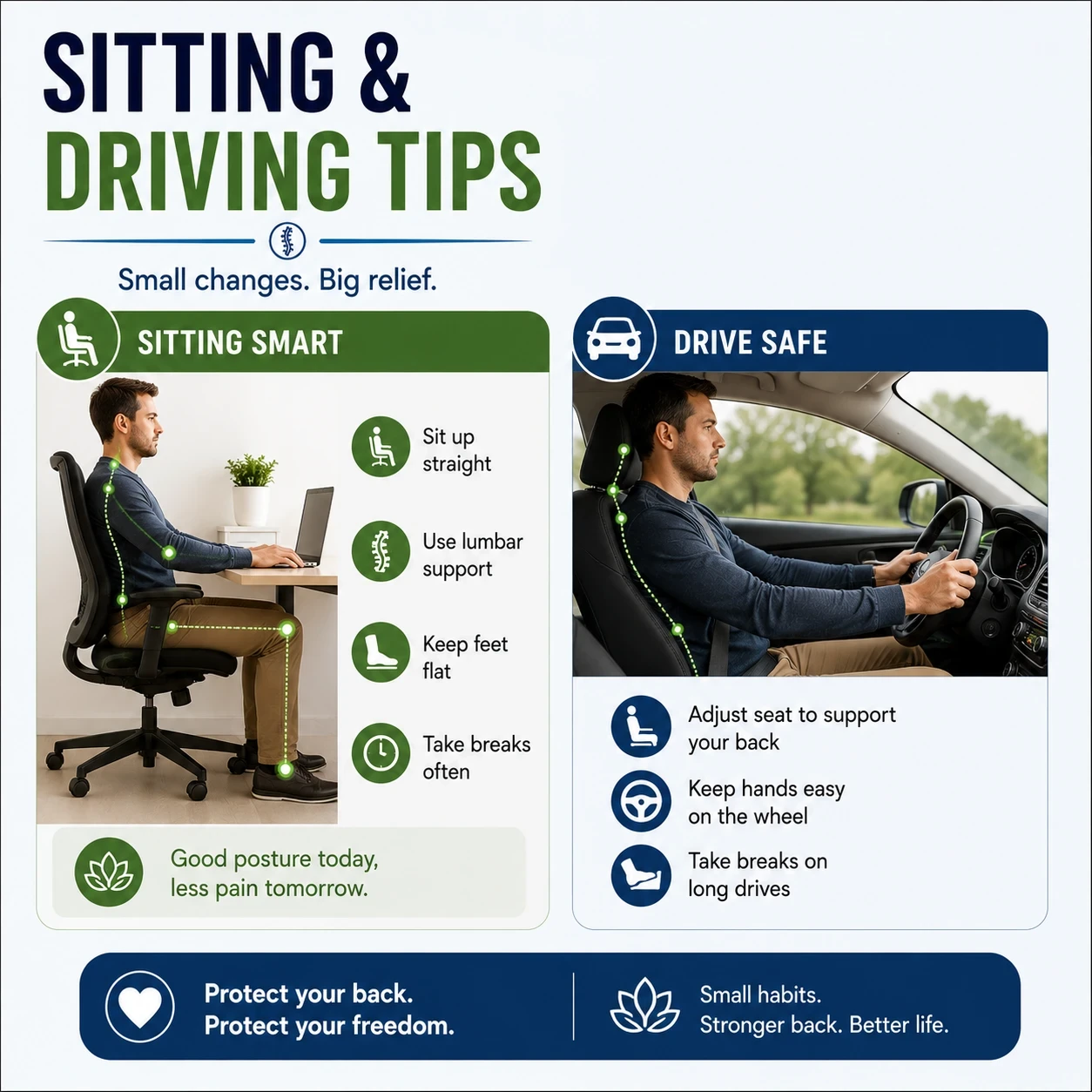
How Sitting Affects Sciatic Nerve Irritation
Long periods of sitting are one of the most common triggers for flare-ups. Sitting increases pressure around the lower spine, hips, and surrounding muscles. Poor posture may further increase strain around irritated nerves.
Office workers, drivers, and people who spend long hours seated often notice symptoms becoming worse later in the day. Some people experience discomfort almost immediately after sitting while others notice stiffness after standing back up.
Small adjustments may help reduce irritation:
- Standing regularly throughout the day
- Using lumbar support cushions
- Changing seated position frequently
- Taking short walking breaks
- Avoiding slouched posture
- Keeping hips and knees supported evenly
Many people respond well to gentle movement every 30 to 60 minutes rather than remaining in one position for long periods.
Driving and Sciatica Symptoms
Driving can be particularly uncomfortable because it combines prolonged sitting with limited movement. Vibrations from the road and fixed hip positions may increase lower back and leg irritation.
During longer journeys, many people benefit from:
- Stopping regularly to stretch and walk
- Adjusting the seat to support the lower back
- Keeping knees level with the hips
- Avoiding overreaching toward the steering wheel
- Using heat therapy before or after driving
Reducing stiffness during travel may help prevent flare-ups from becoming more severe afterward.
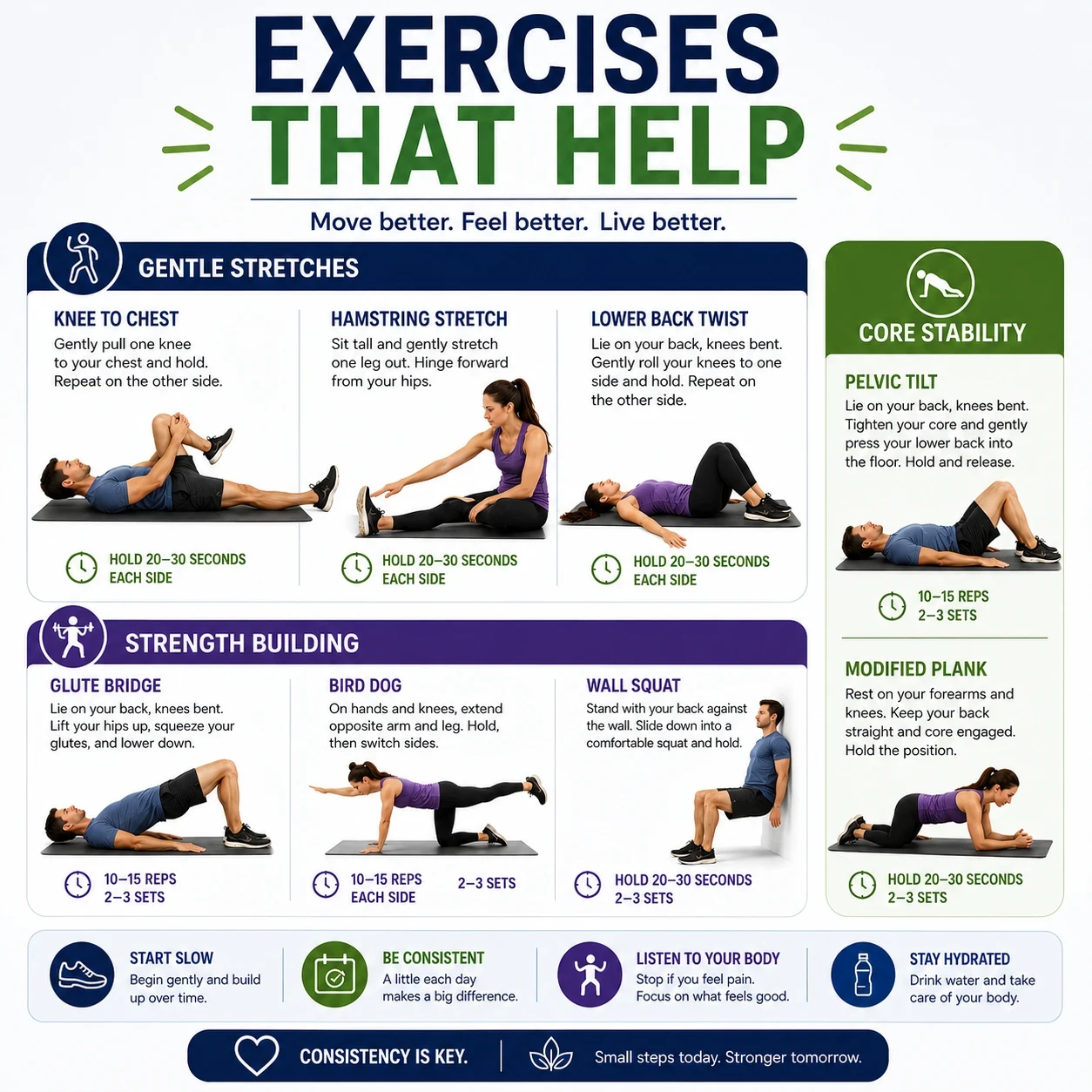
Exercises That May Help Recovery
Gentle movement is often an important part of long-term recovery. Exercises that improve flexibility, stability, and circulation may help reduce tension around the lower back and hips.
Simple exercises commonly recommended include:
- Gentle walking
- Pelvic tilts
- Hamstring stretches
- Glute stretches
- Core stability exercises
- Hip mobility work
- Light strengthening exercises
Recovery usually works best when exercises are introduced gradually rather than aggressively. Pushing through severe symptoms may temporarily worsen nerve sensitivity.
Consistency matters more than intensity. Small amounts of movement performed regularly often support recovery better than occasional intense exercise sessions.
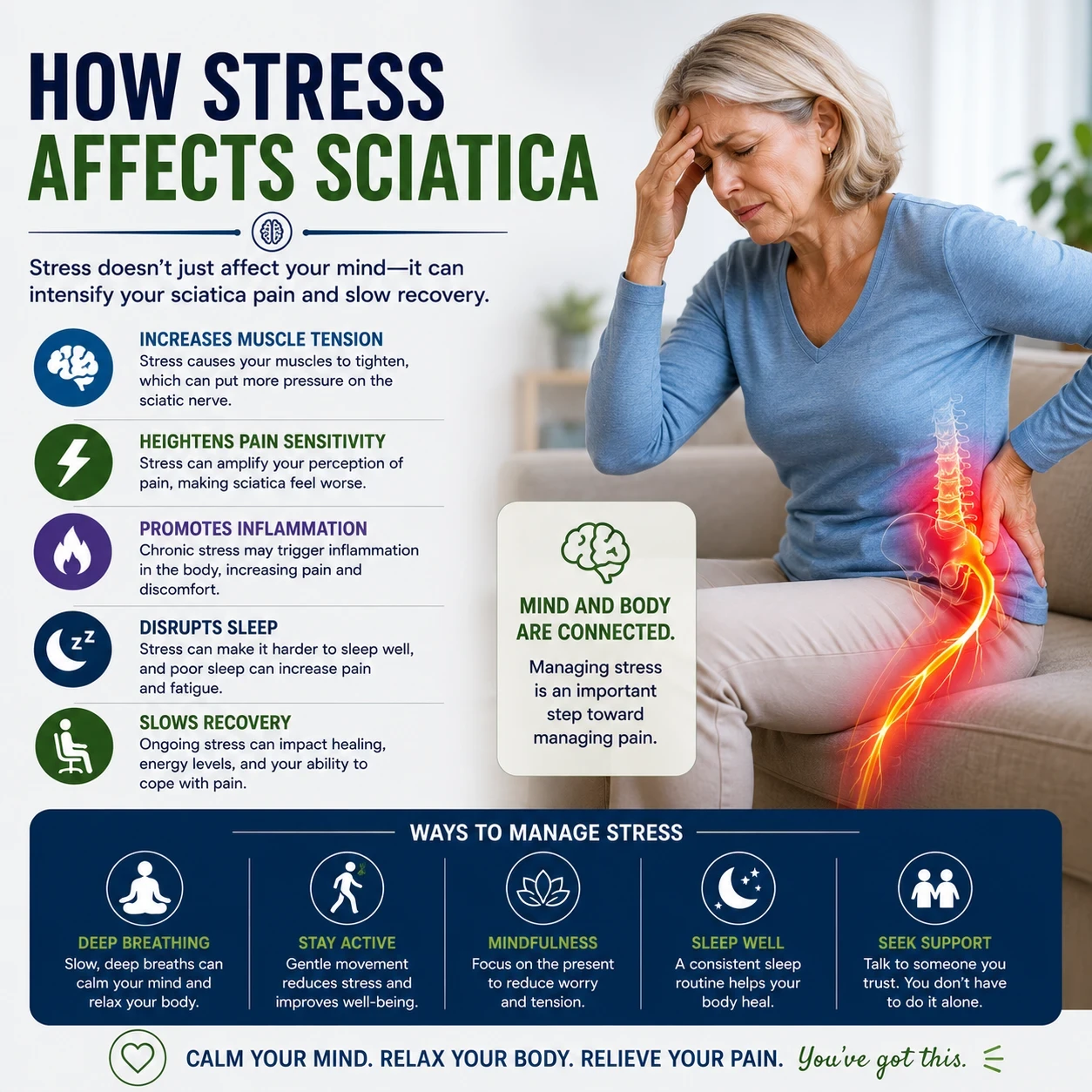
Can Stress and Anxiety Make Symptoms Worse?
Stress and anxiety do not directly damage the sciatic nerve, but they can increase muscle tension and nervous system sensitivity. During stressful periods, the body often becomes more protective and reactive.
This may increase:
- Muscle tightness
- Pain sensitivity
- Sleep disruption
- Fatigue
- Fear of movement
- Tension around the lower back and hips
Many people notice stronger flare-ups during emotionally stressful periods or after poor sleep. Calming the nervous system through pacing, relaxation, walking, and gradual movement may support recovery over time.
Can Sciatica Affect Sleep?
Nighttime symptoms are common because prolonged positions can place pressure on irritated tissues. Some people wake repeatedly because of burning, tingling, or leg discomfort.
From discovering what is sciatica pain to relief.
Poor sleep may also increase overall pain sensitivity the following day, creating a frustrating cycle involving fatigue, stiffness, and reduced activity.
Helpful strategies may include:
- Using supportive pillows
- Applying heat before bed
- Avoiding prolonged sitting late in the evening
- Gentle stretching before sleep
- Changing sleeping position carefully
- Keeping a consistent sleep schedule
Improving sleep quality is often an overlooked part of long-term recovery.
How Work and Lifestyle Habits Influence Recovery
Daily habits can strongly influence symptoms. Repetitive bending, twisting, lifting, poor posture, and inactivity may all contribute to ongoing irritation.
Jobs involving heavy lifting or long hours of sitting can make recovery more challenging. Lifestyle factors such as poor sleep, stress, smoking, and reduced physical activity may also slow improvement.
From discovering what is sciatica pain to relief
Recovery often improves when people focus on:
- Regular movement
- Improving lifting mechanics
- Reducing long periods of sitting
- Maintaining healthier body weight
- Managing stress levels
- Improving sleep quality
- Building supportive strength gradually
Small sustainable changes are often more helpful than trying extreme treatments or aggressive exercise plans.
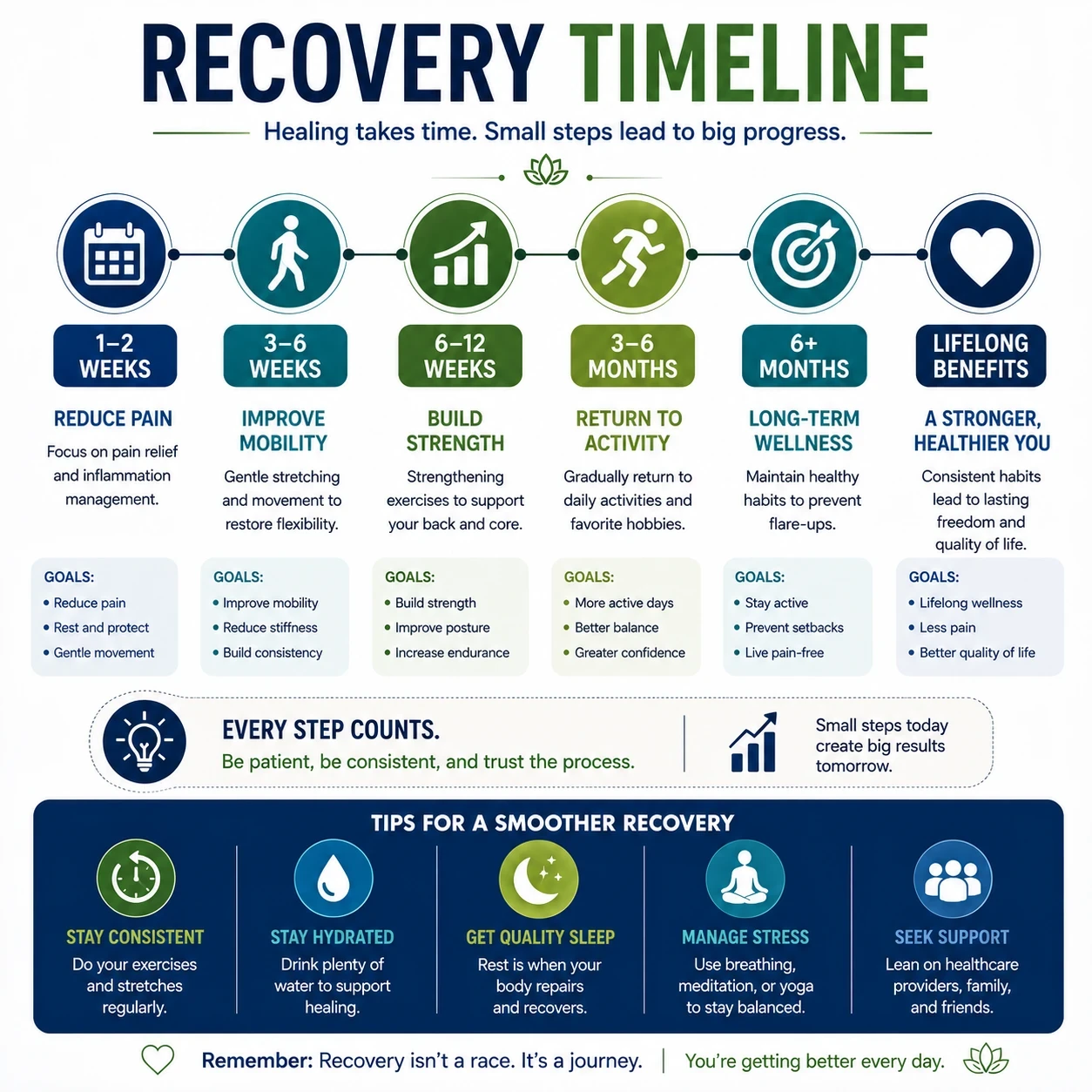
Recovery Timelines
Recovery time varies significantly from person to person. From discovering what is sciatica pain to relief.
Some people improve within several weeks while others experience recurring symptoms over months.
Factors that may influence recovery include:
- Severity of nerve irritation
- Activity levels
- Sleep quality
- Stress levels
- General fitness
- Work demands
- Movement confidence
- Consistency with rehabilitation
Improvement is rarely perfectly linear. Many people experience good days and bad days during recovery. Temporary flare-ups do not always mean damage is worsening.
From discovering what is sciatica pain to relief.
Focusing on gradual progress rather than complete symptom elimination often creates a healthier recovery mindset.
Building Long-Term Back and Nerve Health
Long-term improvement usually involves more than short-term symptom relief. Building healthier movement habits and improving physical resilience may help reduce future flare-ups.
Helpful long-term strategies include:
- Staying physically active
- Maintaining core strength
- Improving hip mobility
- Reducing prolonged inactivity
- Managing stress consistently
- Prioritizing sleep and recovery
- Using supportive therapies when needed
Many people find that combining movement, education, pacing, and supportive therapies creates the most sustainable long-term results.
Additional Frequently Asked Questions
Can sciatica cause foot pain?
Yes. Irritation affecting the sciatic nerve may cause burning, tingling, numbness, or weakness extending into the foot and toes.
Is bed rest recommended?
Extended bed rest is usually not recommended. Gentle movement and gradual activity are often more beneficial for recovery.
Can stretching make symptoms worse?
Aggressive stretching may temporarily increase irritation in some people. Gentle controlled movement is usually better tolerated.
Does weight affect recovery?
Excess body weight may increase strain around the lower back and hips, potentially contributing to ongoing irritation.
Can symptoms return after recovery?
Yes. Flare-ups can return, especially during stressful periods, inactivity, poor sleep, or after excessive strain.
Do all cases require scans?
No. Many people improve without MRI scans or advanced imaging, especially when symptoms gradually improve over time.
Frequently Asked Questions
What is sciatica pain?
Sciatica pain is nerve-related discomfort caused by irritation or compression affecting the sciatic nerve near the lower spine.
Can symptoms go away on their own?
Yes. Many cases improve gradually within weeks through movement, rest, and conservative treatment approaches.
Is walking helpful?
Gentle walking often helps reduce stiffness and improve circulation. Short consistent walks are usually more helpful than prolonged inactivity.
What makes symptoms worse?
Long periods of sitting, poor posture, lifting injuries, stress, poor sleep, and inactivity can all worsen nerve irritation.
Can heat help?
Heat therapy may help relax tight muscles and improve comfort around the lower back and hips.
Does this condition always involve back pain?
No. Some people mainly feel symptoms in the buttock, leg, calf, or foot rather than the lower back itself.
https://www.ninds.nih.gov/health-information/disorders/sciatica
https://www.ncbi.nlm.nih.gov/books/NBK507908/