EMS Therapy Benefits Worth looking at
EMS Therapy Benefits
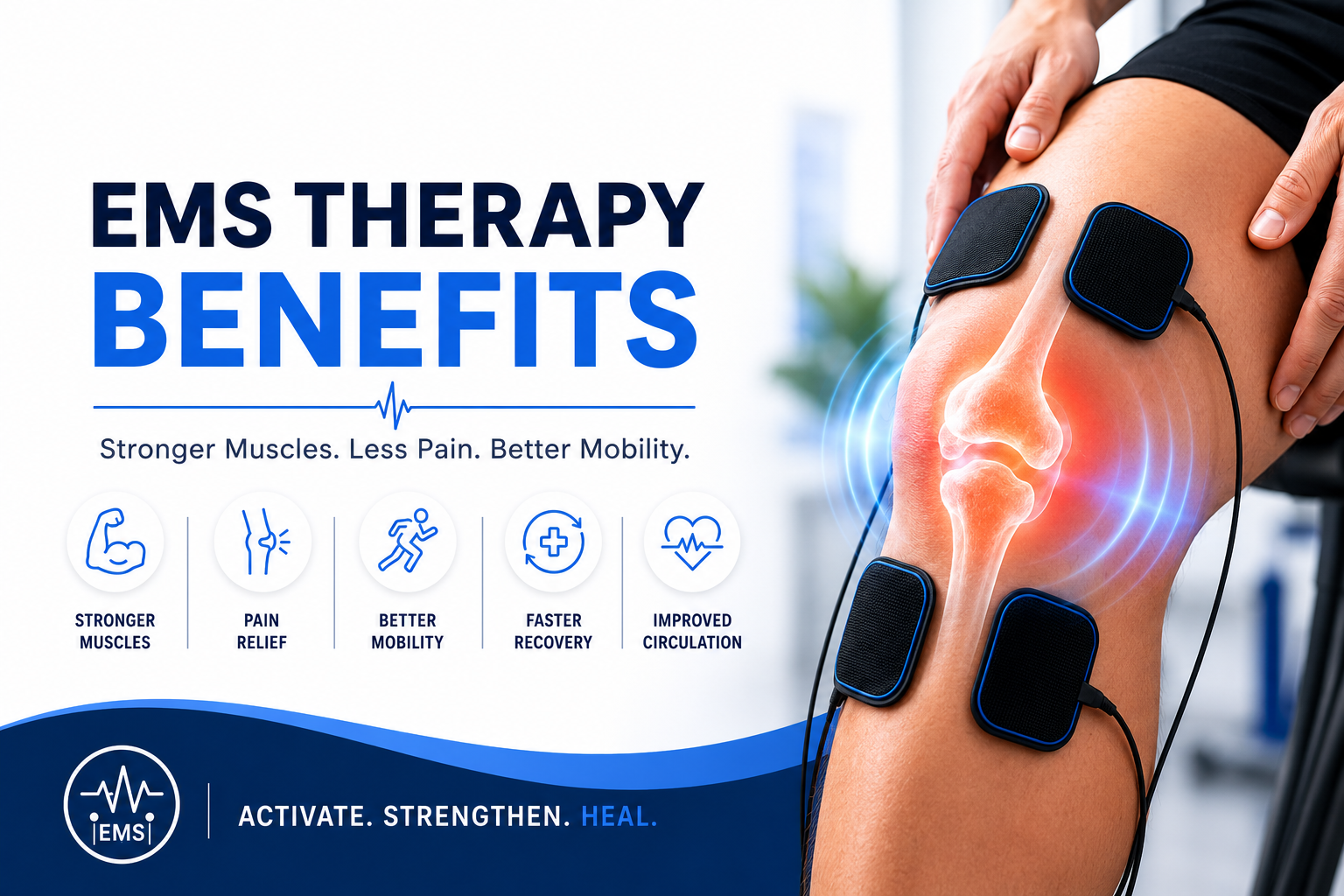
EMS therapy benefits are gaining more attention as people look for non-invasive ways to support muscle strength, mobility, and pain relief.
Electrical Muscle Stimulation (EMS) uses gentle electrical impulses to trigger muscle contractions, helping muscles stay active even when movement is limited.
EMS therapy is now used in rehabilitation clinics, sports recovery, and chronic pain management because it may support circulation, reduce stiffness, and improve muscle function.
Many people exploring EMS therapy for osteoarthritis pain are interested in how this technology can help maintain movement without placing excessive strain on painful joints.
Electrical stimulation may also support recovery after injury or surgery, especially when normal exercise feels difficult.
What Is EMS Therapy?
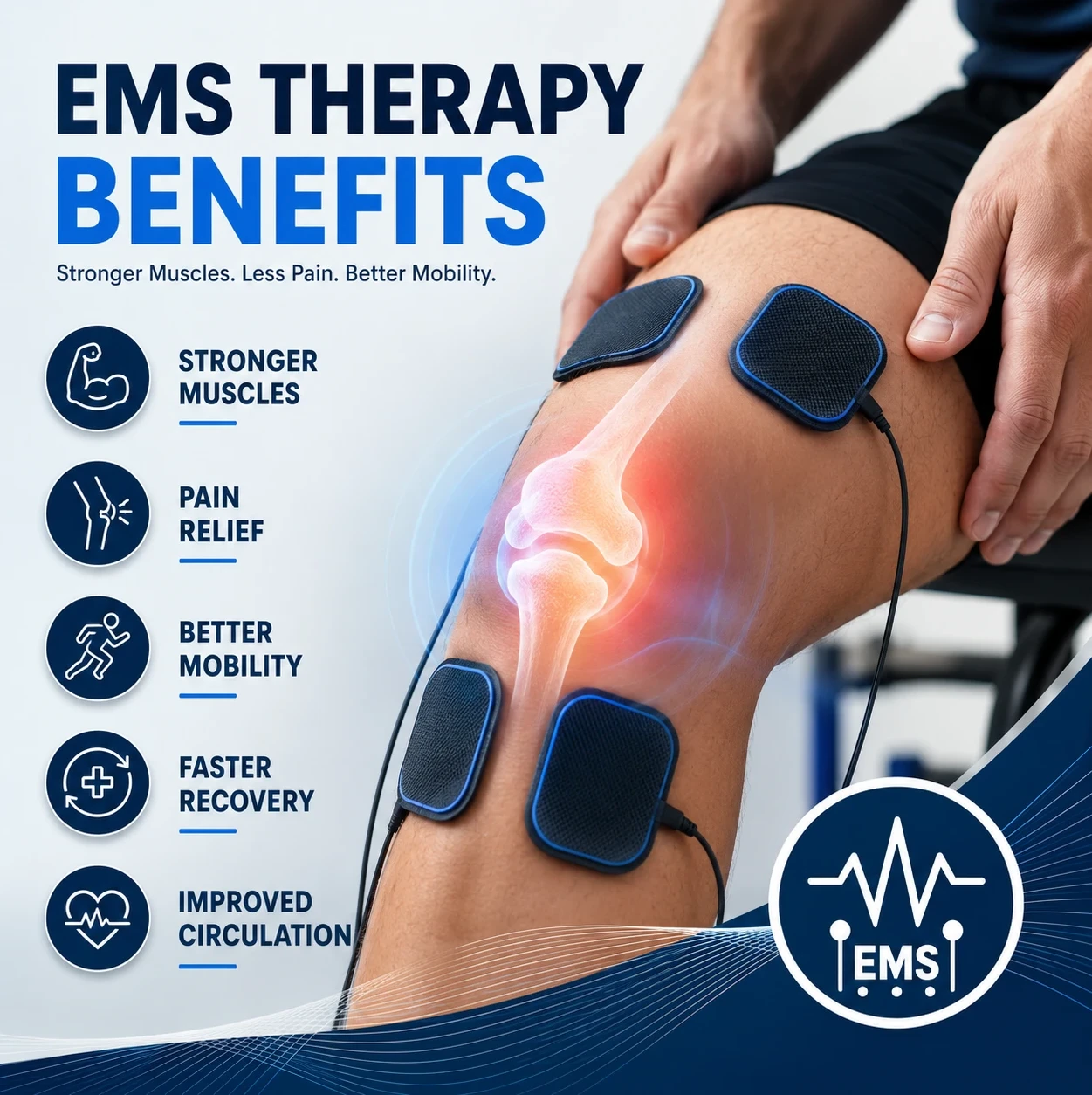
EMS stands for Electrical Muscle Stimulation. Small electrodes are placed on the skin over targeted muscles. The device then delivers low-level electrical pulses that cause the muscles to contract and relax rhythmically.
Unlike traditional exercise, EMS can activate muscles without requiring major joint movement. This is one reason EMS therapy benefits are being studied in people with arthritis, muscle weakness, reduced mobility, and rehabilitation needs.
EMS is different from TENS therapy. TENS mainly targets nerves for pain relief, while EMS focuses more on muscle activation and strengthening.
Explore quality assured EMS therapy Here.
Muscle Strength and Activation
One of the biggest advantages of EMS is improved muscle activation.
When muscles are weak due to inactivity, injury, or pain, EMS may help stimulate muscle fibers that are not being fully used.
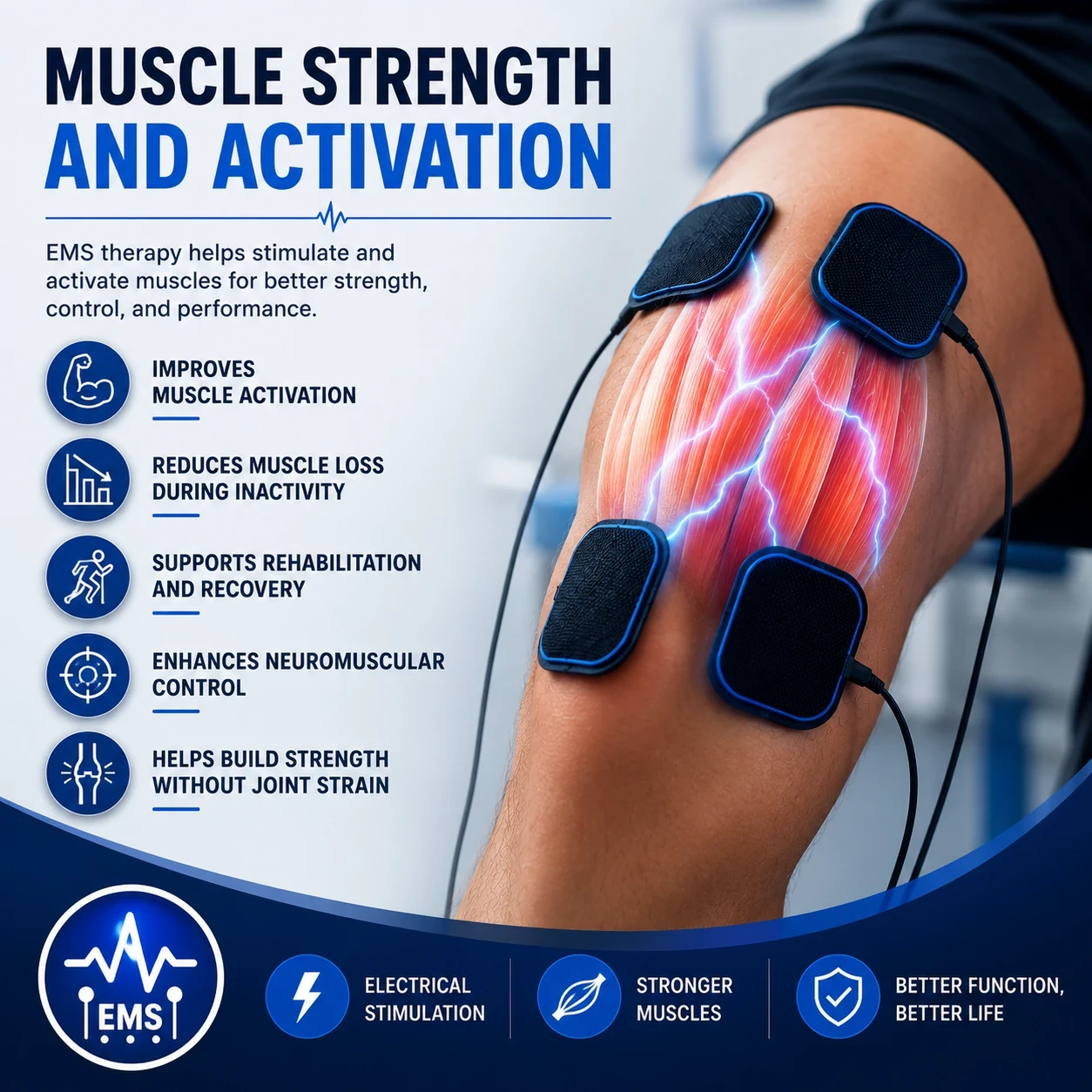
Research suggests EMS can help:
- Support muscle maintenance
- Reduce muscle loss during inactivity
- Improve muscle contraction quality
- Assist rehabilitation after surgery
- Encourage better neuromuscular control
This can be particularly useful for people with osteoarthritis who struggle to exercise consistently because of pain or stiffness.
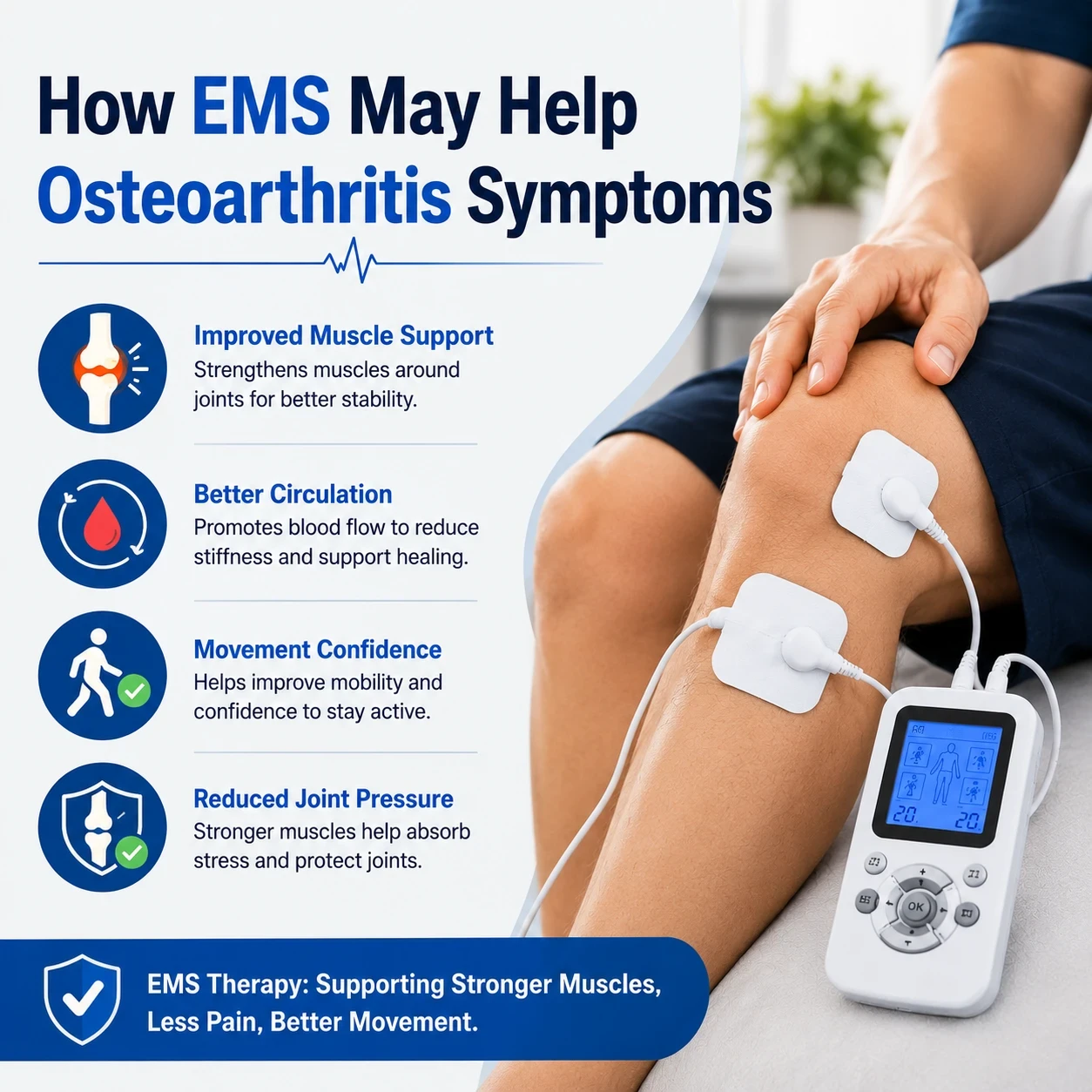
EMS Therapy Benefits for Osteoarthritis
Interest in EMS therapy benefits has increased after recent research involving osteoarthritis patients. Studies suggest EMS may help strengthen muscles surrounding painful joints without placing heavy stress on those joints.
For knee osteoarthritis, stronger thigh muscles can improve stability and support daily movement.
Some studies found participants using EMS experienced improvements in strength and function after several weeks of regular use.
People comparing osteoarthritis vs rheumatoid arthritis often notice that muscle weakness can affect both conditions.
Electrical muscle stimulation may help support physical function in people who find movement challenging because of pain or inflammation.
Shop EMS therapy products Here
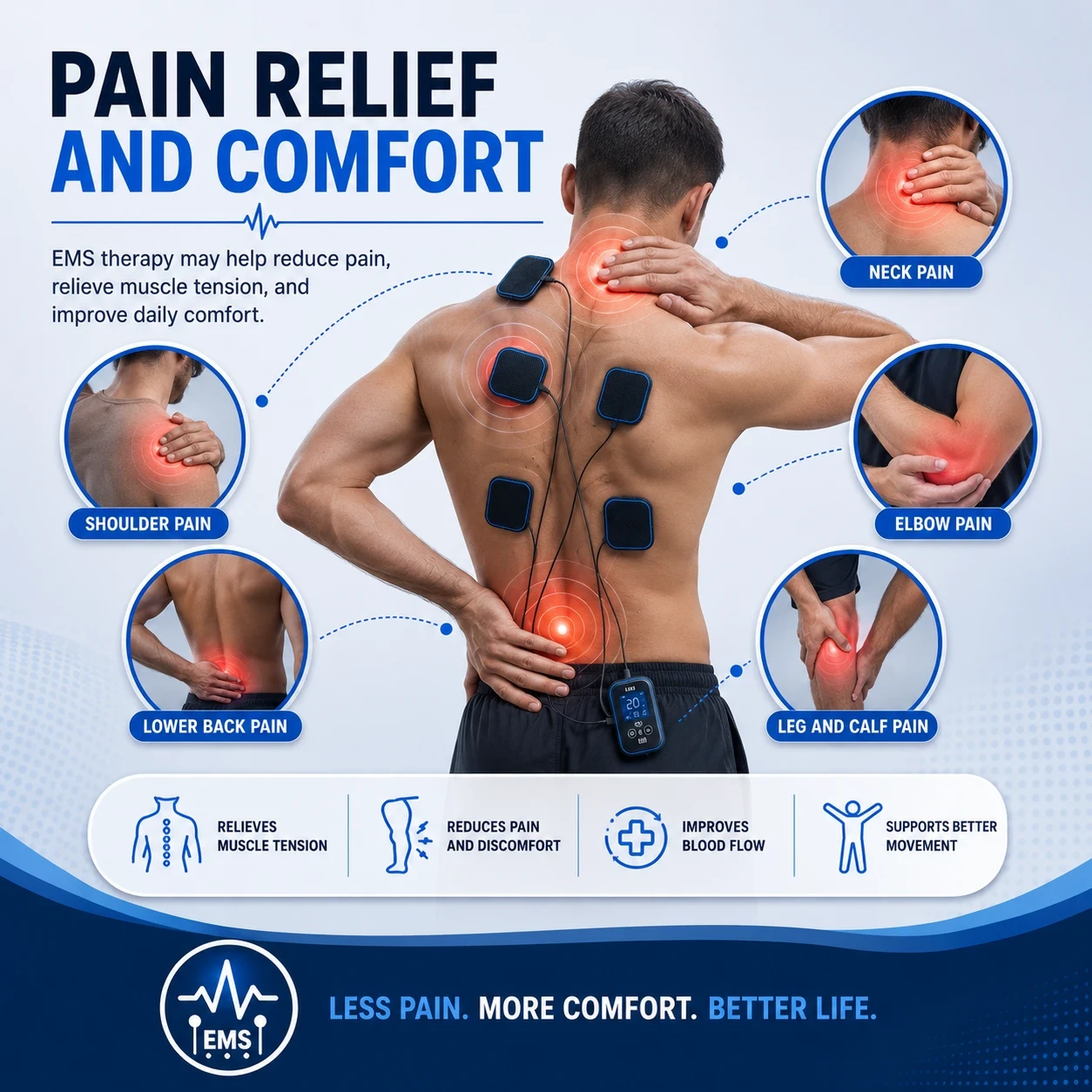
Pain Relief and Comfort
Another reason EMS therapy benefits are becoming popular is their potential role in pain management.
Electrical stimulation may interfere with pain signals while also encouraging the release of natural pain-relieving chemicals within the body.
Some users report that EMS therapy helps reduce:
- Muscle tightness
- Muscle spasms
- Joint stiffness
- Persistent muscular discomfort
EMS is often used alongside physiotherapy, stretching, and movement-based rehabilitation rather than replacing them completely.
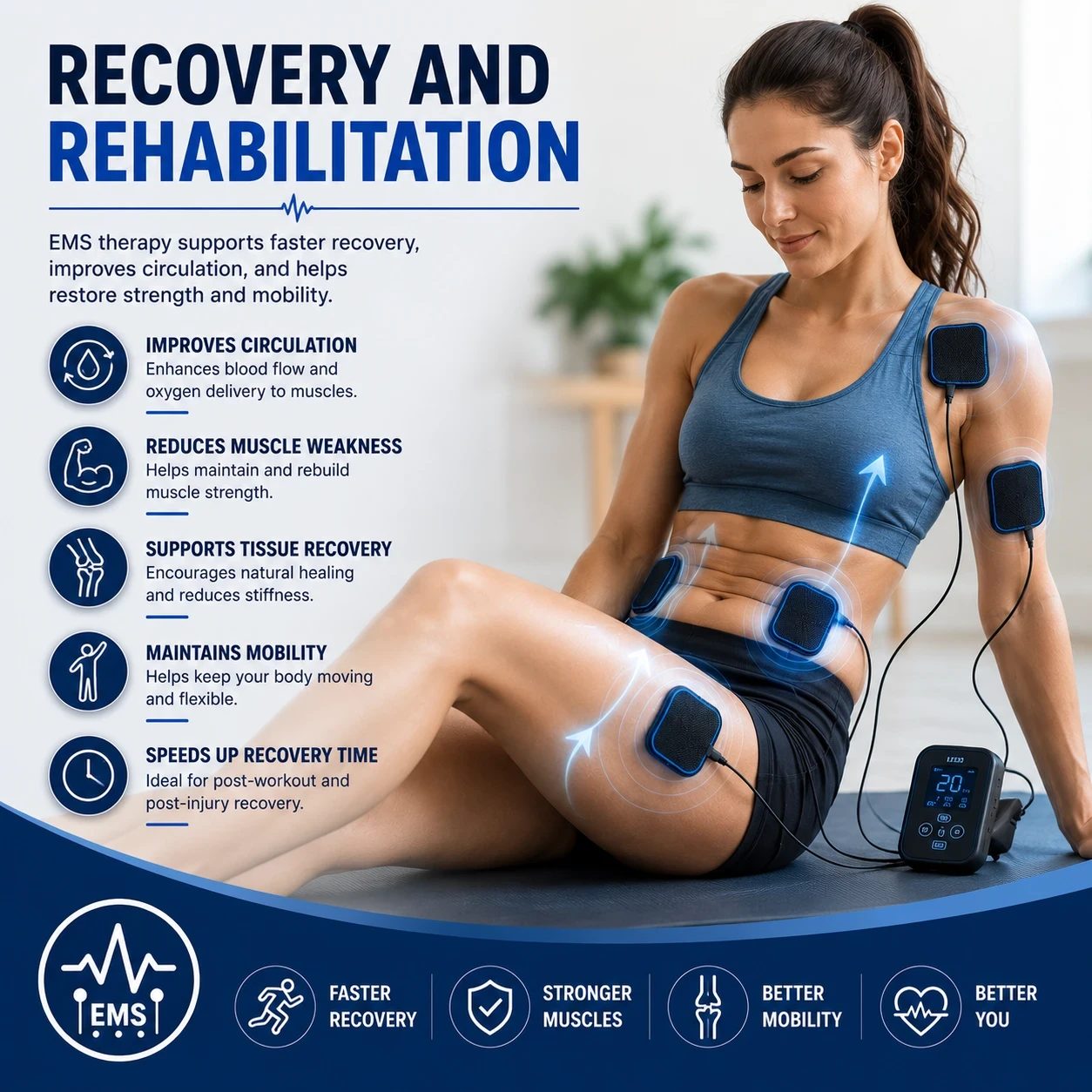
Recovery and Rehabilitation
EMS therapy benefits are widely discussed in sports medicine and rehabilitation because the technology may support faster recovery after physical strain or injury.
- Improve circulation
- Increase oxygen delivery to tissues
- Reduce inactivity-related weakness
- Support tissue recovery
- Help maintain mobility
Athletes sometimes use EMS after intense training sessions to support muscle recovery and reduce soreness.
After Surgery Support
One growing area of research involves EMS therapy benefits after surgery, especially knee and joint replacement procedures.
Muscles often weaken before and after surgery because pain limits movement. EMS may help keep muscles active during recovery periods when exercise tolerance is low.
Recent research involving osteoarthritis patients preparing for knee surgery found that EMS users showed improvements in muscle strength and function after surgery compared with some exercise-only groups.
This has increased interest in combining EMS with rehabilitation programs before and after orthopedic surgery.
Supporting Mobility
Many people value EMS therapy benefits because movement itself can become difficult during chronic pain conditions.
- Pain discourages activity
- Less activity weakens muscles
- Weak muscles increase instability
- Instability can worsen pain
EMS may help interrupt this cycle by supporting muscle activation during periods when normal exercise feels uncomfortable. This is why EMS is increasingly discussed alongside osteoarthritis treatment options focused on long-term mobility and independence.
Are There Limitations?
Although EMS therapy benefits are promising, EMS is not considered a complete replacement for movement and exercise. Most experts suggest EMS works best when combined with rehabilitation, gentle activity, stretching, and overall pain management strategies.
EMS may not be suitable for everyone. People with pacemakers or certain medical devices should seek professional guidance before using electrical stimulation devices.
Some users also find the electrical sensation uncomfortable at higher settings. Results can vary depending on the condition being treated, the quality of the device, and consistency of use.
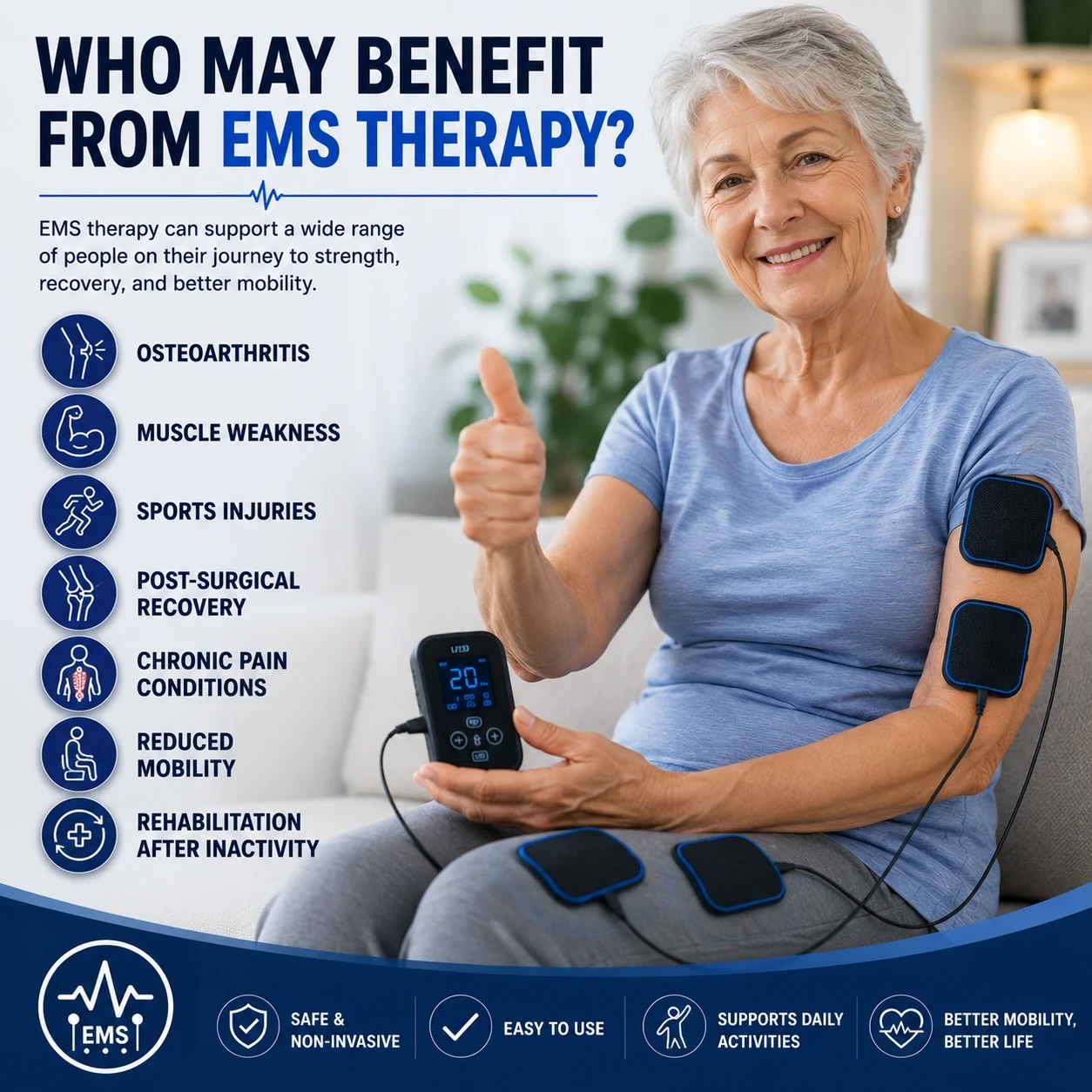
Who May Benefit From EMS Therapy?
EMS therapy benefits may help people dealing with:
- Osteoarthritis
- Muscle weakness
- Sports injuries
- Post-surgical recovery
- Chronic muscular pain
- Reduced mobility
- Rehabilitation after inactivity
It is commonly used by physiotherapists, rehabilitation clinics, and sports recovery specialists.
Final Thoughts
EMS therapy benefits continue to attract attention because they offer a non-invasive way to support muscle activity, rehabilitation, and pain management.
While EMS is not a miracle cure, research suggests it may help improve muscle strength, support recovery, and assist people who struggle with traditional exercise because of pain or limited mobility.
For people managing osteoarthritis, injury recovery, or chronic muscular weakness, EMS may provide an additional tool alongside movement, rehabilitation, and healthy lifestyle strategies.
As research continues, electrical muscle stimulation may become an increasingly important part of modern rehabilitation and pain management programs.
Scientific study:
ScienceAlert EMS Osteoarthritis Research