What is knee bursitis and its symptoms is a common question when knee pain appears suddenly, feels tender to touch, or causes visible swelling around the joint.
Knee bursitis involves irritation of small fluid-filled sacs that reduce friction around the knee.
Understanding what is knee bursitis and its symptoms helps you respond calmly, avoid unnecessary fear, and choose sensible ways to support recovery.
Knee bursitis is usually manageable and often settles with time and appropriate adjustments rather than aggressive treatment.
—
What Is Knee Bursitis?
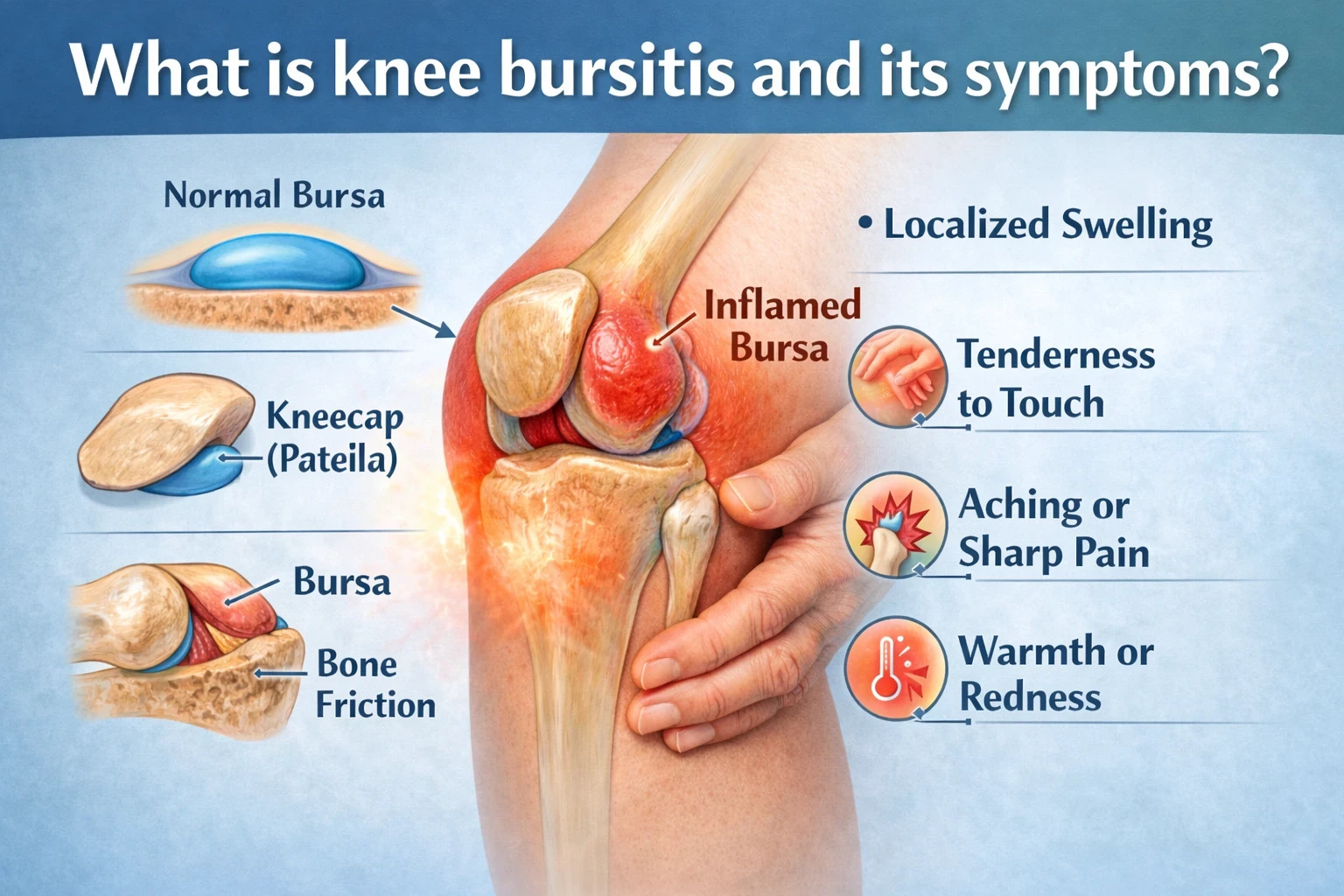
Knee bursitis is inflammation of one or more bursae around the knee joint.
Bursae are thin, fluid-filled sacs that act as cushions between skin, tendons, muscles, and bone.
Common bursae around the knee include:
Prepatellar bursa – in front of the kneecap
Infrapatellar bursa – just below the kneecap
Pes anserine bursa – on the inner side of the knee
When a bursa becomes irritated, it can fill with excess fluid, leading to swelling and tenderness.
This process is inflammatory, not degenerative, and does not mean the knee is “wearing out.”
—
Common Causes of Knee Bursitis
Knee bursitis most often develops from repeated stress rather than a single injury.
Common contributors include:
- Frequent kneeling on hard surfaces
- Prolonged pressure on the knee
- Sudden increases in activity
- Direct knocks or falls
- Tight or overloaded surrounding muscles
Because inflammation is central to this process, some people look beyond rest alone and explore broader strategies that calm inflammatory responses.
Approaches like those outlined in Natural Remedies for Arthritis Pain Relief are often relevant here, even though bursitis is not arthritis.
https://beyond-pain-relief.com/natural-remedies-for-joint-pain-relief/
—
Symptoms You May Notice
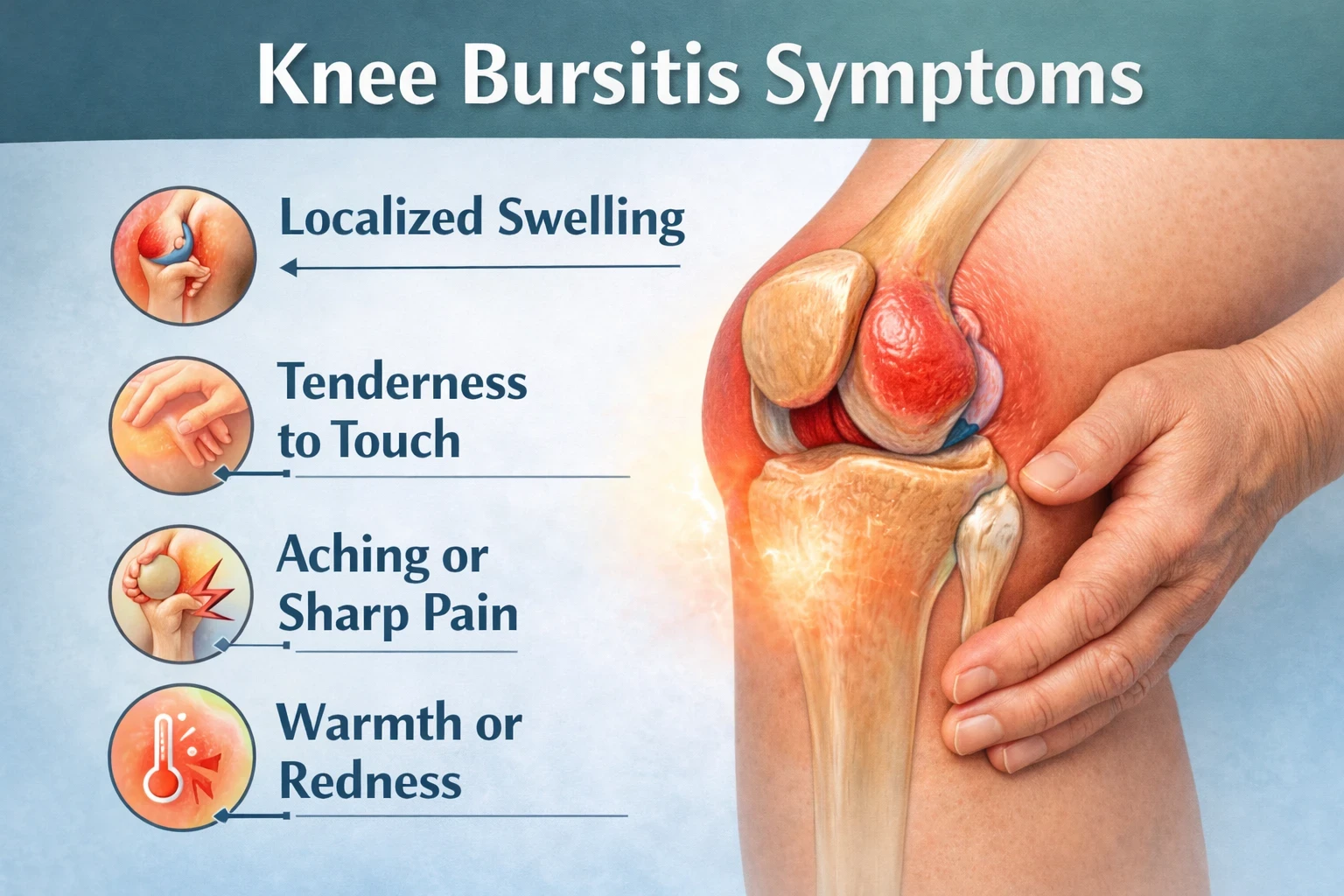
Knee bursitis symptoms vary depending on the affected bursa, but common patterns include:
Localised Swelling
Swelling is usually easy to see and feel. It may appear over the kneecap or along the inner knee.
Tenderness to Touch
The area often feels sore when pressed, kneeling, or even through clothing.
Aching or Sharp Pain
Pain is typically localised and superficial rather than deep inside the joint.
Stiffness or Tightness
Some stiffness after rest is common and usually improves with gentle movement.
Warmth or Redness
During active inflammation, the skin may feel warm or look slightly red.
—
How Knee Bursitis Symptoms Differ From Other Knee Pain
Knee bursitis symptoms often stand out because:
Pain is easy to pinpoint
Swelling is close to the skin
Movement is uncomfortable but not mechanically blocked
Clicking, locking, or instability are usually absent
These features help distinguish bursitis from ligament injuries, meniscus problems, or joint degeneration.
—
What Often Makes Symptoms Worse
Symptoms commonly flare with:
- Kneeling or leaning on the knee
- Repeated bending or squatting
- Prolonged pressure on hard surfaces
- Continuing activity through irritation
Learning to reduce unnecessary load — rather than eliminating movement entirely — is often key.
This broader perspective is explored in Holistic
Approaches for Arthritis Pain Management, which also applies well to inflammatory soft-tissue conditions like bursitis.
https://beyond-pain-relief.com/holistic-approaches-for-arthritis-pain-management/
—
Is Knee Bursitis Serious?
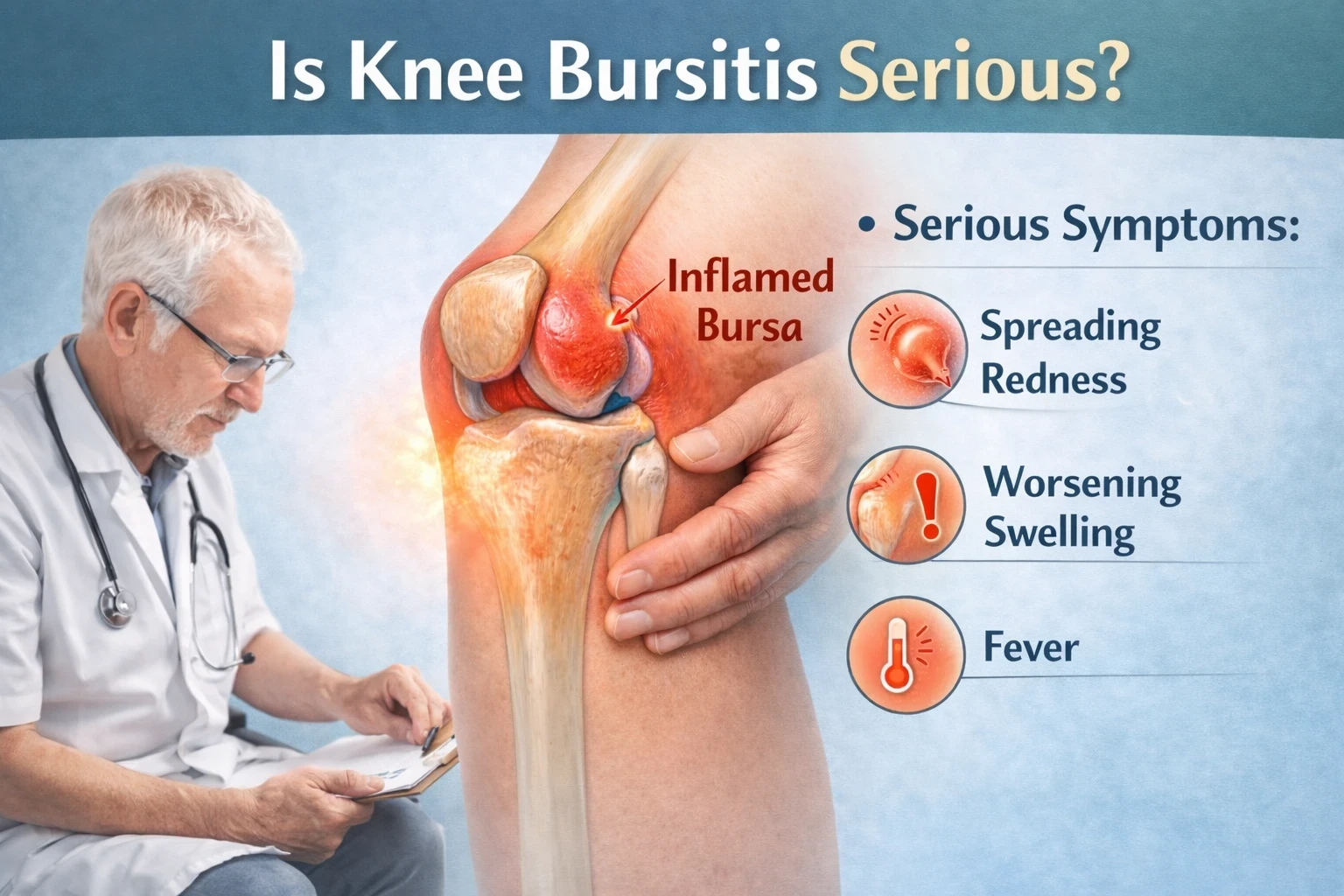
For most people, knee bursitis is not dangerous and does not cause permanent damage. It is a protective inflammatory response.
Medical review is advised if swelling continues to worsen, redness spreads, fever develops, or pain becomes severe, as these may indicate infection or another condition.
—
How Is The Condition Usually Managed
Management focuses on calming irritation and reducing repeated stress rather than forcing the knee to “push through.”
Supportive strategies often include:
- Temporary activity modification
- Avoiding prolonged kneeling
- Using cushions or knee pads
- Gentle range-of-motion exercises
- Short-term compression or support
Gradual return to normal movement
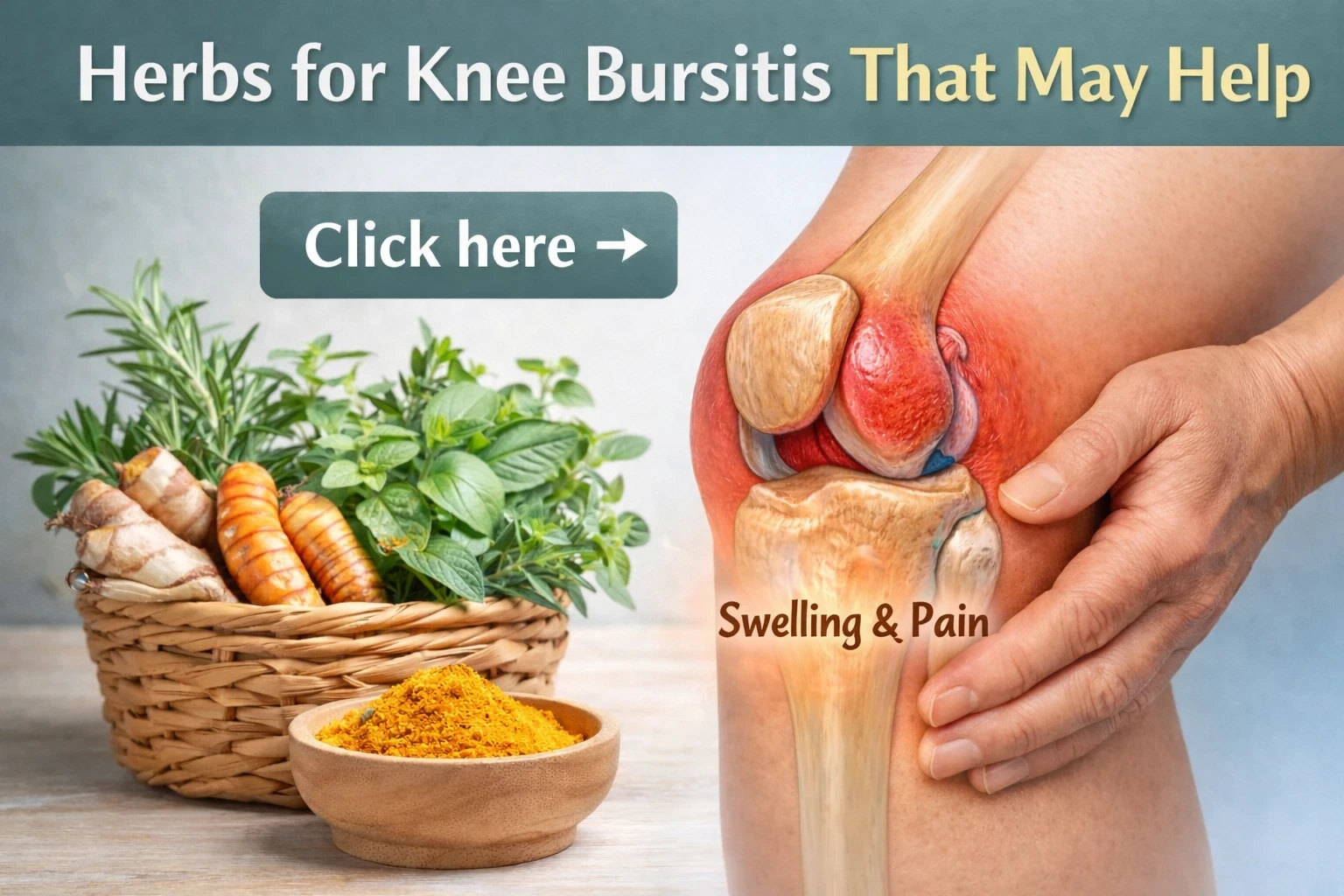
Because inflammation drives symptoms, some people also explore supportive dietary and herbal options.
A balanced overview of these approaches — including what helps and what to expect — is covered in Natural Anti-Inflammatory Herbs — What Helps & What to Expect.
https://beyond-pain-relief.com/natural-anti-inflammatory-herbs-what-helps-what-to-expect/
—
A Reassuring Perspective
Understanding what is knee bursitis and its symptoms helps remove unnecessary fear.
Swelling and pain can look dramatic, but they usually reflect a temporary inflammatory response rather than structural damage.
With sensible adjustments and patience, most cases improve steadily.
Scientific Research & Medical References
https://pubmed.ncbi.nlm.nih.gov/26614925/
https://pubmed.ncbi.nlm.nih.gov/28724171/