Calm Pain Relief Techniques: Practical Ways To Reduce Pain
Calm Pain Relief Techniques:
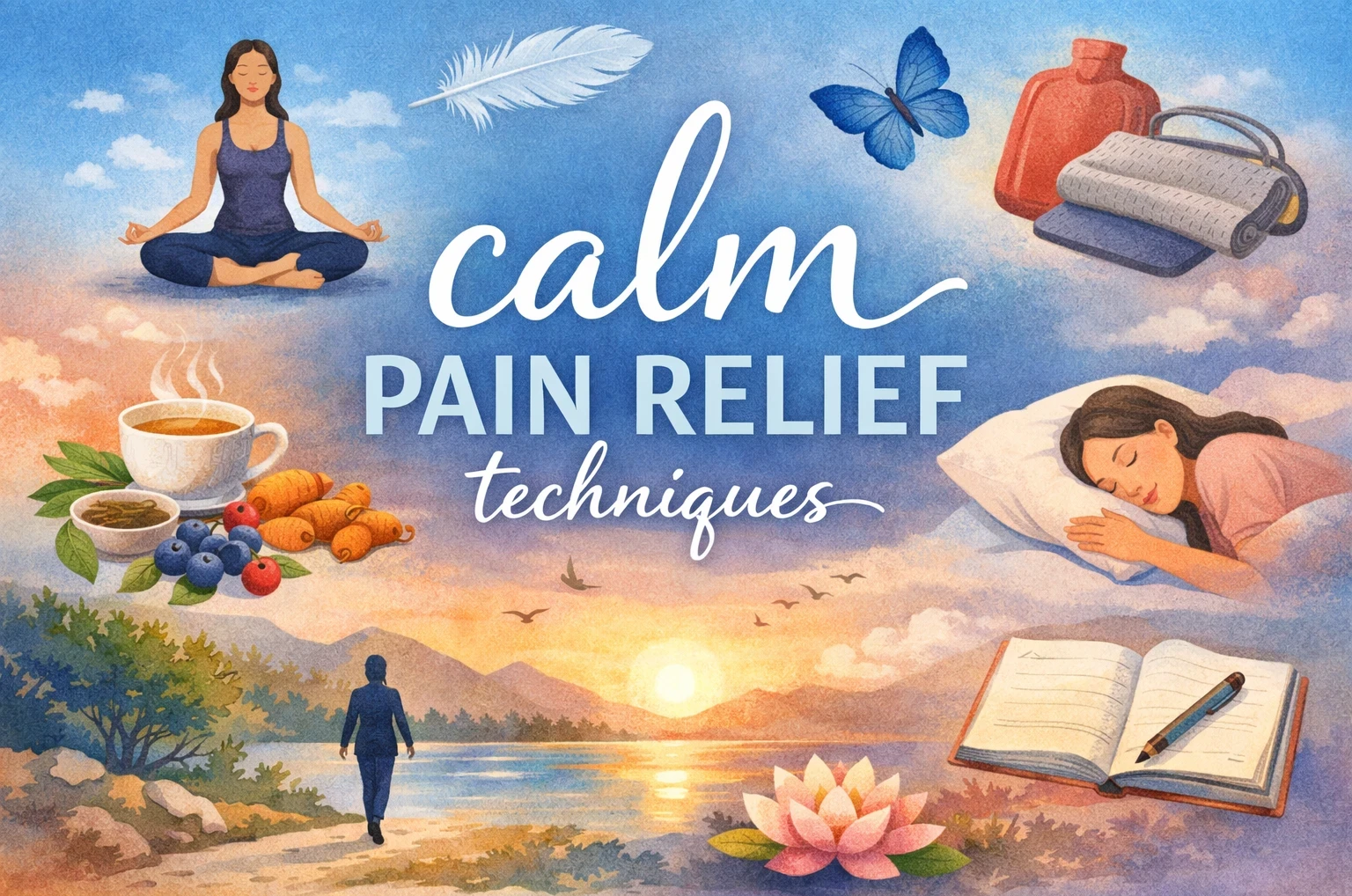
Calm pain relief techniques are becoming increasingly important in a world where stress, inflammation, and nervous system overload contribute to persistent discomfort.
If you are dealing with ongoing joint stiffness, muscle tension, fibromyalgia flares, or stress-related pain, learning how to calm your system may be just as important as treating the pain itself.
Pain is not only structural. It is also neurological. The more sensitized the nervous system becomes, the louder pain signals can feel.
That is why calm pain relief techniques focus on reducing threat signals, lowering inflammation, and supporting the body’s natural recovery systems.
Let’s walk through practical strategies you can start using today.
1. Slow Breathing to Downshift the Nervous System
One of the simplest calm pain relief techniques is structured breathing.
When you slow your breathing, especially your exhale, you activate the parasympathetic nervous system — the body’s “rest and repair” mode.
Try this:
• Inhale for 4 seconds
• Exhale slowly for 6–8 seconds
• Repeat for 3–5 minutes
This pattern reduces muscle guarding, lowers heart rate, and decreases perceived pain intensity.
If you’ve read about how anxiety affects pain perception, you already know how closely the two are linked. (You can explore that deeper here:
https://beyond-pain-relief.com/how-anxiety-affects-perception/)
Calming the nervous system reduces the “volume knob” on pain.
2. Gentle Movement Instead of Complete Rest
When pain flares, the instinct is often to stop moving completely.
But prolonged rest can increase stiffness and sensitivity.
Calm pain relief techniques encourage controlled, low-threat movement instead.
Options include:
• Slow walking
• Light mobility exercises
• Gentle stretching
• Water-based movement
Movement improves circulation, lubricates joints, and reduces inflammatory buildup.
For joint-specific strategies, you may find this helpful:
https://beyond-pain-relief.com/natural-remedies-for-joint-pain/
The goal isn’t intensity. It’s consistency without triggering flare-ups.
3. Heat for Muscle Guarding and Stiffness
Heat therapy is one of the most accessible calm pain relief techniques available.
Warmth increases blood flow, reduces muscle tightness, and signals safety to the nervous system.
Use:
• Warm compresses
• Heating pads
• Warm baths
• Infrared heat wraps
Heat is particularly helpful for chronic muscle tension and fibromyalgia-related discomfort.
It creates a soothing sensory input that competes with pain signals in the brain.

4. Anti-Inflammatory Nutrition
Pain often has an inflammatory component.
Supporting inflammation through nutrition is a steady, long-term calm pain relief technique.
Focus on:
• Omega-3 fatty acids (fatty fish, flaxseed)
• Turmeric (curcumin)
• Magnesium-rich foods
• Leafy greens
• Berries
Magnesium in particular plays a role in muscle relaxation and nervous system regulation. If you’re unsure how to choose the right form, this guide can help:
https://beyond-pain-relief.com/how-to-choose-magnesium-supplements/
Food is not a quick fix — but over time, it reduces the inflammatory background that amplifies pain.
5. Sleep Restoration
Poor sleep increases pain sensitivity. It’s that simple.
One of the most overlooked calm pain relief techniques is protecting sleep quality.
Focus on:
• Consistent bedtime
• Low light in the evening
• Limiting screens 60–90 minutes before bed
• Keeping the room cool and dark
Better sleep improves tissue repair, reduces inflammatory markers, and improves emotional resilience to pain.
Scientific evidence supports the strong link between sleep disturbance and chronic pain perception:
https://pubmed.ncbi.nlm.nih.gov/16706587/
Improving sleep does not eliminate pain overnight — but it significantly improves how manageable it feels.
6.Cognitive Down-Regulation: Reducing Catastrophic Thinking
Pain becomes louder when the brain perceives danger.
If every flare is interpreted as damage or deterioration, the nervous system becomes hypervigilant.
Calm pain relief techniques include:
• Reframing flare-ups as temporary sensitivity
• Avoiding worst-case thinking
• Tracking patterns instead of reacting emotionally
Understanding pain science changes outcomes.
Learning how the brain processes pain can reduce fear and reduce intensity.
Research supports the role of cognitive behavioral strategies in lowering chronic pain severity:
https://pubmed.ncbi.nlm.nih.gov/26233716/
When fear decreases, tension decreases. When tension decreases, pain often follows.
7. Supportive Tools (Used Strategically)
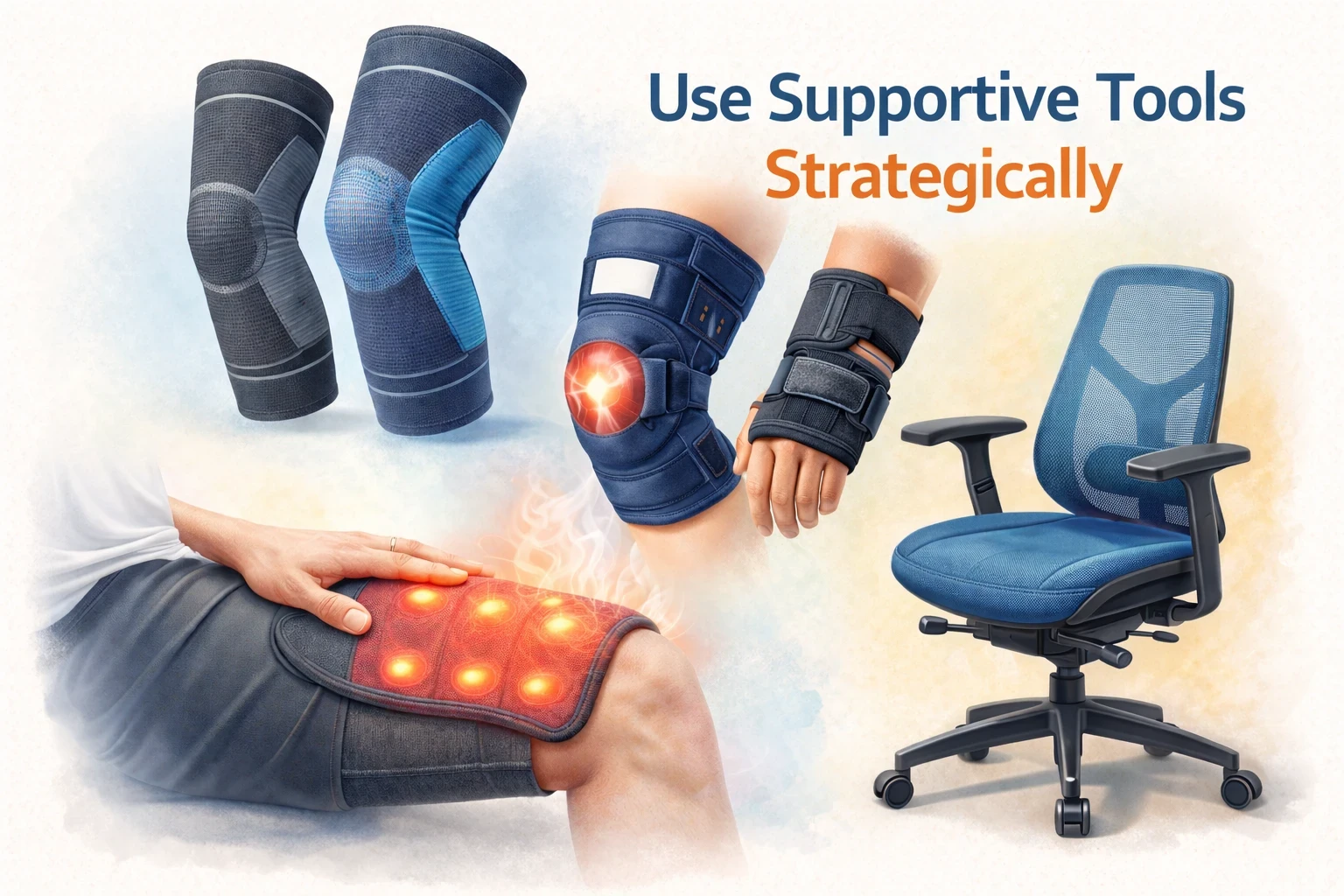
Supportive tools can be helpful when used wisely:
• Compression sleeves
• Ergonomic seating
• Lumbar supports
• Braces for short-term stabilization
These tools are not permanent solutions.
But they can reduce strain during flare-ups and create a sense of stability while you build strength and resilience.
Used occasionally, they support recovery. Used constantly without strengthening, they can create dependence. Balance is key.
8. Pacing and Energy Management
Many people with chronic pain experience “boom and bust” cycles — doing too much on good days and crashing afterward.
A powerful calm pain relief technique is pacing:
• Do slightly less than you feel capable of
• Schedule rest breaks before exhaustion
• Gradually increase tolerance over weeks.
This reduces nervous system spikes and prevents inflammatory surges that follow overexertion.
Consistency beats intensity.
What Calm Pain Relief Techniques Can and Can’t Do
Calm pain relief techniques:
✔ Lower nervous system sensitivity
✔ Reduce inflammatory load
✔ Improve sleep and recovery
✔ Increase resilience
They do not:
✖ Instantly cure structural damage
✖ Replace necessary medical evaluation
✖ Work if used once and abandoned
These strategies are cumulative. The body responds to repeated signals of safety, nourishment, and steady movement.
When to Seek Further Evaluation
If pain includes:
• Sudden swelling
• Unexplained weight loss
• Severe neurological symptoms
• Fever
• Loss of joint function
Medical assessment is essential. Calm pain relief techniques support recovery — but they are not substitutes for proper diagnosis when red flags appear.
The Bigger Picture
Pain is complex. It involves tissues, inflammation, sleep, stress, and brain interpretation.
Calm pain relief techniques work because they address multiple layers at once.
Breathing lowers threat signals.
Movement restores circulation.
Nutrition reduces inflammatory drivers.
Sleep repairs tissue.
Cognitive strategies reduce amplification.
You are not trying to fight pain. You are trying to reduce the signals that make pain louder.
And often, when the body feels safer, pain becomes quieter.
If you apply even three of these calm pain relief techniques consistently for 30 days, you may notice something subtle but powerful — less reactivity, fewer flare spikes, and greater control.
That’s not magic.
It’s physiology.