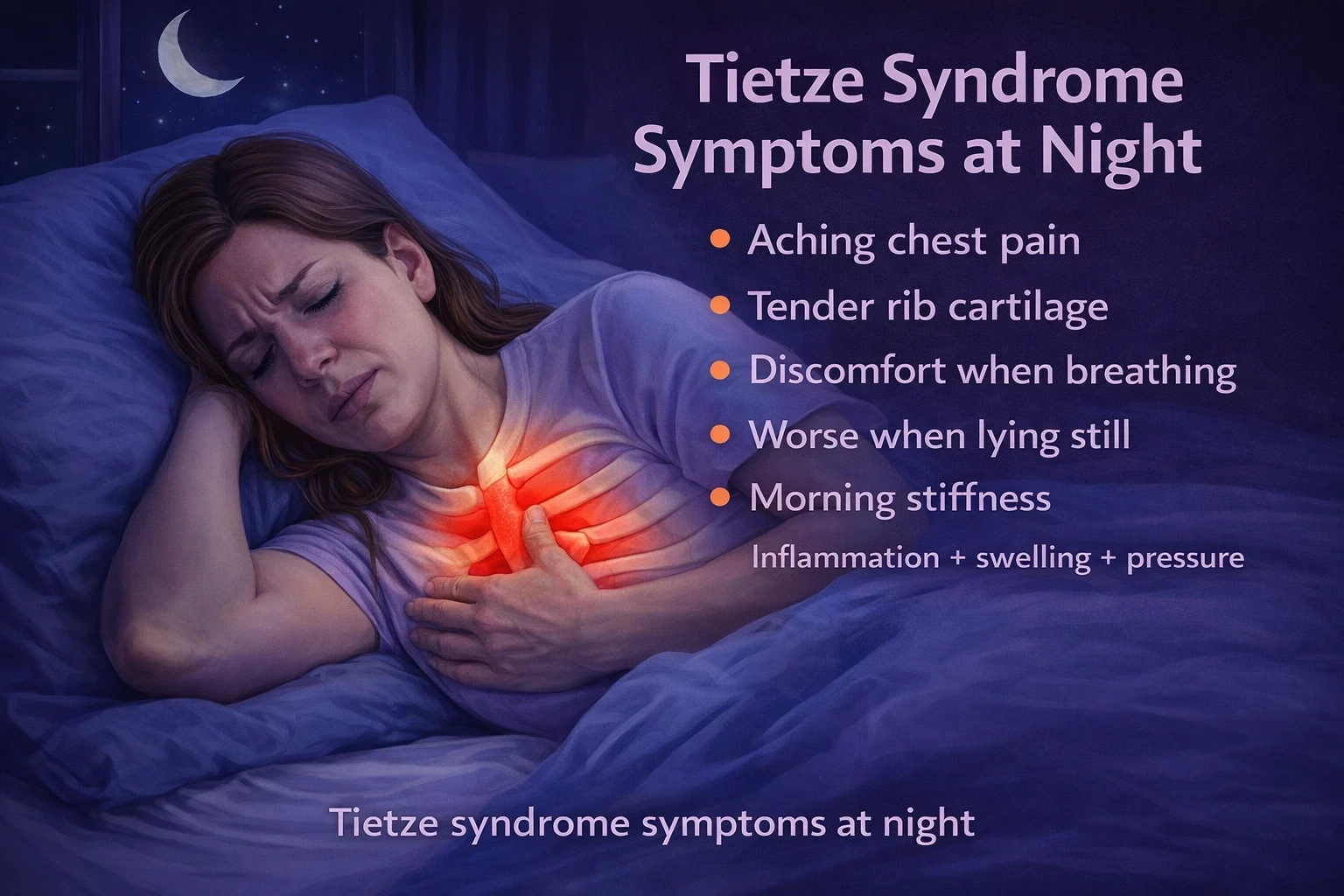
Tietze Syndrome Symptoms At Night
Tietze Syndrome Symptoms at Night:
Tietze syndrome symptoms at night are very common.
Many people notice chest pain becomes more intense once they lie down to sleep.
This can feel frightening.
However, night-time symptoms are a recognised part of Tietze syndrome and are not usually dangerous.
Understanding why pain worsens at night can reduce fear and help you manage symptoms more confidently.
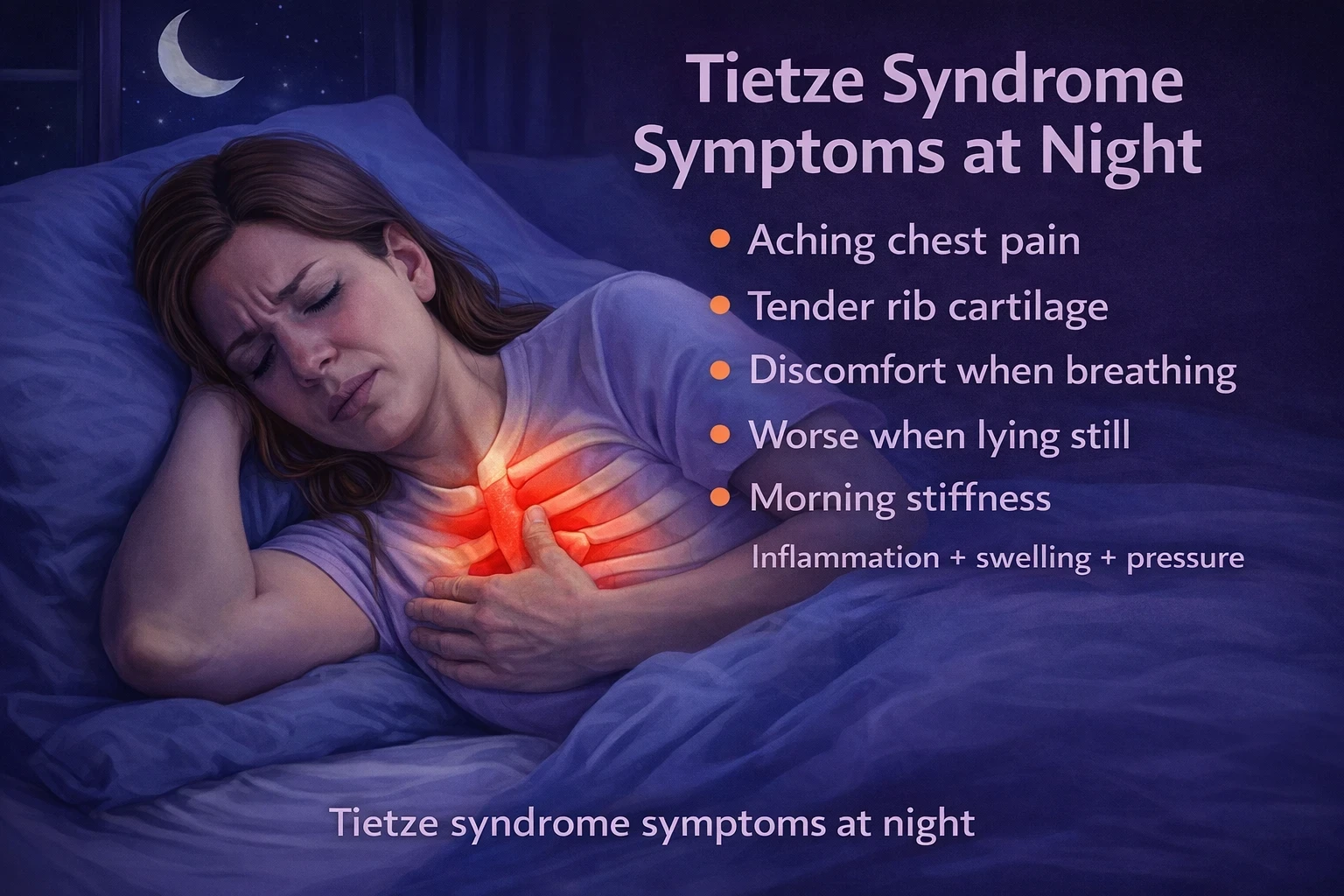
Common Night-Time Symptoms of Tietze Syndrome
At night, people with Tietze syndrome often experience:
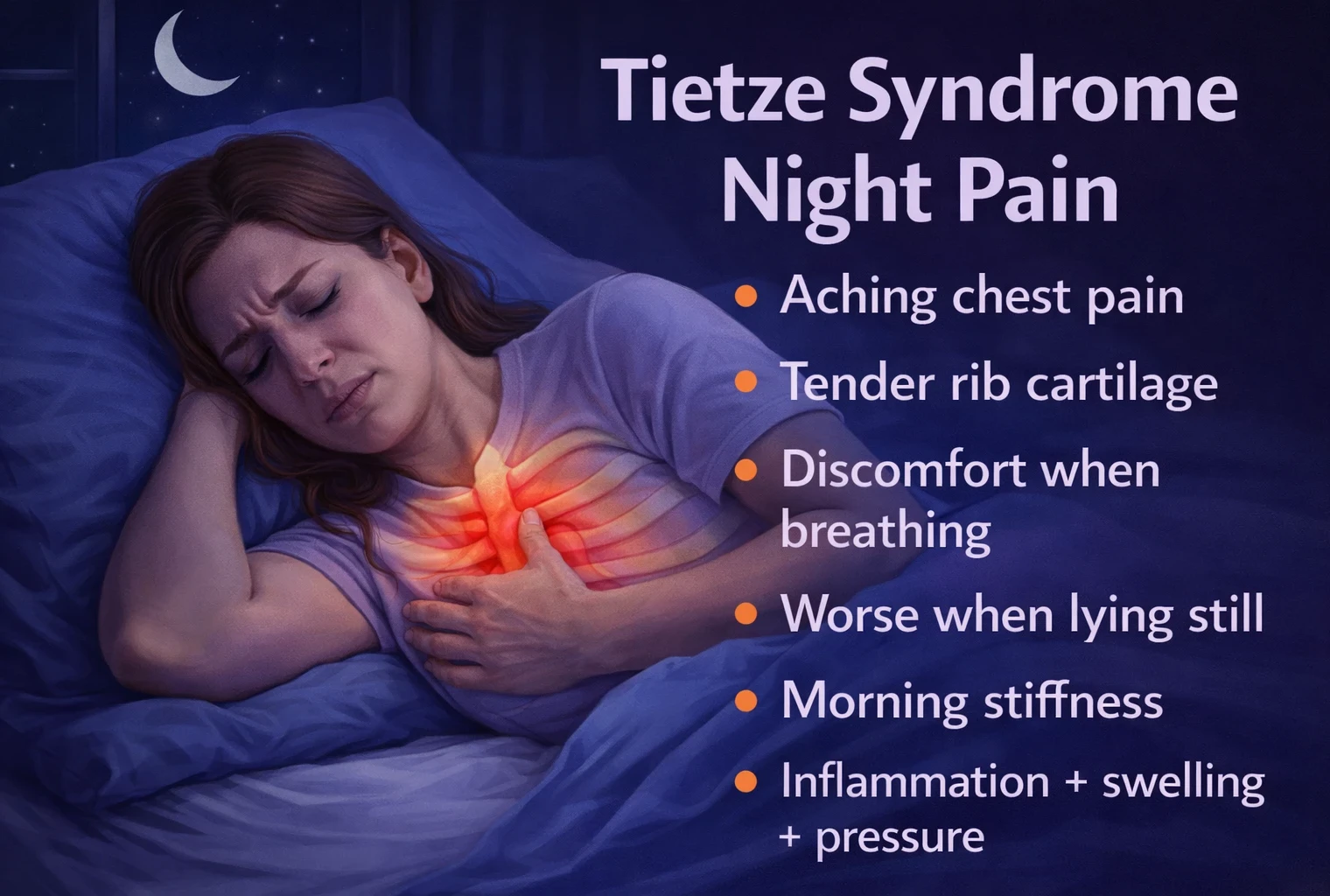
- Aching or sharp chest pain when lying still
- Increased tenderness over the swollen rib cartilage
- Pain when turning in bed
- Discomfort with deep breathing, yawning, or coughing
- Stiffness or soreness on waking
Pain may feel stronger simply because there are fewer distractions.
The swelling itself does not usually increase overnight.
Why Tietze Syndrome Pain Is Worse at Night
Less movement
During the day, natural movement keeps joints and tissues mobile.
At night, long periods of stillness allow stiffness to build.
This makes pain more noticeable when you change position.
Sleep position
Sleeping on the affected side can press directly on the swollen cartilage.
Curling the shoulders forward can also strain the rib joints. These positions often trigger night pain.
Normal inflammation patterns
Inflammation in the body often peaks at night or early morning.
This is why many inflammatory conditions feel worse after dark.
Tietze syndrome follows this same pattern.
Nervous system sensitivity
Ongoing pain can make the nervous system more alert. At night, the brain focuses more on pain signals.
This can amplify discomfort even if inflammation has not increased.
This process is explained further in why nerve pain occurs.
Anxiety at night
Chest pain naturally causes worry. At night, fears about the heart or lungs can feel stronger.
Anxiety increases nervous system activity, which can intensify pain sensations.
Typical Night-Time Pain Patterns
Tietze syndrome pain at night often:
- Feels worse when lying still
- Improves after gentle movement in the morning
- Flares after physically demanding days
- Comes and goes rather than steadily worsening
These patterns strongly suggest chest wall inflammation rather than heart disease.
What May Help Reduce Night Pain
Many people find night symptoms easier to manage by:
- Sleeping on the unaffected side or on their back
- Supporting the arms with pillows
- Using gentle warmth before bed
- Avoiding heavy upper-body activity late in the day
- Practising slow, relaxed breathing before sleep
Some people also prefer approaches outlined in pain relief without medications once serious causes have been ruled out.
When Night Pain Needs Medical Attention
Seek urgent medical advice if night pain occurs with:
- Shortness of breath
- Dizziness or fainting
- Sweating, nausea, or fever
- Pain spreading to the jaw or arm
If these symptoms are absent, night pain is usually a normal feature of Tietze syndrome.
Final Reassurance
Tietze syndrome symptoms at night can feel intense and unsettling.
They are usually caused by inflammation, pressure, stillness, and nervous system sensitivity.
They do not mean damage is occurring while you sleep.
With time, reassurance, and supportive care, night-time symptoms often ease.
Scientific Study
https://pubmed.ncbi.nlm.nih.gov/18325363