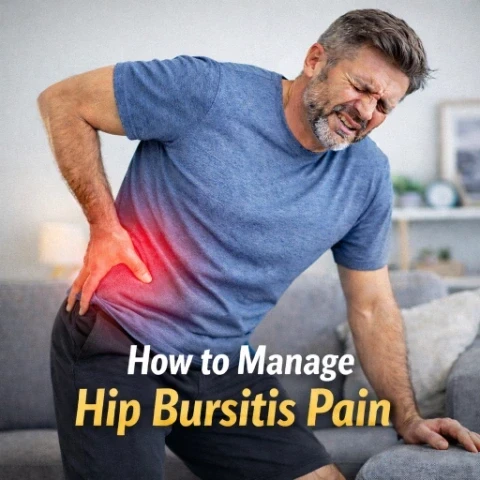
How To Manage Hip Bursitis Pain
How to Manage Hip Bursitis Pain
How to manage hip bursitis pain is a question that people with chronic pain will want to know the answers to.
Hip bursitis pain can make everyday activities such as walking, climbing stairs, standing for long periods, or sleeping on one side uncomfortable and frustrating. It occurs when one of the fluid-filled sacs (bursae) around the hip joint becomes irritated, often due to repetitive strain, pressure, or changes in movement patterns.
While hip bursitis can be persistent, many people successfully manage symptoms using supportive, non-drug strategies.
Understanding what aggravates hip bursitis — and what helps calm it — is key to long-term improvement.
Understanding Hip Bursitis and Pain Sensitivity
The most common form of hip bursitis affects the outer hip, where the bursa sits between bone and soft tissue.
Pain may feel sharp during movement or ache at rest, especially at night.
Over time, repeated irritation can increase sensitivity, meaning even minor triggers can provoke discomfort.
Learning how pain works can be reassuring. Pain does not always indicate ongoing damage.
Education around
why nerve pain occurs
can help people feel safer moving again and reduce fear-based avoidance.
Movement: Gentle and Consistent Beats Rest
Complete rest may seem helpful, but avoiding movement for too long often increases stiffness and sensitivity around the hip.
Gentle, controlled activity usually leads to better outcomes.
Helpful movement strategies include:
- Short, regular walks on flat ground
- Light cycling or swimming
- Gentle hip and glute strengthening within comfort limits
- Avoiding sudden spikes in activity
People dealing with ongoing hip pain often benefit from broader guidance around
chronic pain treatment options,
especially when symptoms last longer than expected.
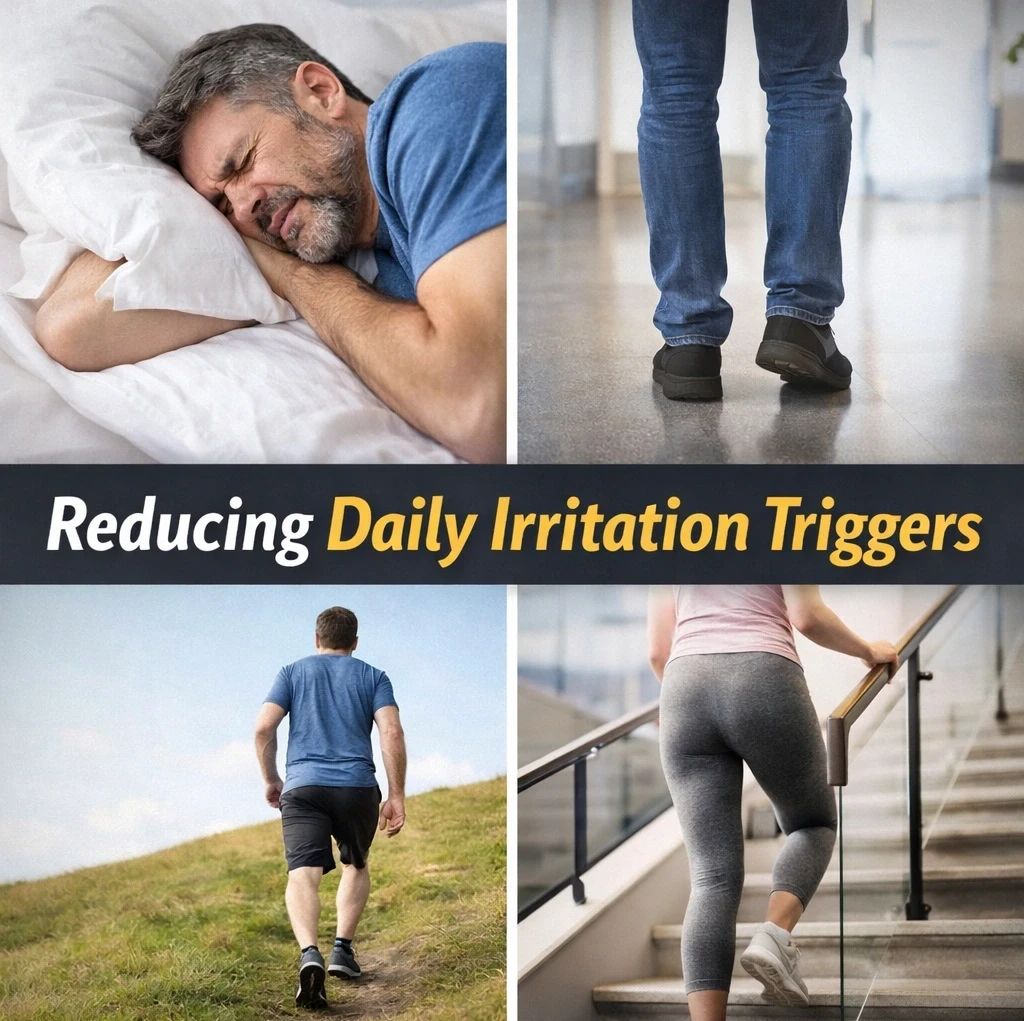
Reducing Daily Irritation Triggers
Small daily habits can significantly influence hip bursitis pain. Identifying and modifying common triggers often reduces flare-ups.
Helpful adjustments may include:
- Avoiding sleeping directly on the painful side
- Using a pillow between the knees
- Limiting prolonged standing on hard surfaces
- Reducing repetitive stair climbing or hill walking
- Avoiding leaning onto one hip while standing
Supporting the Muscles Around the Hip
Weakness or tension in the muscles surrounding the hip can increase load on the bursa.
Gentle strengthening of the gluteal muscles, thighs, and core can improve how forces are distributed during daily movement.
Rather than aggressive stretching, slow and controlled strengthening often works better. This approach aligns well with education-led strategies focused on
pain relief without medications.
Topical and Sensory-Based Support
Some individuals find short-term relief using heat, cold, or topical products.
These approaches do not cure hip bursitis, but they may help calm local sensitivity and make daily activity more manageable when combined with movement and pacing.
Load Management and Pacing
Hip bursitis often flares when load is repeatedly placed on one side of the body.
Simple awareness — such as alternating sides when carrying bags and pacing activity throughout the day — can significantly reduce symptom spikes.
When to Seek Professional Guidance
If hip pain continues to worsen or limits daily function despite self-management, professional assessment may be appropriate.
Recovery from hip bursitis is usually gradual, but consistent support often leads to meaningful improvement.
Scientific Studies
https://pubmed.ncbi.nlm.nih.gov/18432153/
https://pubmed.ncbi.nlm.nih.gov/20333215/