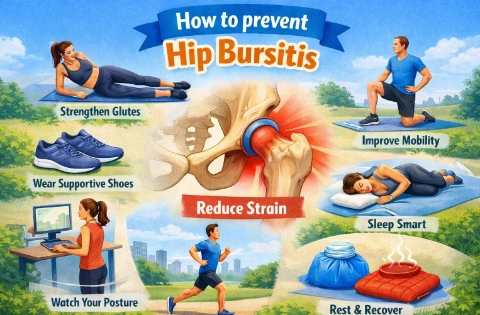
How To Prevent Hip Bursitis
How to prevent hip bursitis
How to prevent hip bursitis is a common question for people who spend long hours sitting, walking long distances, running, or dealing with recurring hip discomfort.
Hip bursitis develops when one of the small fluid-filled sacs (bursae) around the hip joint becomes irritated or inflamed, often due to repetitive strain, poor movement habits, or prolonged pressure on the joint.
The good news is that many cases are preventable with the right daily strategies.
Below is a practical, evidence-informed guide to reducing your risk and keeping your hips resilient.
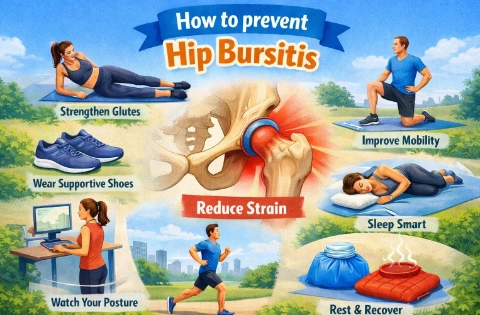
Understand what irritates the hip bursa
Prevention starts with awareness. Hip bursitis often develops due to:
- Repetitive movements such as running or climbing stairs
- Prolonged sitting or lying on one side
- Poor hip and pelvic alignment
- Weak glute muscles leading to overload elsewhere
- Sudden increases in activity without adaptation
Knowing your personal triggers helps you make smarter adjustments before irritation builds.
Build strong, supportive hip muscles
One of the most effective ways to prevent hip bursitis is strengthening the muscles that stabilise the hip joint.
When these muscles are weak, excess stress is transferred to the bursa.
Focus on:
- Gluteus medius strengthening (side-lying leg raises, banded walks)
- Gluteus maximus activation (bridges, sit-to-stand movements)
- Core stability exercises to support pelvic control
You do not need heavy weights. Slow, controlled movements done consistently are far more protective than intense workouts done occasionally.
Maintain healthy hip mobility
Tight muscles around the hip can increase friction over the bursa.
Maintaining mobility helps distribute load more evenly during movement.
Helpful habits include:
- Gentle hip flexor stretches, especially if you sit a lot
- Regular stretching of the outer thigh and glute region
- Controlled range-of-motion exercises rather than aggressive stretching
Mobility should feel relieving, not painful. Sharp pain during stretching is a sign to ease off.
Progress activity gradually
Sudden spikes in walking distance, running mileage, or gym intensity are a major risk factor.
The tissues around the hip need time to adapt.
To reduce risk:
- Increase activity levels gradually (10% rule works well)
- Alternate harder days with easier recovery days
- Pay attention to early warning signs such as tenderness or stiffness
Consistency beats intensity when it comes to prevention.
Improve posture and daily movement habits
Poor posture and movement patterns quietly increase stress on the hip joint over time.
Simple adjustments can make a big difference:
- Avoid crossing your legs for long periods
- Change sitting positions regularly
- Stand up and move every 30–45 minutes if you work at a desk
- When standing, distribute weight evenly rather than leaning on one hip
Small daily corrections add up to meaningful protection.

Choose supportive footwear
Foot mechanics influence hip mechanics more than most people realise.
Unsupportive shoes can alter gait patterns and increase strain on the outer hip.
Consider:
- Shoes with good arch support and shock absorption
- Avoiding overly worn footwear
- Rotating shoes if you walk or exercise frequently
For some people, addressing foot mechanics significantly reduces hip irritation.
Manage sleeping positions
Night-time positioning is a common but overlooked contributor to hip bursitis.
Helpful strategies:
- Avoid sleeping directly on the painful hip
- Use a pillow between the knees if side-sleeping
- Choose a mattress that supports neutral hip alignment
Reducing prolonged pressure during sleep allows irritated tissues to recover.
Respect pain signals early
Ignoring early discomfort often leads to more persistent problems.
Pain is somethingto learn about, not an enemy.
If you notice:
- Localised tenderness on the outer hip
- Pain that worsens with repetitive activity
- Discomfort when lying on one side
It is wise to temporarily reduce aggravating activities and focus on gentle movement rather than pushing through.
Support recovery, not just activity
Prevention is not only about exercise. Recovery habits matter just as much.
Helpful supports include:
- Adequate sleep for tissue repair
- Gentle heat or cold depending on comfort
- Stress management, as tension can increase pain sensitivity
The goal is a balanced system, not constant strain.
When to seek professional guidance
If hip pain keeps returning despite good prevention habits, a physiotherapist or movement-focused practitioner can assess biomechanics, strength imbalances, and load tolerance.
Early guidance often prevents long-term flare-ups.
Final thoughts
How to prevent hip bursitis comes down to respecting load, building strength, maintaining mobility, and listening to early warning signs.
You do not need perfection—just consistent, supportive habits that keep the hip joint moving well and stress distributed evenly.
Prevention is far easier than recovery, and small daily choices can keep hip bursitis from becoming a recurring problem.
For broader strategies that support long-term pain recovery, you might also find treatment options useful.
Scientific Studies
https://pubmed.ncbi.nlm.nih.gov/29720374/ �
https://pubmed.ncbi.nlm.nih.gov/38295551/ �