Knee Bursitis Causes And Symptoms Knee Bursitis Causes And Symptoms
Knee Bursitis Causes And Symptoms
Knee bursitis causes and symptoms are often misunderstood, especially when swelling appears suddenly around the kneecap.
Knee bursitis causes and symptoms usually involve irritation of a small fluid-filled sac (bursa) that helps reduce friction between bone, tendon, and skin.
When that sac becomes inflamed, pain and swelling can follow quickly.
This guide explains knee bursitis causes and symptoms clearly, calmly, and without unnecessary alarm.
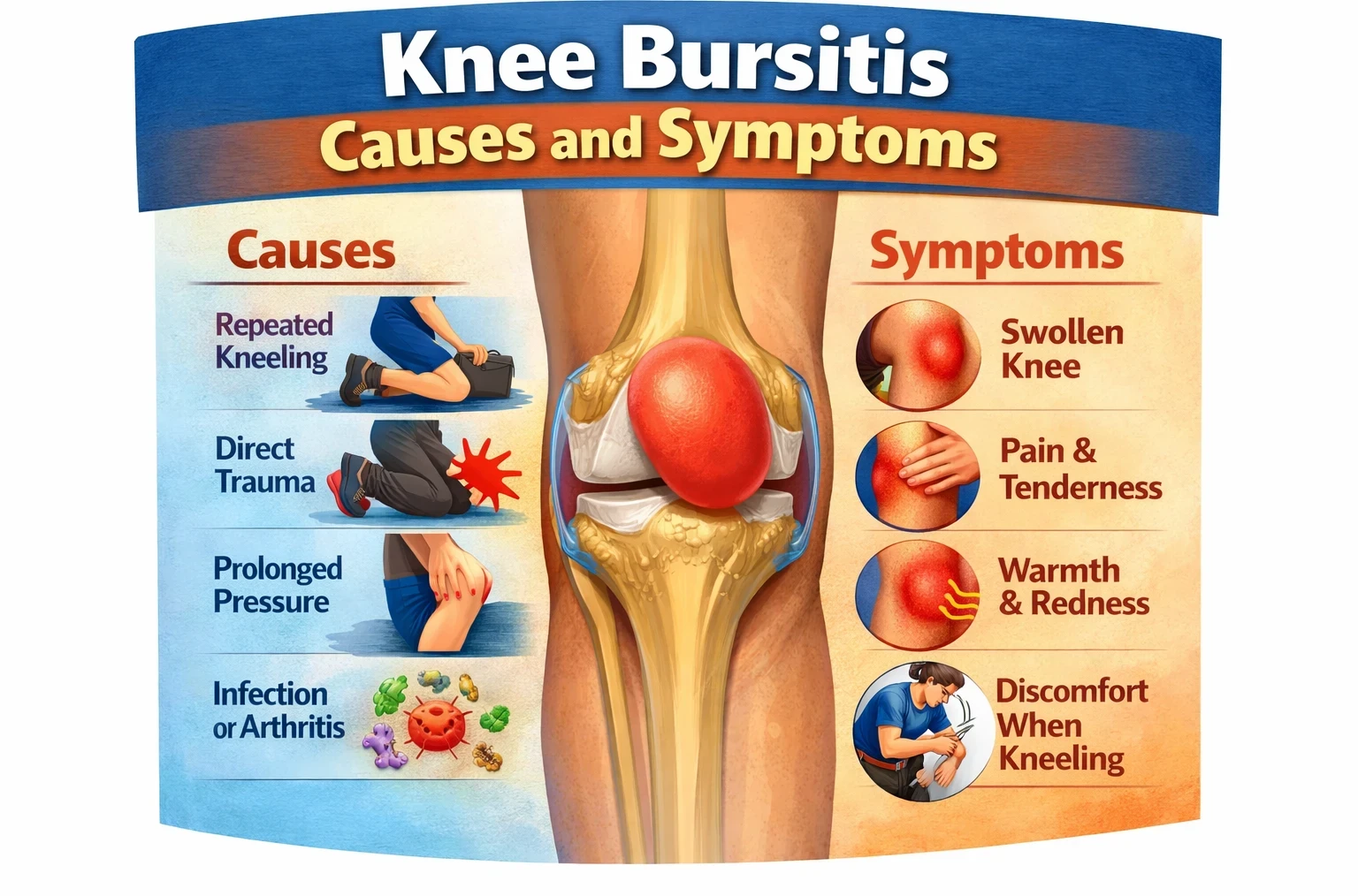
What Is Knee Bursitis?
Inside your knee are several bursae. The most commonly irritated one sits just in front of the kneecap (prepatellar bursa).
Its job is simple: reduce friction when you bend, kneel, or move.
When irritated, the bursa fills with extra fluid. That pressure leads to visible swelling and tenderness.
If you’re unsure how inflammation works more broadly, it can help to read about inflammatory pain treatment options here:
https://beyond-pain-relief.com/inflammatory-pain-treatment-options/
Understanding the mechanism reduces fear. The body is reacting, not “breaking.”
Common Knee Bursitis Causes
Knee bursitis causes tend to fall into predictable categories. Most cases are mechanical rather than structural damage.
1. Repeated Kneeling
Frequent kneeling on hard surfaces (gardening, tiling, plumbing, certain sports) compresses the front bursa repeatedly.
This is why prepatellar bursitis is sometimes called “housemaid’s knee.”
2. Direct Blow to the Knee
A fall or knock to the kneecap can trigger inflammation quickly.
Swelling may appear within hours.
3. Prolonged Pressure
Even without impact, sustained pressure on the front of the knee can irritate the bursa.
4. Infection (Less Common but Important)
If bacteria enter through a cut or scrape, the bursa can become infected (septic bursitis). This requires medical assessment.
5. Underlying Inflammatory Conditions
Conditions like gout or rheumatoid arthritis can increase susceptibility.
If swelling feels persistent or confusing, understanding what chronic pain actually is can provide helpful clarity:
https://beyond-pain-relief.com/what-is-chronic-pain-a-clear-human-explanation/
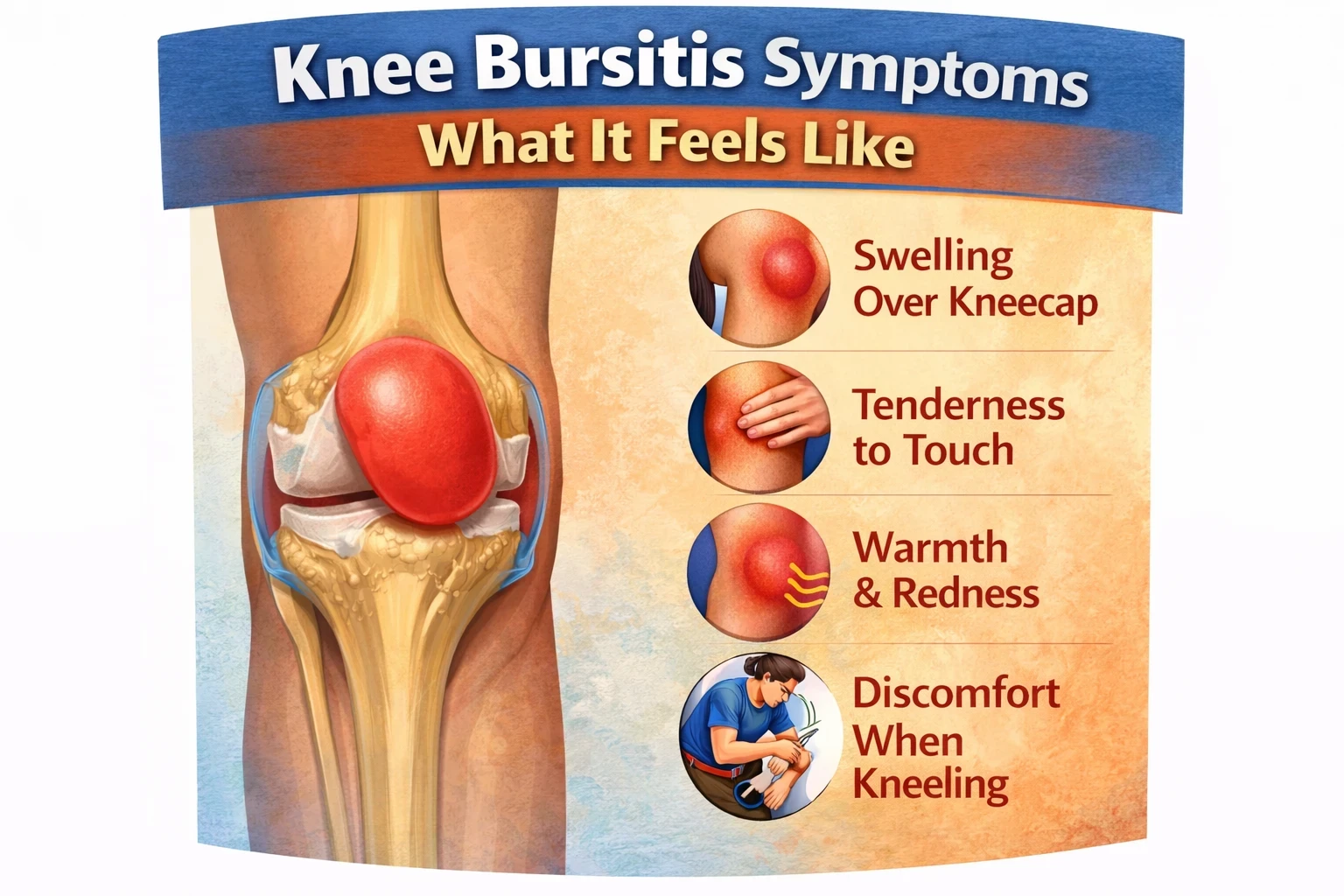
Knee Bursitis Symptoms: What It Feels Like
Knee bursitis symptoms are usually localized and visible.
Common symptoms include:
• Swelling directly over the kneecap
• Tenderness when pressing the area
• Warmth over the swollen region
• Mild to moderate aching pain
• Discomfort when kneeling
Unlike deeper joint injuries, movement is often still possible.
That distinction matters. If bending and straightening are mostly intact but kneeling hurts sharply, knee bursitis causes and symptoms become more likely.
What Makes Knee Bursitis Symptoms Worse?
Certain movements aggravate irritation.
These include:
• Kneeling on hard surfaces
• Direct pressure on the swelling
• Repeated deep bending
• Impact sports during a flare
Resting briefly and reducing pressure often improves symptoms within days.
However, full rest is not usually necessary.
If you’re exploring movement strategies that calm irritated tissues, this guide may help:
https://beyond-pain-relief.com/movement-load-and-pain-sensitivity/
Gentle load adjustment works better than total shutdown.
How Is It Different From Other Knee Problems?
Knee bursitis causes and symptoms differ from ligament injuries or meniscus tears.
Here’s how:
Bursitis
• Swelling on top of kneecap
• Tender to touch
• Usually no locking or instability
Meniscus injury
• Clicking or catching
• Pain deep in joint
• Possible locking
Ligament injury
• Instability
• Sudden trauma
• Difficulty weight bearing
If symptoms include fever, spreading redness, or severe pain, medical assessment is essential to rule out infection.
When to Seek Medical Advice
Most knee bursitis causes and symptoms settle with:
• Activity modification
• Ice for short periods
• Compression wraps
• Elevation
However, seek help if:
• Swelling rapidly increases
• The area becomes very red and hot
• You develop fever
• Pain becomes severe
Infected bursitis needs antibiotics and sometimes drainage.
Early assessment prevents complications.
Supportive Tools During a Flare
While the body calms inflammation, some tools may help temporarily:
• Soft knee pads if kneeling cannot be avoided
• Light compression sleeves
• Short-term use of anti-inflammatory strategies (as advised by a clinician)
• Elevation after long days on your feet
These are support tools, not cures. The long-term solution usually involves adjusting load and reducing repeated irritation.
The Role of Inflammation
Inflammation in bursitis is protective.
The body increases fluid to shield irritated tissue.
This doesn’t mean permanent damage.
Most non-infectious knee bursitis causes and symptoms improve within 1–3 weeks when pressure is reduced.
Understanding this helps prevent unnecessary fear spirals.
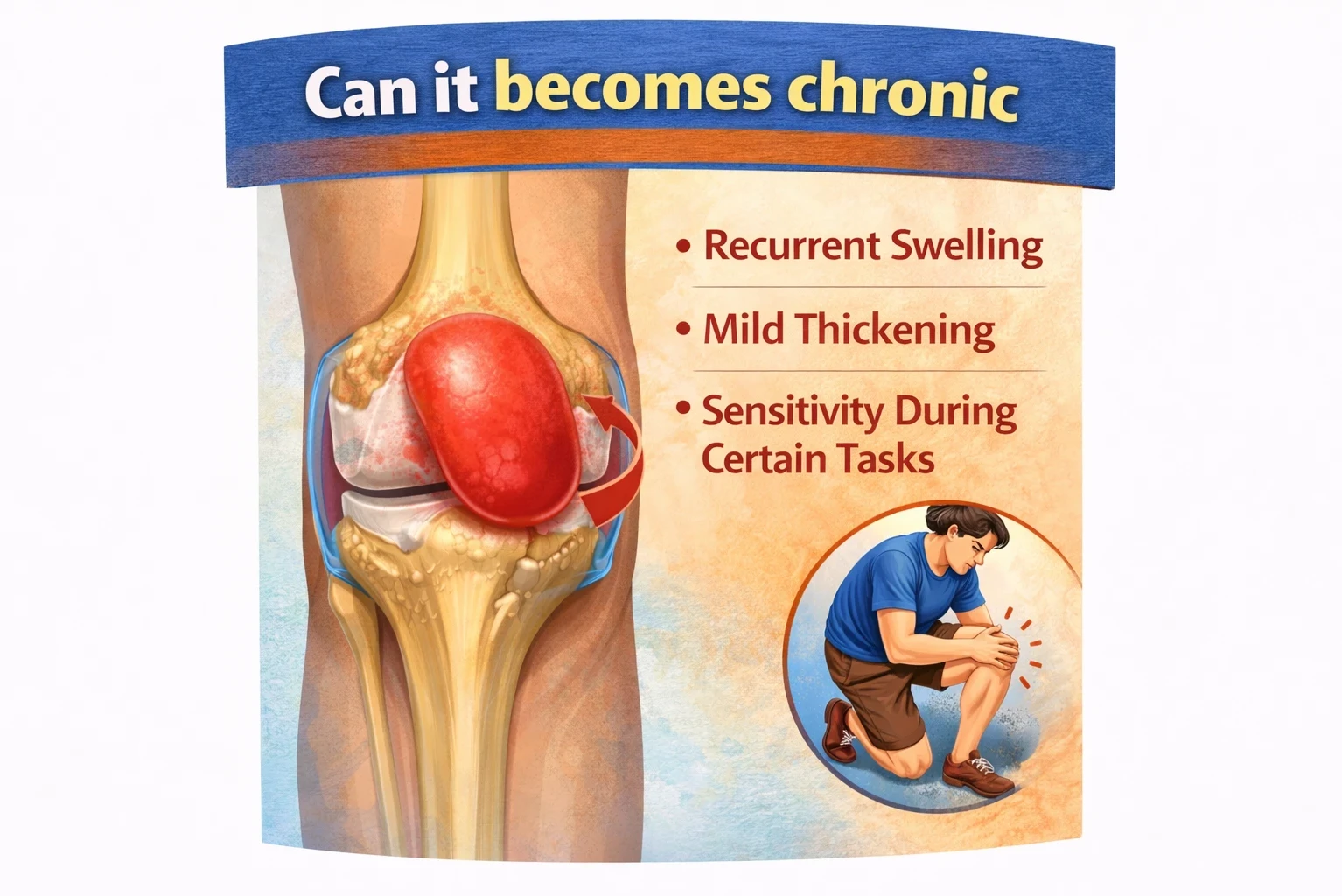
Can It Become Chronic?
Yes, knee bursitis causes and symptoms can become chronic if the irritation pattern continues.
Repeated kneeling without protection can keep the cycle active.
Chronic bursitis often shows:
• Recurrent swelling
• Mild thickening over the kneecap
• Sensitivity during certain tasks
Long-term management focuses on habit change rather than medication alone.
Frequently Asked Questions
Can chronic knee bursitis pain be relieved beyond prescription medication?
Yes — in many cases, chronic knee bursitis pain can improve without relying solely on prescription medication.
Medication may help calm inflammation during a flare, but it does not address the repeated pressure or movement patterns that often keep bursitis active. Long-term relief usually comes from:
• Reducing kneeling or direct compression
• Using protective knee padding when necessary
• Gradually restoring strength and tolerance
• Adjusting movement load thoughtfully
• Supporting short-term swelling with ice or compression
When the mechanical trigger is addressed, symptoms often settle more sustainably.

Is there a natural product that can relieve chronic knee bursitis pain?
Some people explore natural anti-inflammatory supplements as part of a broader plan. Options often discussed include:
• Turmeric (curcumin)
• Omega-3 fish oil
• Ginger extract
• Boswellia
These may support inflammatory balance, but they are not cures for bursitis.
Results vary from person to person, and they work best alongside load management and habit changes rather than replacing them.
If swelling is severe, hot, spreading, or accompanied by fever, medical assessment is important to rule out infection.
Take a look at the best anti-inflammatory supplements on Amazon here.
A Quick Word on Imaging
Scans are rarely needed for straightforward knee bursitis causes and symptoms.
Diagnosis is usually clinical.
Over-scanning can increase worry without improving outcomes.
Gentle Recovery Strategy
If you suspect knee bursitis:
- Reduce direct pressure for 7–10 days
- Use ice briefly (10–15 minutes) if swelling is prominent
- Keep gentle walking going
- Avoid deep kneeling
Gradual return to activity is safe once swelling decreases.
The goal is calm reloading, not complete rest.
Scientific Research Study
https://pubmed.ncbi.nlm.nih.gov/28622346/
Final Thoughts
Knee bursitis causes and symptoms are usually mechanical and manageable. Swelling over the kneecap can look dramatic, but in most cases, it reflects temporary irritation rather than structural damage.
Understanding knee bursitis causes and symptoms allows you to respond calmly:
• Reduce pressure
• Adjust load
• Support briefly
• Resume movement gradually
Most cases settle well with thoughtful care.
