Pain Causes Explained
Pain causes explained simply means understanding why pain occurs, rather than only focusing on where it hurts.
Pain is not a single signal coming from damaged tissue. It is a protective response created by the nervous system to keep the body safe. This explanation helps make sense of why pain can feel severe even when scans or tests show little or no injury.
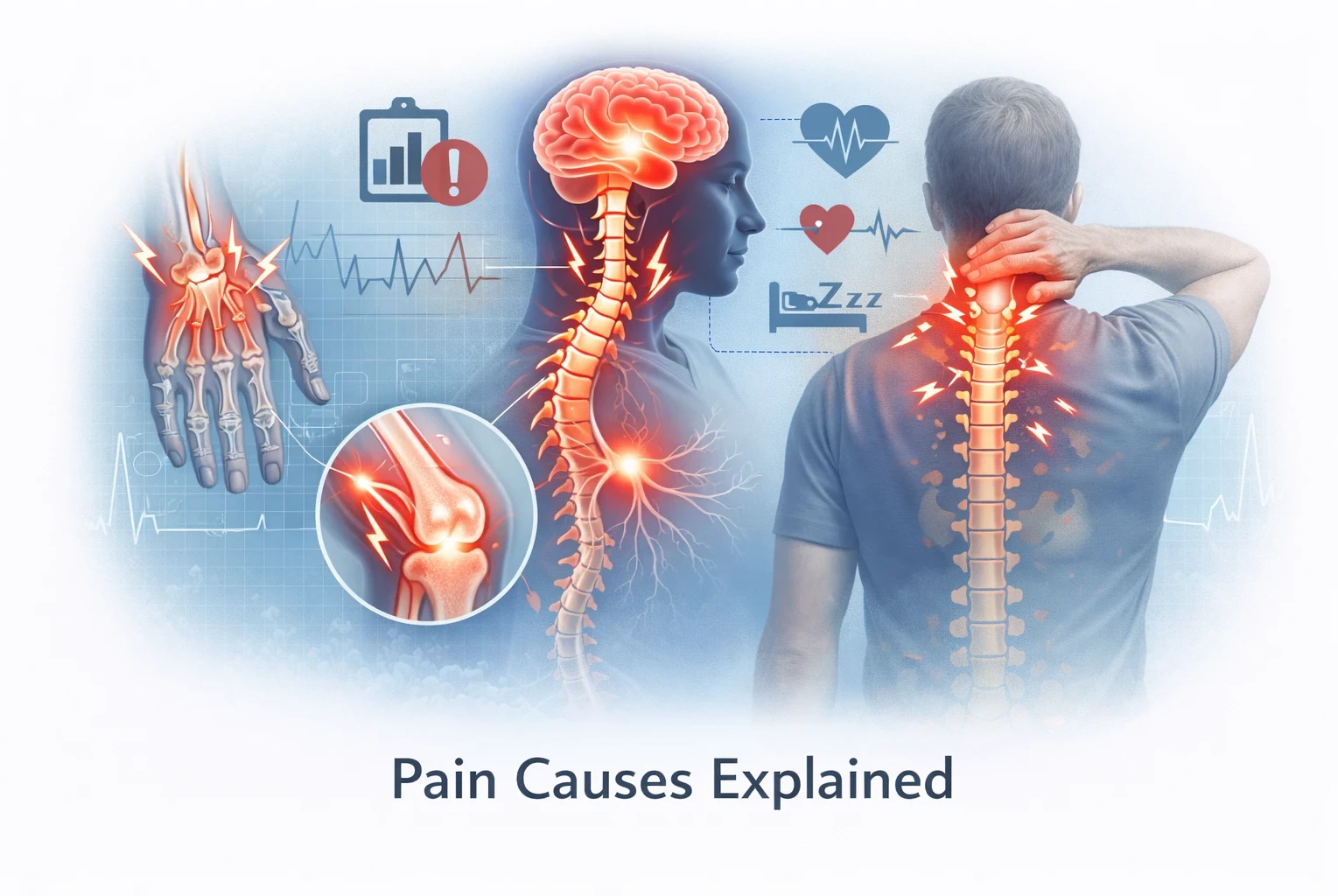
Pain exists to warn us of danger.
When you touch something hot, nerves send information to the spinal cord and brain. The brain evaluates this information and decides whether pain is needed. If it believes there is a threat, pain is produced to encourage protection or withdrawal.
However, pain is not always a direct measure of damage.
Acute Pain: A Short-Term Warning
In short-term or acute situations, pain works very well. A cut, sprain, burn, or infection activates receptors in tissues. These signals are created in the brain but get there through the nervous system.
The brain recognises a genuine threat and produces pain.
Once healing occurs, pain usually settles. In these cases, pain intensity often matches the level of tissue injury.
Chronic Pain: When the Alarm Stays On
Pain causes explained becomes more complex when pain lasts longer than expected. Chronic pain is usually defined as pain lasting more than three months. At this stage, tissue healing has often already occurred.
The ongoing pain does not mean the body is broken. Instead, the nervous system has become overly protective. This process is known as sensitisation.
A sensitised nervous system reacts more strongly to normal signals. Everyday movements, light pressure, or harmless sensations may be interpreted as dangerous. The brain produces pain even without ongoing injury.
The Brain’s Role in Pain
Pain is an output of the brain, not a direct signal from tissues. The brain gathers information from many sources, including:
Signals from nerves
Past injuries or pain experiences
Stress and emotional state
Fear, beliefs, and expectations
Sleep quality and fatigue
Environment and social context
When the brain concludes that protection is needed, pain is produced.
This explains why pain can change depending on mood, stress levels, or confidence in movement.
Nerves and Sensitisation
Over time, repeated pain signals can change how nerves behave. Nerves may fire more easily and more often. The spinal cord and brain become more responsive to incoming information.
This means the volume knob of the pain system is turned up. Normal sensations feel intense. Mild discomfort feels severe. This process is reversible, but it takes understanding and time.

Stress and Pain
Stress is a major contributor often overlooked in pain discussions. Ongoing stress increases sensitivity in the nervous system. Muscles tense, breathing becomes shallow, and recovery slows.
When stress is constant, the brain remains in a protective state. Pain becomes more likely, even during simple activities.
Movement and Pain
Avoiding movement can unintentionally increase pain sensitivity. When the body stops moving normally, the nervous system receives fewer safe signals. This reinforces the idea that movement is dangerous.
Gentle, confident movement helps retrain the nervous system and reduce sensitivity over time.
Why Pain Varies Day to Day
Many people notice pain fluctuates without a clear reason. This is because pain is influenced by many factors, not just tissues. Sleep, stress, mood, activity, and confidence all affect how the nervous system responds.
Pain causes explained helps remove fear by showing that pain does not always equal damage.
Understanding Reduces Pain
Learning how pain works can reduce fear and tension. When the brain feels safer, it often produces less pain. Education is now recognised as an important part of pain recovery.
Pain is real. It is not imagined. But it is also treatable.
Read How do I manage arthritis pain without medication
Scientific research studies
https://www.ninds.nih.gov/health-information/disorders/pain
