Pain Management Strategies For Conditions
Pain Management Strategies for Conditions
People search for pain management strategies for conditions sometimes out of desperation.
Living with ongoing pain can be confusing and exhausting. Many people search for answers but are offered solutions that focus only on symptoms. Understanding pain management strategies for conditions helps people approach pain with clarity, confidence, and realistic expectations.
Pain management is not always about removing pain completely. In many long-term conditions, the aim is to reduce sensitivity, improve function, and support the nervous system so pain becomes less dominant in daily life.
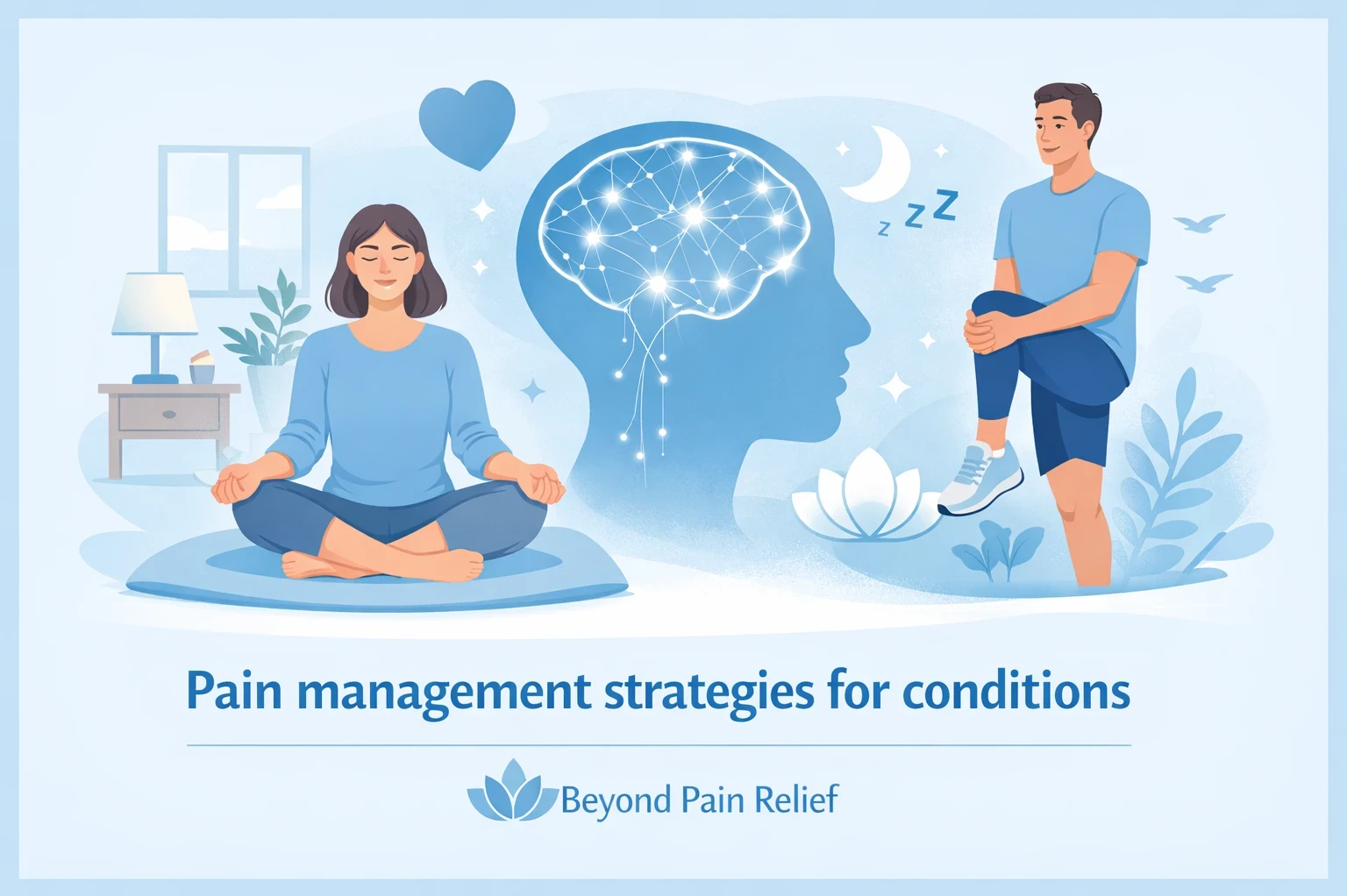
Understanding Pain Beyond Symptoms
Pain is not always a sign of damage. Modern pain science shows that pain is a protective output of the nervous system, influenced by many factors including stress, past experiences, sleep quality, and beliefs about the body.
This explains why pain can persist even when scans are normal. Learning how pain works is often one of the most effective pain management strategies for conditions, because understanding reduces fear.
A clear explanation of this concept is explored in
Understanding Pain Beyond Symptoms, which explains pain in simple, reassuring terms.
Movement, Load, and Pain Sensitivity
Many people avoid movement when they are in pain. While this is understandable, long-term avoidance can increase stiffness, weakness, and nervous system sensitivity.
Gentle, graded movement is central to successful pain management strategies for conditions. This may include:
- Walking at a comfortable pace
- Slow, controlled stretching
- Light strengthening using manageable loads
- Everyday movements performed calmly
The goal is not to push through pain, but to gradually rebuild confidence in movement. This process helps retrain the nervous system to feel safe again.
This approach is explained in more detail in
Movement, Load, and Pain Sensitivity.
Stress, Emotions, and the Nervous System
Stress and pain are closely connected. When the nervous system remains on high alert, pain signals become louder and more persistent.
Effective pain management strategies for conditions often include calming the nervous system through:
- Slow breathing exercises
- Mindfulness or body awareness practices
- Reducing constant mental stimulation
- Creating moments of calm during the day
These strategies do not dismiss pain. They work with the biology of pain by reducing nervous system threat levels.
Sleep and Pain Management
Poor sleep increases pain sensitivity and reduces coping ability. Pain and sleep problems often reinforce each other, creating a difficult cycle.
Supporting sleep is an important part of pain management strategies for conditions. Helpful steps include:
- Regular sleep and wake times
- Reducing screen use before bed
- Creating a quiet, dark sleep environment
- Gentle relaxation routines in the evening
Better sleep does not eliminate pain, but it often makes pain easier to manage.

Emotional Wellbeing and Long-Term Pain
Living with persistent pain can affect mood, confidence, and mental health. Feeling frustrated or misunderstood is common and completely valid.
Pain management often include emotional support such as:
- Pain-informed counselling
- Acceptance-based approaches
- Self-compassion practices
- Reducing fear around flare-ups
The relationship between pain and mental health is explored further in
Beyond Pain Relief for Mental Health.
References
https://pmc.ncbi.nlm.nih.gov/articles/PMC2206347/

