Sleep Hygiene Tips: Practical Habits That Improve Sleep Quality
Sleep Hygiene Tips:
Sleep hygiene tips are simple, repeatable habits that improve your ability to fall asleep, stay asleep, and wake feeling restored.
If you struggle with broken sleep, racing thoughts, or morning fatigue, refining your daily and evening routines can make a noticeable difference over time.
Sleep hygiene is not about perfection.
It’s about creating conditions that support your nervous system rather than stimulate it.
Let’s walk through what actually works.

What Are Sleep Hygiene Tips?
Sleep hygiene tips are evidence-based behaviours that protect your natural sleep-wake rhythm (circadian rhythm).
They reduce unnecessary stimulation and help your body shift into a recovery state.
If you’ve already explored topics like chronic stress or pain sensitivity on your site, you’ll know that the nervous system responds to cues. Sleep is no different.
For a broader understanding of how stress impacts the body, see:
https://beyond-pain-relief.com/how-magnesium-helps-with-stress/
And if pain is interfering with sleep, this guide may help: https://beyond-pain-relief.com/what-is-chronic-pain-a-clear-human-explanation/
Now let’s focus on the habits themselves.
1. Keep a Consistent Sleep and Wake Time
Your body loves rhythm.
Going to bed and waking up at the same time daily (even weekends) strengthens circadian alignment.
Irregular schedules confuse your internal clock, making it harder to feel sleepy at night.
Simple steps:
• Choose a realistic bedtime
• Set a consistent wake-up alarm
• Avoid “catch-up” sleep beyond one extra hour
Consistency builds sleep pressure naturally.
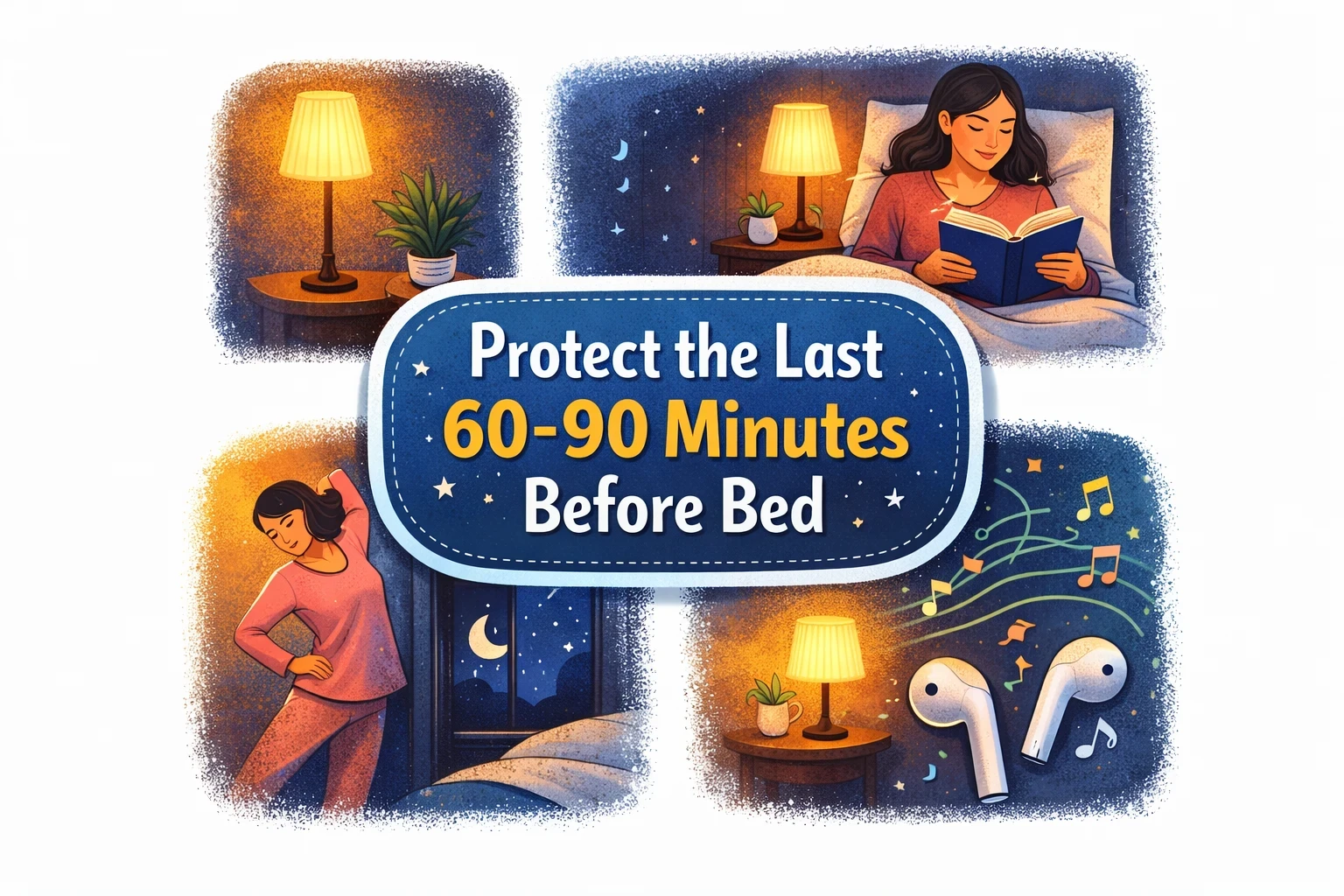
2. Protect the Last 60–90 Minutes Before Bed
This window matters more than most people realise.
Bright lights, work emails, intense TV, and scrolling stimulate alertness. Instead, treat the final hour as a transition phase.
Try: • Warm lighting
• Light stretching
• Reading paper books
• Calm music or guided relaxation
These environmental cues signal safety and wind-down.
3. Limit Stimulants Strategically
Caffeine has a half-life of 5–7 hours. That afternoon coffee can still be active at bedtime.
Sleep hygiene tips for stimulants: • Avoid caffeine after 1–2 pm
• Reduce energy drinks
• Be mindful of hidden caffeine (chocolate, pre-workouts)
Alcohol may feel sedating initially, but it disrupts deeper sleep stages and increases night waking.
For a deeper look at calming techniques, you may also find this helpful: https://beyond-pain-relief.com/calm-pain-relief-techniques/
4. Make Your Bedroom a Recovery Zone
Your bedroom should cue sleep, not stress.
Optimise:
• Cool temperature (16–19°C ideal range)
• Blackout curtains or eye mask
• Minimal noise (or white noise if helpful)
• Supportive mattress and pillow
Avoid working from bed if possible. Your brain forms associations quickly. Bed = sleep is a powerful cue.
5. Get Morning Light Exposure
One of the most overlooked sleep hygiene tips is morning light.
Natural daylight within 30 minutes of waking helps reset your circadian rhythm. Even 10–20 minutes outdoors can strengthen nighttime sleep drive.
If outdoor light isn’t possible, sit near a bright window. This small habit improves sleep timing consistency.
6. Move During the Day
Regular movement improves sleep depth and efficiency.
This doesn’t mean intense late-night workouts.
Gentle daytime activity supports healthy sleep pressure.
Examples: • Walking
• Light strength training
• Mobility work
• Yoga
If pain limits movement, this guide may help: https://beyond-pain-relief.com/movement-load-and-pain-sensitivity/
Movement earlier in the day works best.
7. Manage Racing Thoughts
Many people struggle not with physical discomfort, but mental activation.
Try:
• Writing a short “worry list” before bed
• Brain dump journaling
• Guided breathing (4-6 breathing works well)
• Body scan relaxation
If stress is persistent, structured approaches such as Cognitive Behavioral Therapy for Insomnia (CBT-I) show strong evidence support: https://www.sleepfoundation.org/insomnia/treatment/cognitive-behavioral-therapy-insomnia
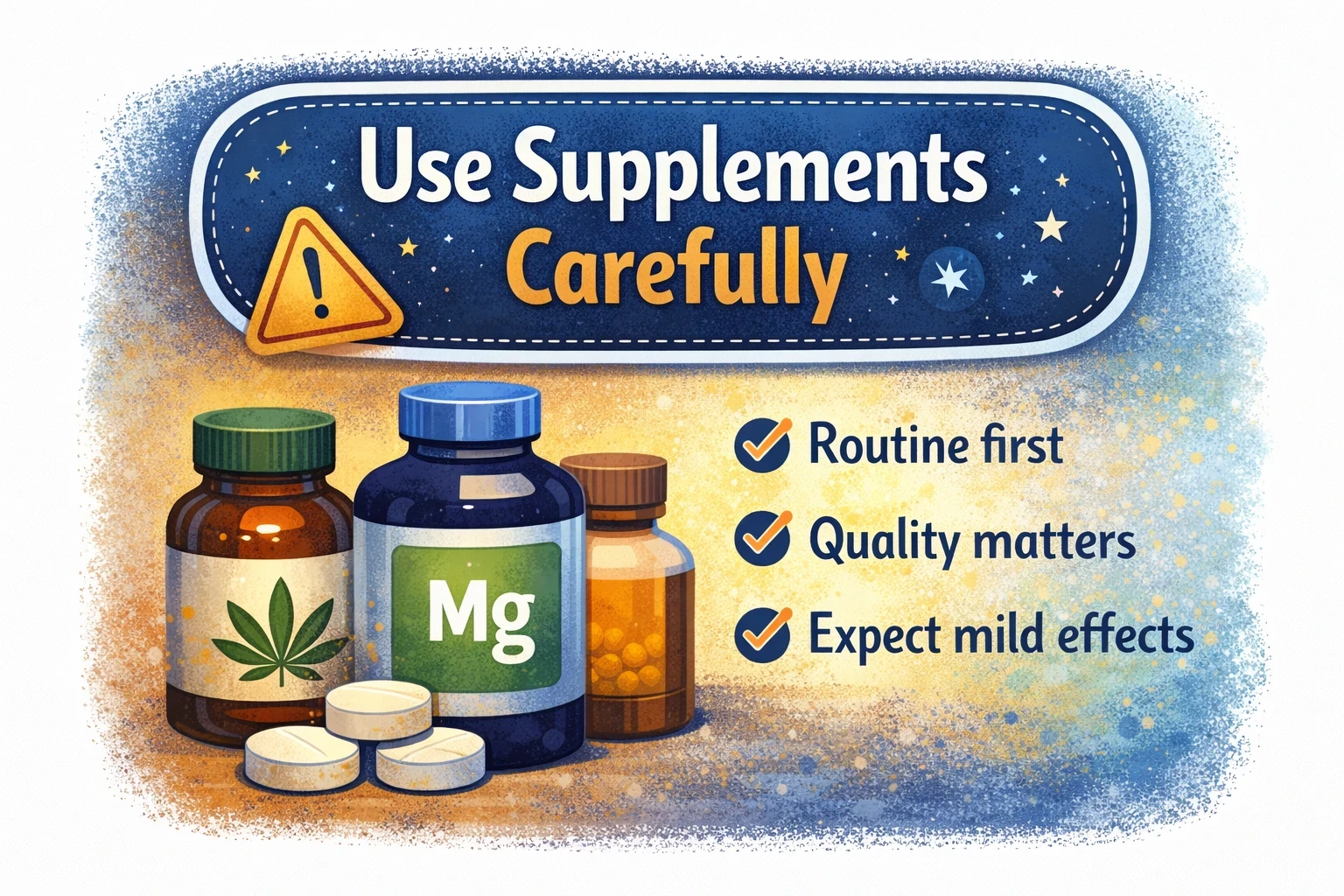
8. Use Supplements Carefully
Some people experiment with magnesium or herbal products as part of sleep hygiene strategies.
These can support relaxation for some individuals.
However:
• Supplements are not a substitute for routine
• Effects are typically mild
• Quality matters
Sleep hygiene tips focus first on behaviour, not pills.
Highly recommend natural solution to help with with your sleep routine.
What Sleep Hygiene Tips Can and Can’t Do
Sleep hygiene tips can: • Improve consistency
• Reduce sleep onset time
• Support deeper sleep
• Reduce night waking
They cannot: • Instantly cure long-term insomnia
• Override chronic anxiety alone
• Replace medical evaluation when needed
If sleep disruption is severe, persistent, or linked to loud snoring, breathing pauses, or severe daytime sleepiness, speak with a healthcare professional.
Why Sleep Hygiene Matters for Pain and Recovery
Poor sleep increases pain sensitivity and emotional reactivity.
Better sleep improves tissue recovery, stress tolerance, and cognitive clarity.
If you’re building recovery routines around inflammation or chronic discomfort, sleep is foundational.
One scientific review discussing sleep and pain sensitivity can be found here: https://pubmed.ncbi.nlm.nih.gov/33676867/
Improving sleep doesn’t require drastic measures.
It requires steady, realistic habits applied consistently.
Start small. Pick one or two sleep hygiene tips this week.
Let them become automatic.
Then build from there.
