Exercise For Fibromyalgia
Exercise for Fibromyalgia
Exercise for Fibromyalgia Without Causing Flare-Ups
Exercise for fibromyalgia is one of the most misunderstood and feared topics for people living with this condition.
Many are told to “stay active,” only to find that exercise leads to increased pain, exhaustion, or flare-ups afterward.
This often creates confusion and fear around movement.
The problem is not exercise itself. The problem is how exercise is approached when the nervous system is already sensitive.
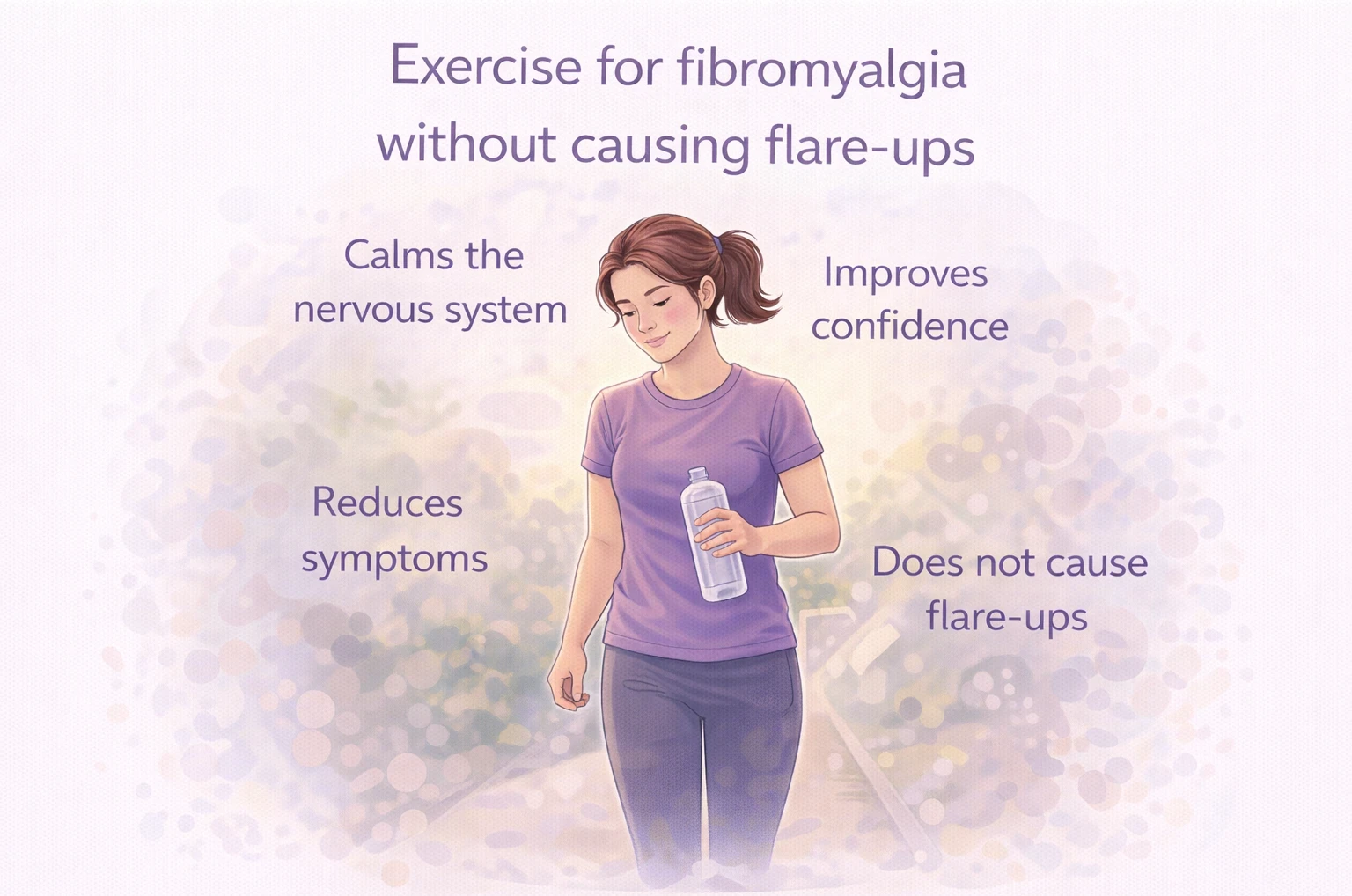
When done correctly, exercise can calm the nervous system, improve confidence, and reduce symptoms over time—without causing flare-ups.
Why exercise feels risky with fibromyalgia
Fibromyalgia changes how the nervous system responds to physical load.
Instead of responding proportionally, the system may overreact to activity that would normally be well tolerated.
This can lead to:
Delayed pain 24–72 hours after exercise
Sudden fatigue after mild movement
Increased stiffness the next day
Fear of triggering a flare
These reactions do not mean the body is weak or damaged.
They reflect a nervous system that has become overly protective.
For a full explanation of fibromyalgia, see:
https://beyond-pain-relief.com/what-is-fibromyalgia/
The boom-and-bust cycle
One of the most common patterns seen in fibromyalgia is the boom-and-bust cycle.
It often looks like this:
1. Symptoms ease slightly
2. Activity increases significantly
3. Pain and fatigue spike
4. Rest becomes excessive
5. Tolerance drops
6. The cycle repeats
This pattern teaches the nervous system that movement is dangerous, even when it is not.
Breaking this cycle is more important than the type of exercise you choose.
The real goal of exercise in fibromyalgia
The goal of exercise is not:
- To push through pain
- To “get fit” quickly
- To eliminate symptoms immediately
The real goals are to:
- Build predictability
- Improve tolerance
- Reduce fear around movement
- Signal safety to the nervous system
Progress comes from consistency, not intensity.
What types of exercise work best
There is no single “best” exercise for fibromyalgia.
The best option is one that feels safe, manageable, and repeatable.
Walking
Walking is often the most effective starting point. It is easy to control, adaptable to energy levels, and can be stopped at any time.
Starting with very short walks—sometimes just a few minutes—is often more effective than longer sessions done infrequently.
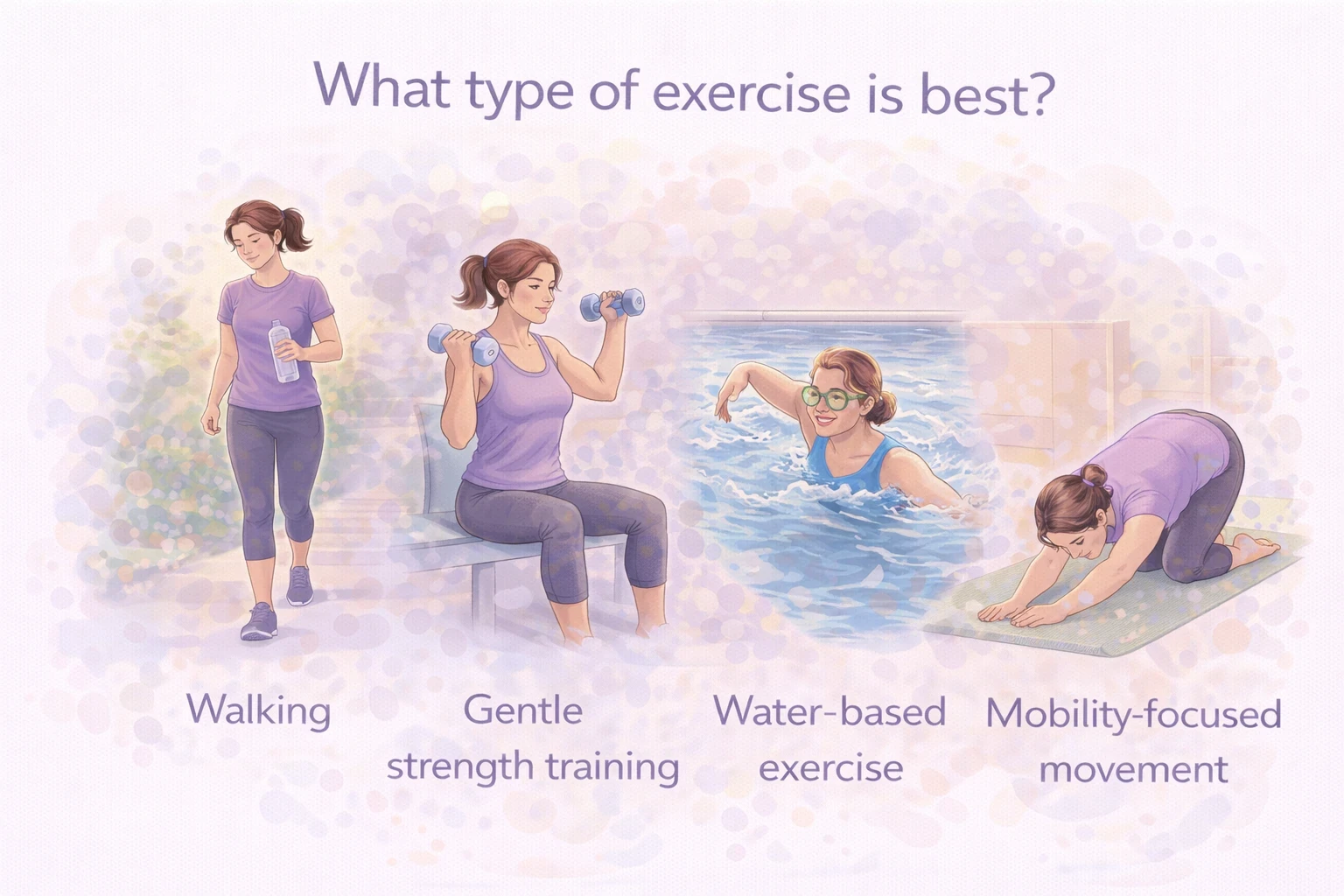
Gentle strength training
Light resistance training can help reduce muscle guarding and improve confidence.
Slow movements, low resistance, and long rest periods are key.
Water-based exercise
Swimming or warm-water movement reduces load on joints and can feel calming to the nervous system.
Mobility-focused movement
Gentle mobility helps reduce stiffness and fear of movement.
Aggressive stretching into pain is usually counterproductive.
The “finish feeling better” rule
One of the safest guidelines for exercise with fibromyalgia is simple:
Finish sessions feeling the same or slightly better than when you started.
If you finish exhausted, shaky, or significantly sore, the session was likely too much.
Stopping earlier builds trust with the nervous system.
How often should you exercise?
Frequency matters more than duration.
Helpful guidelines include:
Short sessions done regularly
Predictable routines
Avoiding large spikes in activity
Ten minutes most days is often more beneficial than longer sessions done once or twice a week.
Delayed pain does not mean damage
Delayed pain after exercise is common in fibromyalgia.
This happens because the nervous system processes load differently, not because tissues are being harmed.
A mild increase that settles within 24 hours is often acceptable.
Severe or prolonged flares are a signal to reduce load and progress more gradually.
Understanding how pain works can reduce fear during these moments:
https://beyond-pain-relief.com/how-to-manage-chronic-pain-without-medication/
Exercise during flare-ups
During flare-ups, the goal shifts from progress to maintenance.
Helpful approaches include:
- Very gentle movement
- Short walks
- Light stretching
- Breathing-focused movement
Complete rest often worsens stiffness and fear. Movement should feel supportive, not demanding.
Signs your approach is working
Positive signs include:
- Fewer severe flare-ups
- Faster recovery after activity
- Improved confidence
- More predictable energy levels
- Gradual improvements in sleep
These changes often appear before pain levels noticeably reduce.
Key takeaways
Exercise is safe and helpful when done gently
Consistency matters more than intensity
Fear increases sensitivity; reassurance reduces it
Progress is gradual but meaningful
Exercise is not about forcing change. It is about teaching the body that movement is safe again.
Scientific research
https://pubmed.ncbi.nlm.nih.gov/31462544/
https://pubmed.ncbi.nlm.nih.gov/27916278/