Fibromyalgia Flare Ups Symptoms Suddenly Get Worse
Fibromyalgia Flare-Ups
Fibromyalgia flare-ups are one of the most frustrating and confusing aspects of living with fibromyalgia.
Symptoms may feel manageable for a period of time, then suddenly intensify without a clear injury or obvious trigger.
These flare-ups can be frightening, especially when pain, fatigue, and sensitivity all increase at once.
Understanding why fibromyalgia flare-ups happen helps reduce fear, shorten recovery time, and avoid the cycle of overdoing activity followed by prolonged setbacks.
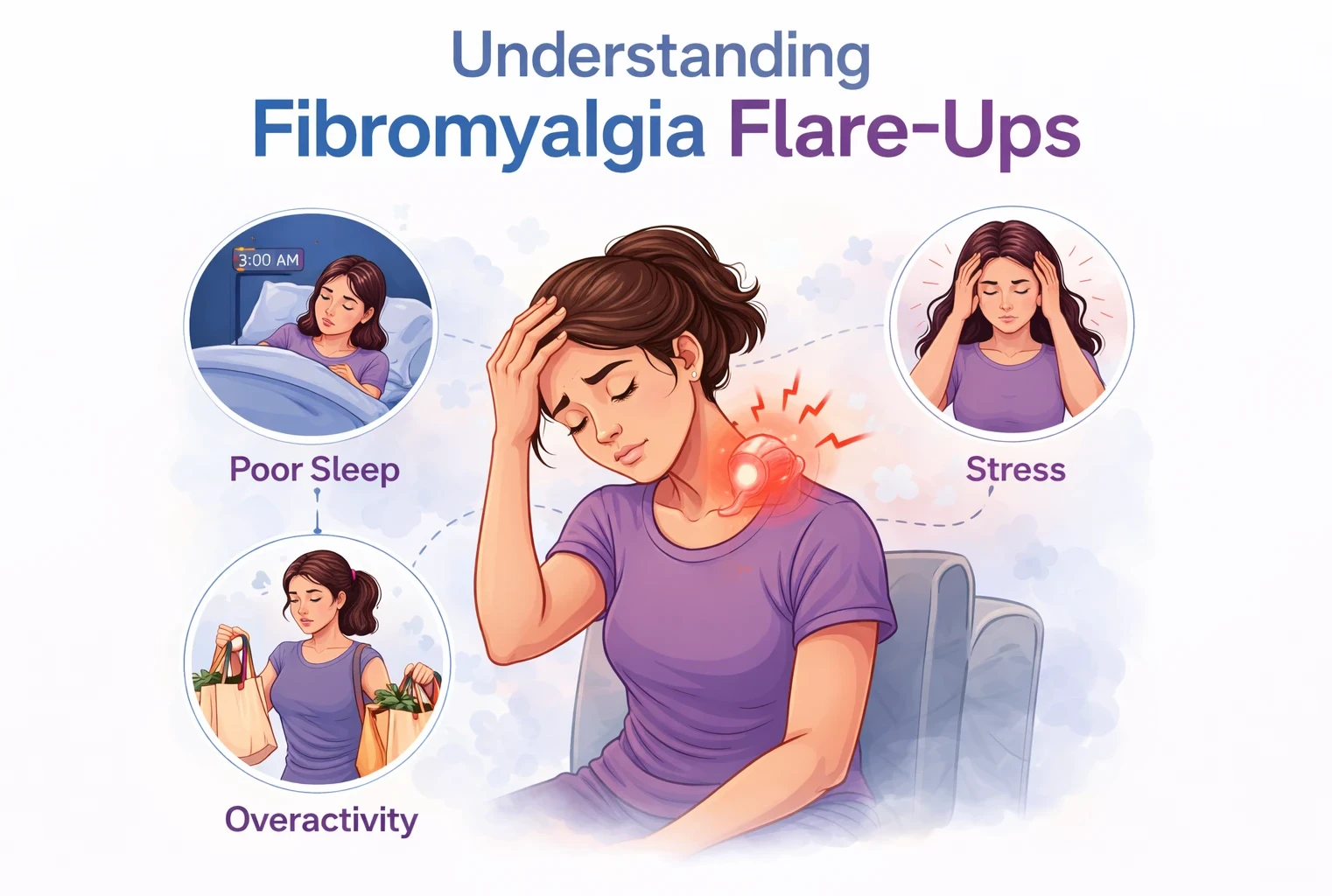

What is a fibromyalgia flare-up?
A fibromyalgia flare-up is a period where symptoms temporarily worsen beyond your usual baseline.
This may include increased pain, deeper fatigue, disrupted sleep, brain fog, and heightened sensitivity to touch, sound, or stress.
A flare-up does not mean the condition is deteriorating.
It reflects a temporary increase in nervous system sensitivity.
If you are new to the condition, a full explanation of fibromyalgia can be found here:
https://beyond-pain-relief.com/what-is-fibromyalgia/
Why flare-ups feel sudden
Fibromyalgia flare-ups often feel like they come out of nowhere, but they are usually the result of load exceeding capacity.
Your nervous system constantly balances:
- Physical activity
- Mental demands
- Emotional stress
- Sleep quality
- Illness or recovery needs
When the total load builds faster than recovery, the nervous system becomes more protective.
Pain sensitivity increases, muscles guard more, and energy drops.
Common fibromyalgia flare-up triggers
Although triggers vary between individuals, several factors commonly contribute to flare-ups.
Poor sleep
Even one or two nights of poor sleep can significantly increase pain sensitivity.
Sleep disruption reduces the nervous system’s ability to regulate pain signals.
Doing too much on a good day
One of the most common triggers is overdoing activity when symptoms temporarily improve.
This often leads to delayed pain and fatigue 24–72 hours later.
Emotional or mental stress
Stress does not cause fibromyalgia, but it strongly influences symptom intensity.
Deadlines, worry, conflict, or long periods of pressure all increase nervous system threat sensitivity.
Illness or immune stress
Minor infections, viral illnesses, or even periods of immune activation can temporarily increase symptoms.
Long periods of inactivity
Complete rest during pain can lower tolerance over time, making flare-ups more likely when activity resumes.
Why flare-ups feel so intense
During a flare-up, the nervous system shifts into a high-alert state. This leads to:
- Lower pain thresholds
- Increased muscle tension
- Heightened sensory sensitivity
- Reduced tolerance for physical and mental effort
This does not mean damage is occurring. It means the nervous system is acting protectively.
Learning how chronic pain works can help reduce fear during these periods:
https://beyond-pain-relief.com/how-to-manage-chronic-pain-without-medication/
Calming the nervous system during a flare

What helps fibromyalgia flare-ups settle
Flare-ups usually settle faster when the nervous system receives signals of safety rather than threat.
Helpful strategies include:
- Reducing activity load without stopping completely
- Gentle, predictable movement such as short walks
- Prioritising sleep and recovery
- Keeping routines simple and calm
- Reducing sensory overload
The goal during a flare is stability, not progress.
What often makes flare-ups worse
Some well-intended responses can unintentionally prolong flare-ups.
These include:
- Complete bed rest for long periods
- Panic-driven activity avoidance
- Pushing through pain aggressively
- Constantly monitoring symptoms
- Searching for a single cure during a flare
These responses can reinforce threat signals and delay recovery.
Flare-ups do not mean damage
Flare-ups do not mean failure
Many people interpret flare-ups as setbacks or proof that nothing is working.
In reality, flare-ups are a common part of recovery with fibromyalgia.
Progress is often seen as:
- Fewer severe flare-ups
- Shorter recovery time
- Better confidence during symptom spikes
- Improved ability to pace activity
Learning to shorten flare-ups is meaningful progress.
When to seek medical review
While flare-ups are common in fibromyalgia, medical review is appropriate if:
- Symptoms change suddenly or dramatically
- New neurological symptoms appear
- Pain is accompanied by unexplained fever or weight loss
- Joint swelling or redness develops
These situations may require additional assessment.
The long-term view
Fibromyalgia flare-ups become less frightening and more manageable with understanding and experience.
Over time, many people learn to recognise early warning signs and adjust before symptoms escalate.
Education, pacing, and consistent routines form the foundation of long-term improvement.
Scientific research
https://pubmed.ncbi.nlm.nih.gov/27916278/
https://pubmed.ncbi.nlm.nih.gov/31462544/
